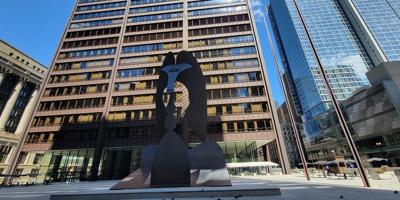


Richard J. Daley Center, Chicago
CHICAGO — Baby formula maker Abbott Labs has been ordered to pay at least $70 million, after a jury found the company should pay for allegedly not doing enough to prevent four infants from ingesting infant formula that caused them to become severely ill.
The verdict came despite the formula manufacturer's assertions that evidence showed that in at least three of the four cases the babies had no human milk or other resources available to them, and would have otherwise starved.
And it comes amid warnings from health care providers and industry executives alike that the continued high-stakes litigation could ultimately impact the continued availability of the vital infant formula products.
The verdict was delivered April 9 in Cook County Circuit Court following a lengthy trial, ordering the company to pay $53 million in compensatory damages combined to the four families. The jury then followed that on April 10 with an additional directive to the company to tack on $17 million more in punitive damages, or damages intended to punish Abbott.
The verdict is the most recent handed down in a growing series of trials amid thousands of lawsuits pending against Abbott Laboratories and the country's other largest baby formula maker, Mead Johnson & Company, over claims the company failed to sufficiently warn parents about the possibility that consuming baby formula could cause some infants to develop the condition known as necrotizing enterocolitis, or NEC.
The lawsuits generally assert the companies have allegedly sold baby formula despite allegedly knowing their cow's milk-based formulas substantially increased the risk of babies developing NEC.
NEC is a condition which results in the death of bowel tissue and can lead to severe illness and death in newborns, particularly if they are born premature. NEC carries a fatality rate of around 15-40% in infants suffering from the condition.
According to court documents, there are "thousands" of lawsuits pending in state and federal courts across the U.S., all leveling the same claims against Mead Johnson and Abbott Labs.
For their part, the companies have warned that, should the lawsuits be allowed to succeed at forcing the companies to pay potentially billions of dollars in damages, it could lead to changes in the formula supply, threatening the availability of the vital food source, particularly for newborns who may struggle to breast feed.
Indeed, that very concern has led federal judges to toss lawsuits pending against the formula makers in federal court.
To date, Abbott and Mead Johnson have scored wins against the lawsuits in Chicago federal court. There, U.S. District Judge Rebecca Pallmeyer is presiding over a consolidated action involving at least 750 cases.
Out of those hundreds, Pallmeyer and attorneys for both sides selected four cases to move forward as so-called "bellwether" cases. Such bellwether proceedings are used to measure the validity and strength of the common claims that underlie all of the hundreds of similar cases.
However, in the first three cases, Pallmeyer has agreed with the formula makers that, under standards and rules that govern proceedings in federal courts, plaintiffs can't get past the benchmark holding that the benefits of their infant formula products — feeding newborns who would otherwise starve, for instance, in cases in which their mothers not be able to produce milk to feed their babies — outweigh the risks of possibly contracting NEC.
However, while federal courts have delivered victories, proceedings also continue in Illinois state courts, including in famously plaintiff-friendly Cook County. Illinois state courts operate under significantly more lax evidence standards and different rules, allowing lawsuits to continue that would otherwise fail to make it past the gate in federal court.
In a February ruling in the four cases consolidated for trial, for instance, Cook County CIrcuit Judge Kathy M. Flanagan rejected Abbott Labs' arguments that the lack of a viable supply of human milk or of a non-cow's milk alternative should allow Abbott Labs to escape a trial.
Abbott had argued a more explicit warning about the risk of NEC would have done nothing to lead the new parents to reject their formulas and instead hold out for significantly less available alternative food.
Flanagan, however, said plaintiffs contested Abbott's evidence with expert testimony contesting those claims, and set the matter for trial, setting the stage for the jury verdict.
Plaintiffs in the Cook County cases at trial were represented by attorneys from the firms of Olson Grimsley Kawanabe Hinchcliff & Murray, of Denver; and Keller Postman, of Chicago and Washington, D.C.
After the punitive damages verdict on April 10, the Olson Grimsley firm released a statement trumpeting the results of the case.
In the statement, Olson Grimsley partner Sean Grimsley said: “This verdict reveals the truth that Abbott hid from the public: cow’s milk-based baby formula causes NEC in premature infants. No amount of money can help these families recover from this terrible disease, but today’s verdict provides a measure of justice for families who were kept in the dark."
Abbott Labs was represented by attorneys from the firms of Kirkland & Ellis and Winston & Strawn, both of Chicago.
Abbott vowed to appeal the decision. In a published statement, the company said they will appeal, saying the verdict is “out of step with the overwhelming consensus of the medical community and regulators that these preterm products are safe, they are necessary and there is no reliable scientific evidence that they cause NEC.”
The verdict marks the first such decision in one of the dozens of cases docketed in Cook County court.
Hundreds of other lawsuits filed in Illinois state courts have landed in downstate Madison and St. Clair County courts.
There, courts have repeatedly rejected attempts by Abbott and Mead Johnson to either dismiss or relocate the cases out of those courts.
In 2024, a St. Clair County jury ordered Mead Johnson to pay $60 million to a family that claimed the formula fed to their child caused NEC.
The formula makers are also facing damages worth at least hundreds of millions of dollars in cases in other states, including Missouri, where a jury famously ordered damages of $495 million over NEC claims.
Editor’s note: This article has been revised from an initial version to reflect the award of punitive damages by the jury and to include statements from the parties that followed the verdicts.