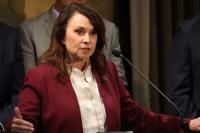



Jackson Voss, government affairs and policy coordinator for the Alliance for Affordable Energy
A Louisiana lawmaker has advanced a bill that would shield oil and gas companies from lawsuits seeking compensation for the effects of climate change, but critics fear its passage would limit communities’ ability to protect the public health and property rights.
House Bill 804, authored by Rep. Brett Geymann (R-Lake Charles), was referred to the Committee on Appropriations on March 9. The measure would limit claims against the energy industry for injury or harm to individuals or property caused by the emission of greenhouse gases, such as carbon dioxide.
The Louisiana measure comes in the wake of a federal lawmaker, Rep. Harriet Hageman (R-Wyoming), saying she is working on a federal bill to regulate climate-change lawsuits and bills relating to the climate superfund.
“Multiple climate lawsuits are now advancing toward trial,” Hageman said at a congressional hearing last month. “Clearly this is an area in which Congress has a role to play. To that end, I am working with my colleagues in both the House and Senate to craft legislation tackling both these state laws and the lawsuits.”
The Louisiana bill would bar parishes from seeking damages related to climate change unless they obtain the agreement of the governor, attorney general, House Committee on Natural Resources and Environment, and Senate Committee on Natural Resources.
Jackson Voss, senior government affairs & policy advisor for the Alliance for Affordable Energy in New Orleans, expressed concern that Geymann, who chairs the House Committee on Natural Resources and Environment, and other lawmakers may not have considered the full consequences of HB 804 becoming law.
“While the chairman’s intention may be to protect industry from what he sees as unnecessary litigation, we are concerned that this type of bill would essentially deny people, businesses, and state and local governments the ability to seek legal recourse for anything that could be framed as being the result of emissions,” Voss told the Louisiana Record in an email.
Based on Voss’s reading of the measure, parishes would be barred from seeking damages if harmful emissions leaked from a carbon-capture project, unless the causes of the action were included in provisions of the federal Clean Air Act and the parishes obtained approval from the governor, attorney general and the designated legislative leaders.
“All this to say, the alliance is concerned that this bill will do more to limit the rights of the people and the state of Louisiana to vigorously protect their interests, as well as public health and property, than to protect industry and natural resources,” he said. “We hope to ensure legislators are made aware of those concerns before they vote to make this law.”
Another Louisiana bill would go a step further. HB 566, sponsored by Rep. Charles Owen (R-Rosepine), would bar the state from spending money on any program whose goal is net-zero carbon emissions – that is, reducing greenhouse gas generation to zero.
The measure would also empower citizens or groups who know about potential violations of the bill to file civil lawsuits against the public entity engaged in such spending, according to the Legislature’s analysis of the bill.
At the start of 2026, the American Petroleum Institute identified stopping “extreme climate liability policy” as one of its agenda items for this year to strengthen the nation’s energy industry. That item urges the protection of energy producers and consumers “from abusive state climate lawsuits and the expansion of climate ‘superfund’ policies that bypass Congress and threaten affordability.”