
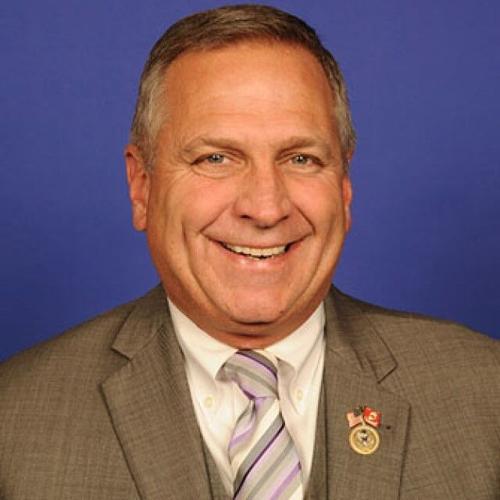



U.S. Rep. Mike Bost
WASHINGTON, D.C. - Illinois Democrats may yet need to defend an Illinois state law forcing election authorities to count all mail-in ballots received up to 14 days after Election Day, after the U.S. Supreme Court said an Illinois Republican congressman - like all other candidates for office - does, in fact, have the constitutional right to sue to challenge state election laws and rules believed to be illegal and unfair.
The decision immediately revives the lawsuit brought by U.S. Rep. Mike Bost (R-Jacksonville) challenging the state's controversial law, championed and defended by Democrats, requiring all ballots received in the mail to be counted, up to two weeks after Election Day.
The nominally 7-2 ruling was authored by U.S. Supreme Court Chief Justice John Roberts. Justices Clarence Thomas, Samuel Alito, Neil Gorsuch and Brett Kavanaugh joined Roberts' opinion in full.
Justices Amy Coney Barrett and Elena Kagan concurred in the result. But in a special concurring opinion authored by Barrett, the two said they disagreed with Roberts' reasoning.
Justice Ketanji Brown Jackson dissented, joined by Justice Sonia Sotomayor.
In the majority decision, Roberts said lower courts were clearly wrong to toss Bost's lawsuit on the grounds that Bost, even though he was a incumbent candidate for the U.S. House of Representatives in Illinois' 12th Congressional District, had no legal standing to sue at all.
In the ruling, Roberts and the majority said Bost, as a candidate for office, had a "personal stake" in getting a straight answer from the courts on the question of whether Illinois state lawmakers had violated federal law in opening such a wide window for counting ballots in elections for federal offices, like the U.S. House of Representatives, U.S. Senate and President.
The decision, Roberts likened Bost's claims concerning the allegedly nefarious nature of Illinois' vote-counting change to a sudden decision by those running foot races to extend the length of a 100-yard dash to 105 yards instead.
Just as those competing in such an athletic contest would have standing to challenge such rule changes, so, too, do candidates have a stake - and thus, standing - to challenge election laws extending the time period in which ballots must be received and counted.
"Candidates, in short, are not 'mere bystanders' in their own elections," Roberts wrote in the majority decision. "They have an obvious personal stake in how the result is determined and regarded. Departures from the preordained rules cause them particularized and concrete harm.
"... An unlawful extension of vote counting deprives candidates of the opportunity to compete for election under the Constitution and laws of the United States," Roberts wrote.
Further, Roberts and the majority said Bost and other candidates for office have a real interest in ensuring changes in the rules governing how votes are counted does not diminish the confidence voters have that votes were fairly counted and the results are legitimate, and not the result of potential fraud by a ruling party.

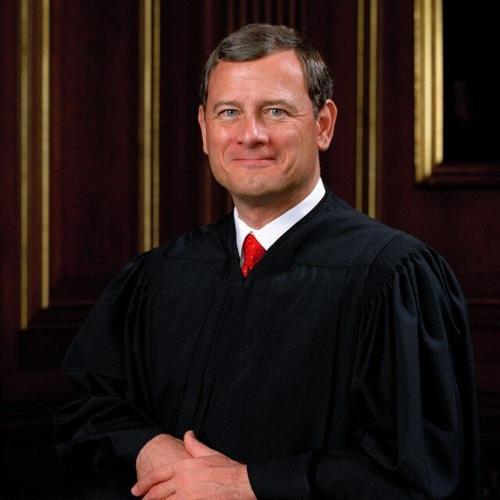
U.S. Supreme Court Chief Justice John Roberts
"The counting of unlawful votes — or discarding of lawful ones — erodes public confidence that the election results reflect the people’s will. And when public confidence in the election results falters, public confidence in the elected representative follows,” Roberts wrote for the majority.
The decision does not address the legality or constitutionality of Illinois’ vote-by-mail system or rules.
Rather, the case had landed before the Supreme Court after Illinois Democrats had succeeded at persuading federal courts in Chicago that Bost lacked standing to challenge the rules at all.
Bost and some Republican co-plaintiffs had sued in 2022, just before that year's November general election. The lawsuit at the time sought a court order blocking Illinois from counting mail-in ballots received after Election Day, if those ballots included votes for federal offices, including Congress and President.
The lawsuit took aim at a law enacted by Illinois Democrats in 2020. That law had used the Covid pandemic to justify rewriting the state's election laws to greatly expand the use of mail-in voting in Illinois.
Bost's lawsuit claimed the Democrat-initiated and enacted laws violated federal election law and the constitutional rights of Illinois voters and candidates for federal office.
The lawsuit particularly targeted rules requiring election authorities to count all mail-in ballots received up to 14 days after Election Day. The rules further require election officials to accept and count those ballots even if there is no proof they were actually mailed by Election Day, as the law claims to otherwise require.
Bost's lawsuit specifically claims Illinois' vote-by-mail regime clashes with a federal law that establishes an official Election Day for federal offices.
Under that federal law, votes must be cast by "the first Tuesday after the first Monday in November of every even-numbered year."
However, Bost's lawsuit asserts the Illinois rules improperly turn "Election Day" into an election period, without authorization from Congress.
Critics of the law have asserted the change in the law creates new opportunities for dominant parties and powerful campaign organizations to manipulate the system and cheat by counting questionable or illegitimate ballots.
The plaintiffs have asserted Illinois' balloting system could allow potentially hundreds of thousands of otherwise invalid votes to sway close election contests.
Bost's lawsuit further argues the law improperly "dilutes" the value of votes cast on or before Election Day, in keeping with federal law.
Illinois state election officials, with the support of the Illinois Democratic Party and the past support of the U.S. Justice Department, under the administration of Democratic former President Joe Biden, moved to dismiss the lawsuit. They argued Illinois law doesn't conflict with federal law because the Illinois law still requires all ballots to be mailed on or before Election Day, even if the law allows votes to be counted without any independent proof they actually were mailed at all.
Illinois Democrats have noted in court filings that striking down the law would make it more difficult for Democrats to win elections, as Democrats disproportionately vote by mail, compared to Republicans and other voters.
However, all of those claims have yet to be addressed in court.
Instead, both a federal district court judge and the U.S. Seventh Circuit Court of Appeals sided with Illinois Democrats in ruling Bost couldn't continue his lawsuit because he couldn't show how Illinois' long window for counting mail-in ballots harmed him.
In the appellate ruling, in particular, judges determined Bost's district - a gerrymandered district drawn by Illinois Democrats to pack in Republican voters and allow Democrats to compete more effectively in other downstate U.S. House districts - is too Republican to allow any allegedly illegal mail-in ballots to place him in jeopardy of losing.
They noted Bost had secured at least 75% of the vote in his district.
At the U.S. Supreme Court, Democrats maintained that argument, while further warning that allowing Bost to sue now would open the door to a parade of candidates taking advantage of their "automatic" standing to challenge state election law and rules at whim, using the courts to sow chaos into elections.
In their concurring opinion, Justices Kagan and Barrett said they could not agree with the Roberts' majority decision to create what they called a "bespoke standing rule for candidates."
They said they agreed the lower courts had been wrong to toss Bost's lawsuit. But they said they believed the error was in brushing off Bost's assertions that he had standing because the extended vote counting period would force him and other Republican candidates in Illinois to spend more money monitoring vote counting than they otherwise would under their interpretation of the federal Election Day law.
Kagan and Barrett said they believed Bost had instead established a so-called "pocketbook injury," which they said should have been sufficient to allow his case to proceed.
"Elections are important, but so are many things in life. We have always held candidates to the same standards as any other litigant," Barrett wrote, later adding: "... The practical realities of running for office warrant special treatment for candidates."
In dissent, Justice Jackson, joined by Sotomayor, however, amplified Democrats' warnings of chaos for elections that could follow the decision in Bost's favor.
Jackson rejected all reasoning in Bost's favor, agreeing that candidates who win by comfortable margins have no standing to challenge vote-counting rules, because of their margin of victory.
Jackson agreed with the Seventh Circuit and Democrats that any claims asserted by Bost in the lawsuit are based only on speculation of some "speculative future injury" which could come from the state potentially requiring illegal ballots to be counted.
"By carving out a bespoke rule for candidate-plaintiffs—granting them standing 'to challenge the rules that govern the counting of votes,' simply and solely because they are 'candidate[s]' for office — the Court now complicates and destabilizes both our standing law and America’s electoral processes," Jackson wrote.
In the majority opinion, however, Roberts said it is the approach favored by Jackson and Democrats that serves to sow uncertainty in election results.
Requiring candidates to lose to sue to challenge election law, or even just requiring them to first hit some kind of "vote threshold" to establish their right to challenge vote-counting rules, would "channel many election disputes to shortly before election day — or worse, after."
"Such late-breaking, court-ordered rule changes can 'result in voter confusion and consequent incentive to remain away from the polls,' and thus undermine the '[c]onfidence in the integrity of our electoral processes . . . essential to the functioning of our participatory democracy,'" Roberts wrote, citing the court's prior holding in the 2006 decision in Purcell v Gonzalez.
"The democratic consequences can be even more dire if courts intervene only after votes have been counted. 'Count first, and rule upon legality afterwards, is not a recipe for producing election results that have the public acceptance democratic stability requires,'” Roberts added, citing the Supreme Court's 2000 holding in Bush v Gore.
The decision could have far-reaching consequences across the country.
Another Republican congressman in California, for instance, is also challenging that state's vote-by-mail ballot counting regime, which requires mail-in ballots to be counted if received up to seven days after Election Day. The lawsuit by U.S. Rep. Darrell Issa (R-San Diego), which largely mirrors Bost's complaint, has been placed on hold pending the outcome of Bost's case before the Supreme Court.
However, ultimately, neither Bost's nor Issa's lawsuits may secure any kind of landmark decisions.
Rather, the fate of those cases may hinge on the outcome of another case, also currently before the high court.
Last November, the U.S. Supreme Court agreed to hear an appeal out of Mississippi, as the Republican-led state, together with an unusual assortment of Democratic and other left-wing allies, seek to overturn a decision from the U.S. Fifth Circuit Court of Appeals striking down Mississippi's Covid-era state law change allowing mail-in ballots to be received and counted in federal races up to five days after the official Election Day established by Congress.
The court has not yet set a date for arguments in that case.
Bost and his Illinois co-plaintiffs have been represented by attorneys with the conservative legal advocacy organization, Judicial Watch, and Chicago attorney Christine Svenson, of Svenson Law Offices.
Bost was supported before the Supreme Court by the U.S. Justice Department under President Donald Trump.