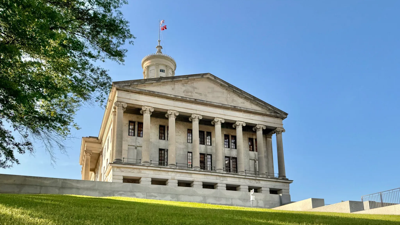



Front View of the Tennessee State Capitol in Nashville
NASHVILLE, Tenn. – Tennessee lawmakers are pursuing action against cities that align with private lawyers, proposing a bill that would give the state’s top attorney the power to review those arrangements.
Counties, towns and cities are increasingly hiring private lawyers on contingency fees to pursue theories in court, like litigation against Hyundai and Kia that alleges they created a “public nuisance” because their cars are too easy to steal.
HB2069 would require those contracts, which can lead to millions of dollars in fees for the private lawyers, to be submitted to the state Attorney General’s Office for approval – similar to a system in Texas.
Sponsor Chris Todd, a Republican, says his bill would let the AG pursue litigation without interference from private lawyers hired by political subdivisions. In nationwide litigation over the opioid addiction crisis and in other cases, settlements can be complicated when private lawyers representing towns stake their claims to the fees they generate.
“In Tennessee, policy decisions belong to the people and their elected representatives – not to whoever files the most creative lawsuit and stands to profit from it,” Todd said at a recent Cities and Counties Subcommittee hearing during which the bill was approved on a party-line 5-2 vote.
It was sent to the State & Local Government Committee. The Senate version of the bill passed the Judiciary Committee last week in a 7-2 vote.
Roger Gibboni of Hunton spoke to the House subcommittee on behalf of the U.S. Chamber Institute for Legal Reform, which supports passage. He said Tennessee law already requires the attorney general to direct litigation in which the state might be interested, but this bill gives him or her the mechanism to enforce that.
“This safeguard will also protect against Tennessee municipalities knowingly or unknowingly being used as vehicles for policy-oriented litigation by activist organizations and profit-motivated litigation by private plaintiffs lawyers,” Gibboni said.
It will not strip a political subdivision’s power to bring public nuisance lawsuits. It instead directs the AG to make sure the contingency-fee contract is valid and won’t complicate any enforcement efforts the AG is pursuing.
Lawsuits filed under a theory of public nuisance have been filed by cities, counties and states to score billions of dollars in settlements over products like cigarettes and opioids.
For years, critics have been concerned with how the legal claim has been expanded by government officials and the private lawyers they hire on contingency fees. Indiana this year is trying to reform when those cases can be brought, citing the too-easy-to-steal cases against Hyundai and Kia.
Nashville is among the plaintiffs in those cases.