
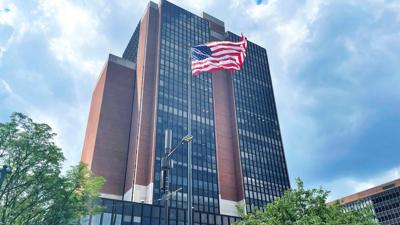



James A. Byrne U.S. Courthouse in Philadelphia
PHILADELPHIA – A man cleared of second-degree murder after decades in prison is now suing the City of Philadelphia, alleging his conviction was based on a coerced confession and unreliable hair-testing results.
Mark Young was found guilty of second-degree murder after the 1974 robbery of Place Bar resulted in the murder of Walter Palermo. But he long maintained his innocence and in 2024 was released.
He’s hired Michael Pomerantz of the Marrone Law Firm to sue Philadelphia and two former detectives who allegedly withheld witness testimony from both Young and prosecutors. They filed suit Jan. 12.
“The wrongful arrest and conviction of Mr. Young was part of a pattern and practice of the City of Philadelphia, whereby detectives of the Philadelphia Police Department Homicide Division routinely resolved cases by using coerced statements and testimony, as well as fabricated and suppressed evidence,” the suit says.
Young says he was not one of the two men who robbed Place Bar and shot Palermo in the back with a shotgun. Descriptions by a bartender and female customer identified one man who at the time was an informant for detectives Donald Lyons and Thomas Brown, who relied on him for names of gang members to blame for unsolved crimes, the suit says.
To keep that scheme going, the detectives refused to arrest their informant, the suit says. They also ignored that a witness identified their informant, who was nicknamed “Turtle.”
It is alleged the detectives withheld the names of witnesses and their statements. Young six months earlier had put up bail for Charles Sheppard, who had been identified as the shooter, though Young said he did so with someone else’s money because that individual was stuck at work.
Young was questioned about Sheppard’s whereabouts and passed a lie detector test about whether he was at Place Bar that night. Turtle, who was a member of a gang that Young had previously been in, stopped by his house to borrow a shirt.
They never discussed the murder, Young says, but Turtle told detectives that Young was the unknown conspirator. Young, who was in Army basic training in New Jersey that November, was charged with second-degree murder.
He says he was told he could waive an extradition hearing to get back to Philadelphia, away from the “white farm boys” in New Jersey prisons. Detectives also showed him Turtle’s statement and a prepared confession, the suit says.
Over 15 hours, Young says he was isolated and assaulted while interrogated. Ultimately, he scribbled his name on the confession. In questioning a witness, they presented a photo array in which Young was four of the six pictures.
They changed a description of light skin and 5-foot-5 to dark skin and 5-foot-11, the suit says. Tests on hair at the crime scene were ultimately deemed questionable in 2015 by the FBI.
Sheppard was found years later and sentenced to life in prison, thanks to testimony from two witnesses whose identities had been hidden from Young during his trial, the suit says.
Those witnesses pointed to a woman who had seen the other criminal’s face but she had moved out of state. It took until 2008 for her to sign an affidavit that said she had not seen Young there. Sheppard signed an affidavit stating the same. It took 16 years for his post-conviction petition to be granted.
A plea to third-degree murder nullified his life sentence and he was released. Philadelphia also faces another recent lawsuit from a man exonerated after 19 years in prison who alleges witnesses were bribed to implicate him in the killing of a cop.