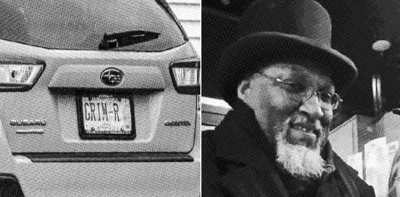


Cedric Lodge and his license plate
WILLIAMSPORT, Pa. – The former morgue manager at Harvard Medical School who harvested and sold body parts to pay the costs of his wife’s cancer will spend eight years in prison.
Pennsylvania federal judge Matthew Brann issued his sentence this week in the case of Cedric Lodge, who faced a maximum of 10 years for selling brains, skin and heads taken from cadavers donated to research.
Lodge’s wife Denise, whose sentencing memorandum states the two resorted to this scheme to make money for treatment of her stage IV breast cancer, was sentenced to a year in prison.
“The trafficking of stolen human remains through the U.S. Mail is a disturbing act that victimizes already grieving families while also creating a potentially hazardous situation for Postal employees and customers,” said Christopher Nielsen, the Inspector in Charge of the Philadelphia Division of the Postal Inspection Service.
“I hope our efforts, and these sentencings, bring some amount of closure to those affected by this terrible crime.”
Prosecutors had recommended the maximum sentence for Cedric but Judge Brann stopped two years shy of that. Denise had sought probation but instead will get one year in jail.
The two sold body parts like skin and head from corpses donated to Harvard Medical School, and civil lawsuits in Boston painted a wild picture of Cedric as a ghoul who took his job in the morgue way too far, even noting his personalized license plate – “Grim-R.”
But Denise’s presentence report says his motivation was money.
“It was only after Denise became so sick with Stage IV breast cancer that she could no longer work, and the family’s finances began to collapse, that her husband, Cedric Lodge, turned to the criminal conduct at issue,” attorney Hope Lefeber wrote.
“As their income dwindled and Denise’s medical needs increased, Cedric came up with a plan to sell human remains. Denise initially refused.”
But Denise was worn down by her cancer and his persistence, the report says, and in a “vulnerable state,” she eventually agreed.
Lodge and his co-defendants unsuccessfully argued in motions to dismiss their criminal indictments that pieces of dead bodies can't be considered "goods." Katrina MacLean of Salem, Mass., and Joshua Taylor of West Lawn, Pa., are co-defendants. MacLean operates a store called Kat's Creepy Creations.
She explained her involvement by pointing at her "somewhat unusual interest" in a nationwide oddities community that collects body parts. The indictment says she sold remains stolen by Lodge and Taylor was a purchaser.
MacLean paid $600 to Lodge for two dissected faces in 2020, it says. She allegedly shipped human skin to a man whom she wanted to turn it into leather.
Taylor, who also pleaded guilty, paid Denise more than $37,000 over three years for body parts, the indictment says. Memos on money transfers said things like "head number 7" and "braiiiiiins."
In October, the Massachusetts Supreme Court reopened civil cases from plaintiffs who sued Harvard, finding the university was not immune from suit under the “good faith” defense of the Uniform Anatomical Gift Act.
Lawyers included pictures of Lodge and his license plate in their complaints.
"The Grim Reaper posted images of himself dressed up in the garb of an undertaker in a Dickens novel with a black top hate and overcoat," one lawsuit said. "His license plate and open association with macabre hobbies revealed his view of his job at the morgue as a backdrop for his fantasies instead of a place of reverence and respect."