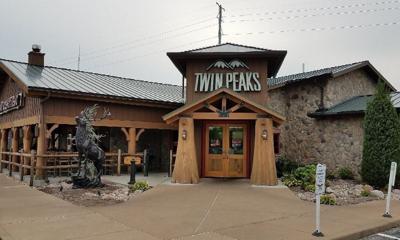



Twin Peaks Restaurant in Maplewood, Mo.
ST. LOUIS — A woman has filed a federal civil rights lawsuit against Twin Peaks Restaurant's Maplewood location, its parent company and two managers, alleging she was subjected to race discrimination, gender-based mockery and an unjustified ban from the restaurant following an interaction with employees earlier this month.
Cynthia Berry filed the complaint on July 10 in the U.S. District Court for the Eastern District of Missouri. The lawsuit names Twin Peaks Restaurant (Maplewood), Twin Peaks Restaurant Partners LLC, General Manager Jeff Pacie and an unnamed manager identified only as "Steven" or "Stephen."
Berry alleges violations of Title II of the Civil Rights Act of 1964 and 42 U.S.C. § 1981, claiming she was denied equal treatment because of her race.
According to the complaint, Berry, a 61-year-old multiracial woman from Richmond Heights, had been a regular customer at the Maplewood Twin Peaks restaurant before the incident and had visited the establishment several times during June and early July without any complaints or disciplinary issues.
She alleges that she visited the restaurant on July 5 while grieving a recent family loss and was seeking "social interaction, relaxation and respite."
The lawsuit states that Berry arrived at approximately 1:45 p.m., ordered a glass of wine and spent time listening to music and watching horse racing on television.
Around 3:15 p.m., she moved to the restaurant's patio, where she began speaking with a dishwasher employed by the restaurant.
According to the complaint, the two discussed recent family losses before an unnamed manager interrupted the conversation.
Berry alleges the manager interrupted without introducing himself or saying "excuse me" and behaved in a rude and hostile manner toward her.
The complaint contends that she believed the manager was attempting to provoke a confrontation that could later be used as justification to remove her from the property.
Berry maintains she remained calm throughout the encounter and recorded part of the interaction on her cellphone.
Following the incident, Berry says she attempted to resolve the matter by filing a complaint with the Better Business Bureau and by repeatedly calling the restaurant in an effort to identify the manager involved and obtain an explanation and apology.
According to the complaint, the restaurant did not provide the manager's identity.
Berry alleges that on July 6, she spoke by telephone with General Manager Jeff Pacie.
The complaint states Pacie was initially polite until Berry identified herself as "the lady asking for directions to Target the other day."
At that point, Berry alleges Pacie became hostile, informed her she was barred from returning to the restaurant and warned that police would be called if she came back.
The lawsuit claims no explanation or business justification for the trespass order was provided.
The complaint further alleges that after Berry mentioned having an audio recording of the July 5 interaction, she eventually reached the unnamed manager by telephone after multiple attempts.
Berry claims the manager responded by playing the Aerosmith song "Dude (Looks Like a Lady)" over the phone before ending the call. She further alleges that on later calls to the restaurant, she again heard the same song played by restaurant management.
Berry contends the conduct amounted to gender-based mockery and serves as evidence supporting her claim that she was discriminated against because of the intersection of her race and gender.
Berry asserts that the incidents caused her significant emotional distress during an already difficult period of grieving.
The complaint states that she cried after returning home, experienced humiliation and dignitary harm and sought mental health treatment by scheduling virtual therapy with a licensed clinical psychologist.
In her legal claims, Berry alleges the restaurant violated Title II of the Civil Rights Act by denying her the full and equal enjoyment of a place of public accommodation because of her race.
She also claims the defendants violated Section 1981 by interfering with her contractual relationship as a paying customer.
The complaint alleges the defendants have offered no legitimate, non-discriminatory reason for their actions and contends the alleged harassment and trespass were motivated by racial animus.
As part of the requested relief, Berry asks the court to declare that the defendants violated federal civil rights laws, award compensatory and punitive damages, restore her access to the Maplewood Twin Peaks location, require anti-discrimination training for managers and employees, and order the adoption of a written non-discrimination policy applicable to all Twin Peaks locations.
She also requests attorney's fees if she later retains counsel, prejudgment and post-judgment interest, and permission to proceed without paying court filing fees due to financial hardship.
U.S. District Court for the Eastern District of Missouri case number: 4:26-cv-01079