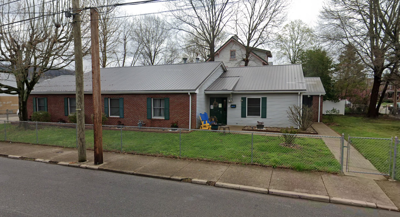



300 Ruffner Avenue in Charleston, W.Va.
CHARLESTON – The sister of a man with profound disabilities has sued the operators of a Charleston group home alleging failures to provide water, prevent pressure injuries and follow wound-care orders caused severe injuries and contributed to his death.
Catherine Sue Cooper filed the lawsuit October 15 in Kanawha Circuit Court as administrator of the estate of her brother Kenneth Edward Dunlap against Res-Care, RSCR West Virginia and REM West Virginia, which it identifies as RSCR’s successor by merger.
Dunlap, 54, died September 15, 2025. He had cerebral palsy, a profound intellectual disability, a seizure disorder and a cardiac septal defect. He was nonverbal, used a wheelchair and depended on others for his daily care, according to the complaint.
The lawsuit centers on his care at a facility at 300 Ruffner Ave., where he lived between May 15 and July 16, 2025, except during hospitalizations. It alleges staff failed to adequately assess his needs, monitor his fluid intake, reposition him, provide pressure-relieving equipment and carry out physicians’ instructions.
“Because his cerebral palsy limited his ability to communicate, he depended entirely on ResCare’s staff to recognize and respond to his needs,” the complaint states.
Dunlap entered the home after nearly three months at Charleston Area Medical Center, where he initially was treated for severe sepsis, pneumonia, constipation and dehydration. His family no longer could provide the around-the-clock care he needed, according to the complaint.
At discharge, a hospital assessment placed him at moderate risk of developing pressure injuries. The complaint alleges the group home’s nursing staff did not conduct an admission assessment of his skin or pressure-injury risk. The earliest such risk assessment in records produced by the defendants was dated June 17, more than a month after his arrival.
Two days after Dunlap entered the home, staff obtained an order for a dressing over a wound on his buttock. Despite that wound and his known risks, the lawsuit alleges, the operators did not institute a turning schedule or provide a pressure-redistributing mattress, wheelchair cushion or nutritional supplements to promote healing.
On May 29, staff found his right forearm and hand swollen and bruised and sent him to CAMC. Staff told the hospital they knew of no fall or injury, the complaint says. It alleges the records produced contain no investigation into how the injury occurred, although Cooper later was told her brother had fallen out of bed.
At the hospital, Dunlap’s sodium level measured 166 millimoles per liter, which the complaint describes as a critical value. He was admitted to intensive care with severe dehydration and acute kidney injury. Treating physicians attributed the elevated sodium level to a likely water deficit from poor oral intake, according to the lawsuit.
The complaint describes repeated hospital visits as wounds developed and worsened on Dunlap’s right arm, left hip and buttocks. A plastic surgeon attributed his right arm wounds to his sleeping too long on that arm.
A pressure-relieving wheelchair cushion and low-air-loss mattress were first ordered June 25, more than five weeks after his admission, the lawsuit alleges.
In July, a wound-care center instructed staff to turn and reposition Dunlap every two hours, avoid prolonged pressure on his wounds and increase his protein intake. It later directed that he be kept out of his chair as much as possible.
“Apart from isolated entries,” the complaint states, records produced by the operators contain no turning or repositioning records, routine skin-assessment records or treatment records documenting that ordered dressing changes were performed during his stay.
By July 14, the wound on the back of Dunlap’s right wrist measured about 5 centimeters by 5 centimeters, with the joint capsule exposed, according to the lawsuit. He subsequently underwent two operations involving wound cleaning, removal of wrist bones and wound-vacuum treatment. His left-hip pressure ulcer had progressed to Stage IV.
Dunlap was discharged July 25 to Teays Valley Center, a skilled nursing facility in Hurricane. His wounds and nutritional condition continued to deteriorate before his death, the complaint alleges.
The lawsuit accuses the operators of accepting and repeatedly readmitting Dunlap without sufficient staffing or equipment to meet his needs. It alleges their failures caused a physical decline that was “a proximate cause of, and a substantial contributing factor in,” his death.
Cooper seeks compensatory and punitive damages.
The estate is being represented by R. Dean Hartley, Mark R. Staun and John H. Zickefoose of Hartley Law Group in Charleston and by Jeffrey G. Blaydes of Blaydes Law in Charleston. The case has been assigned to Circuit Judge Tera Salango.
Kanawha Circuit Court case number 26-C-1258