



CHARLESTON – West Virginia Attorney General J.B. McCuskey is co-leading a brief defending a Connecticut farmer facing $2 million in federal fines for allegedly violating the Clean Water Act.
The amicus, or friend of the court, brief was signed by AG from West Virginia, Nebraska and 21 other states and argues that states, not the federal government, should control most water regulation within their borders.
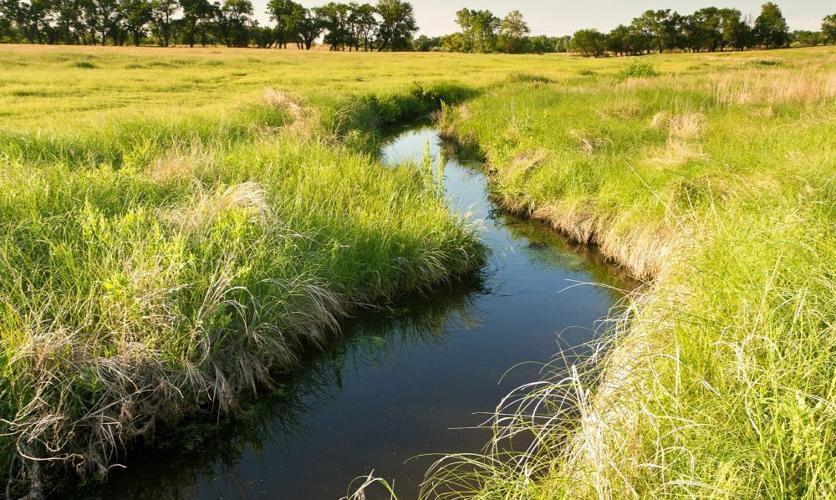
The federal government sued Jeffrey Andrews, alleging he discharged fill material — which they called “pollutants” — into about 13.3 acres of wetlands on his property without a required permit.

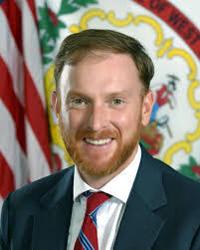
McCuskey
The brief, filed in Andrews v. United States, argues that federal courts continue to ignore the Supreme Court’s clear 2023 ruling in Sackett v. EPA, which strictly limited federal jurisdiction over wetlands under the Clean Water Act. The court ruled federal jurisdiction extends only to wetlands with a “continuous surface connection” to navigable waters — meaning wetlands that are “as a practical matter indistinguishable” from traditional navigable rivers, lakes, and streams. The decision was intended to end decades of confusion and restore the state-federal balance Congress originally intended.
“The Supreme Court has spoken three times on this issue, yet lower courts still refuse to respect the constitutional limits on federal power,” McCuskey said. “A farmer shouldn't face $2 million in fines because rainwater temporarily runs across his land. This federal overreach tramples on state sovereignty and costs landowners, businesses, and taxpayers trillions of dollars.”
In the brief, the AGs detail how federal agencies repeatedly have exceeded their statutory authority over the past 50 years, despite Congress’s clear intent to preserve state control over water regulation. Since the Founding, states have held primary responsibility for regulating waters within their borders, and at least 30 states — including West Virginia — have their own comprehensive wetland protection laws.
The states are asking the Supreme Court to hear this case and issue a quick reversal, reminding lower courts that the federal government’s power over wetlands is limited to only those waters Congress authorized it to regulate.
Last week, McCuskey led a 20-state coalition submitting formal comments to the Trump Administration supporting reforms to the Waters of the United States definition.
Joining West Virginia and Nebraska in the brief are the AGs of Alabama, Alaska, Arkansas, Florida, Georgia, Idaho, Indiana, Iowa, Kansas, Kentucky, Louisiana, Mississippi, Missouri, North Dakota, Ohio, Oklahoma, South Carolina, South Dakota, Tennessee, Texas and Wyoming.
In related news, U.S. Senator Shelley Moore Capito (R-W.Va.), who is chairwoman of the Senate Environment and Public Works Committee, led all 10 Republican members of the committee in sending a letter to the U.S. Environmental Protection Agency and U.S. Army Corps of Engineers to commend the agencies’ proposed rule to revise the WOTUS definition.

Capito
“We applaud the proposal to revise the definition of ‘waters of the United States’ (WOTUS) issued by the Environmental Protection Agency (EPA) and the Army Corps of Engineers (Army Corps),” the January 9 letter stated. “The Agencies’ proposed rule would establish a clearer definition of jurisdictional waters subject to the Clean Water Act (CWA) that complies with the legal boundaries articulated by the Supreme Court, right-size federal and state jurisdiction over waters consistent with the CWA, and protect our nation’s waters.”
The letter said the group appreciated the agencies’ work on the matter.
“The Agencies’ proposed rule faithfully adheres to the text of the CWA and the Sackett decision, a critical attribute that will ensure that the rule is legally durable,” the letter stated. “As the Agencies review public comments, we encourage the EPA and Army Corps to consider these comments and incorporate feedback to further improve the rule.
“We urge the Agencies to finalize a rule that, like the proposal, provides regulatory certainty, supports cooperative federalism, and follows the statutory text and the Supreme Court’s ruling. We look forward to the publication of the final WOTUS rule in the coming months.”