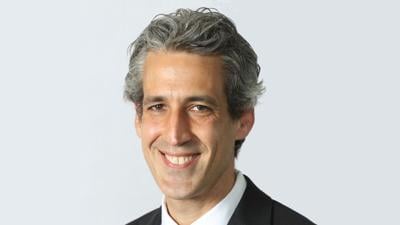



Evanston Mayor Daniel Biss
EVANSTON — Evanston can't end a class action lawsuit accusing the city of violating the Constitution by paying out millions of dollars to current and former black Evanston residents and their descendants through a race-based "reparations" program, a federal judge has ruled.
On March 27, U.S. District Judge John F. Kness denied a motion by the city to dismiss the lawsuit brought by a group of white former Evanston residents and their descendants.
In the ruling, Kness specifically rejected the city's attempts to claim the white plaintiffs can't sue because they never actually attempted to apply for payment through the program, which the city had made clear was limited only to people who are black.
"Plaintiffs’ application to a program that limits eligibility on the basis of immutable race characteristics would have been a futile gesture," Kness said.
The plaintiffs had filed suit in May 2024. They are represented in the case by attorneys with the Washington, D.C.-based conservative public policy advocacy organization, Judicial Watch.
The lawsuit specifically took aim at a policy established by the north suburban city of Evanston in 2021, allegedly to make up for decades of alleged race-based housing decisions and other alleged racist mistreatment at the hands of city officials.
Known as the Evanston Local Reparations Restorative Housing Program, the city originally stated it would dedicate $10 million to pay up $25,000 to black current and former Evanston residents and their families for down payments on home purchases or to put towards repairs and renovations to existing homes.
City officials at the time said the program was intended to help black and African-American residents purchase and maintain homes in Evanston and build "intergenerational wealth" and "equity."
The city committed an additional $10 million to the program in 2022, and in 2023 revised the rules to allow for direct cash payments to black Evanston residents and their descendants, and potentially others who assert they have suffered discrimination in Evanston.
At the time the lawsuit was filed, the city had approved payments of $25,000 each to 141 people identified as "ancestors," meaning they are black, live in Evanston and were at least 18 years old during the period from 1919 to 1969. In all, the city had spent more than $6.3 million, as of the date the lawsuit was filed.
According to published reports, Evanston has steadily approved payments through the program to 40-45 current and former residents since 2021. More than 250 people have been awarded grants through the program since its inception, reports have said.
The lawsuit, however, said the program amounts to blatant and unconstitutional racial discrimination by the city government.
"The Evanston, Illinois ‘reparations’ program is nothing more than a ploy to redistribute tax dollars to individuals based on race," Judicial Watch said in a statement released at the time the lawsuit was filed. "This scheme unconstitutionally discriminates against anyone who does not identify as Black or African American."
The lawsuit specifically accuses the city government of violating the constitutional rights of non-black Evanston residents to equal protection under the law, as guaranteed by the U.S. Constitution's 14th Amendment.
Named plaintiffs in the action include Margot Flinn, Carol Johnson, Stasys Neimanas, Barbara Regard, Henry Regard and Stephen Weiland. All claim their parents or grandparents, or both, lived in Evanston as adults from 1919-1969.
But because none of the plaintiffs nor their parents and grandparents are black, the lawsuit says they don't qualify to participate in the Evanston program, violating their constitutional rights to be free from government-mandated discrimination.
The lawsuit further noted the city has not taken any steps to actually compel potential recipients of the "reparations" grants to show they, their parents or grandparents actually suffered discrimination because of actions taken by the city government. Instead, the lawsuit said, the city is merely paying money to anyone who is black and whose family lived in the city from 1919-1969. The lawsuit says such a program, which uses race as a "proxy" to stand in for actual discrimination claims, is unconstitutional.
The lawsuit asks the court to declare the program unconstitutional, and to order the city to pay the plaintiffs and potentially thousands of others whose parents or grandparents lived in Evanston from 1919-1969 and are not black $25,000 each, potentially in addition to payments to the black applicants through the "reparations" program.
In response to the suit, the city sought to dismiss the action. The city specifically challenged the plaintiffs' so-called "standing" to sue, asserting they shouldn't be allowed to sue because they don't currently live or own property in the city, and never attempted to apply for a cut of the program's proceeds by 2021, when the program began accepting recipients.
Nearly two years after the lawsuit was first filed, however, Kness said those considerations can't be used to stop the case from moving forward.
The judge noted requiring white plaintiffs to apply for a program explicitly limited to black recipients would be "futile."
Kness further noted the program has accepted applicants on a "rolling basis" since 2021, thwarting its bid to claim there was a 2021 deadline.
And he further noted the city hasn't presented evidence showing the program actually requires recipients to prove they live in Evanston currently, own property in the city, or intend to use the proceeds to invest in real estate in the city.
The judge said it would be more appropriate to allow the parties to hammer out disagreements over criteria during a later discovery phase, when the parties present evidence to develop "a fuller factual record" in the case.
The plaintiffs are represented by attorneys Paul J. Orfanedes and Michael Bekesha, of Judicial Watch, and Christine Svenson, of Chalmers Adams Backer & Kaufman, of Palatine.
Evanston has been represented by attorneys Michael T. Brody, Precious S. Jacobs-Perry and Jeffrey P. Salvadore, of Jenner & Block, of Chicago; and its in-house city attorneys, including Alexandra B. Ruggie, Cynthia Grandfield and Matthew Slodowy.