


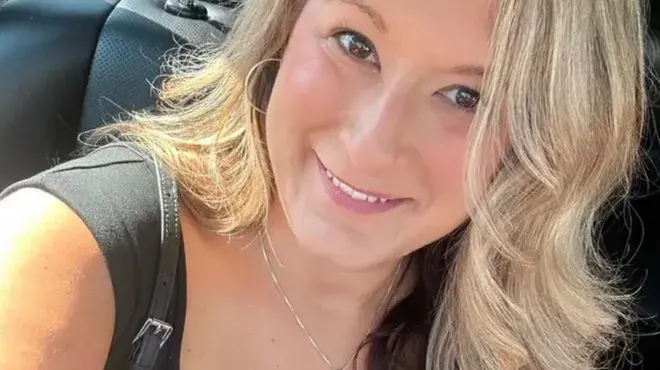
Rachel Tussey
CHARLESTON – The family of a popular social media influencer has sued a Cincinnati-area weight loss surgical facility as well anesthesiologists, physicians and nurses accusing them of medical negligence that led to her death following a tummy tuck procedure.
Jeremy Tussey, individually and as administrator of the estate of his wife Rachel Tussey, filed a civil lawsuit May 7 in Hamilton County Court of Common Pleas against JourneyLite of Cincinnati, Associated Anesthesiologists of Springfield and multiple physicians, nurse anesthetists, nurses and unnamed individuals and companies.
Rachel Tussey died following a February 25 abdominoplasty (or tummy tuck), liposuction and umbilical hernia repair at JourneyLite’s Evandale surgery center.
Tussey, 47, was a wife, mother of three, and a widely followed content creator who shared messages of self‑improvement and encouragement with tens of thousands of followers online. She was popular on TikTok where her username was @midlifeunmuted_.
According to the complaint, following an uncomplicated surgery, Tussey was given excessive doses of powerful opioid medications during post‑anesthesia recovery and was left without appropriate monitoring, staffing and emergency response capabilities.
The complaint says Tussey suffered acute respiratory failure, resulting in prolonged oxygen deprivation to her brain, catastrophic anoxic brain injury and ultimately her death March 17.

Layne
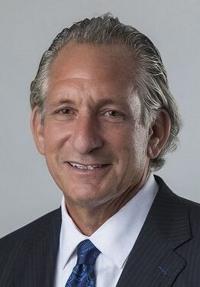
“When patients entrust their lives to a surgical facility, they trust the facility to protect their safety at every state of care and immediate emergency response if something goes wrong,” said Bernie Layne, an attorney for the family. “The allegations in this case, which have been supported by the surgeon who performed Mrs. Tussey’s procedures, alleges a profound breakdown of those basic responsibilities – and that those failures were compounded after the fact by altered and destroyed records.”
Layne, a partner at Mani Ellis & Layne, as well as fellow partners Jonathan Mani and Damon Ellis are representing the family. In addition, L. Dante diTrapano, Timothy Houston and David Carriger with Calwell Luce diTrapano in Charleston are representing the estate as well. Mani Ellis & Layne has offices in Charleston and Columbus, Ohio.

diTrapano
“This is a rare instance where you have the surgeon, who was an eyewitness to the medical malpractice and the botched resuscitation effort, go on the record and tell the truth about the conduct of the anesthesia group and the surgical center that caused the death of our client’s wife,” diTrapano said.
Last month, Dr. Shahryar Tork, the surgeon who performed Tussey’s surgery, filed a lawsuit against JourneyLite and Associated Anesthesiologists. Tork said Tussey was “alert and stable” after the procedure.
“In the post-anesthesia care unit (PACU), JourneyLite’s nursing staff allegedly administered a rapid overdose of opioids (far exceeding what she received during the entire nine-hour surgery), causing respiratory failure, anoxic brain injury, and her death two weeks later in hospice," a spokesperson for Tork said.
Tork is a board-certified plastic surgeon practicing in Cincinnati. He was featured in Tussey’s social media videos ahead of the procedure.
In the complaint, Tork said he was misled about the facility’s capabilities and safety standards and the situation that followed caused “significant reputational and economic harm to his practice.” His complaint alleges “safety issues,” “unqualified” nurses, a failure to follow proper protocol following an overdose and a subsequent “cover-up.”
In addition to medical negligence, the Tussey lawsuit also alleges negligent hiring, retention and supervision, as well as spoliation of evidence, asserting critical medical records and personnel files were altered or destroyed after JourneyLite was on notice of likely litigation.
Tussey’s complaint also says a former JourneyLite anesthesiologist raised concerns about patient safety in 2020 and 2021.
“I could not be confident that the pacu (post-anesthesia care unit) staff could handle airway problems,” the whistleblower wrote, according to Tussey’s complaint. He also said he could not trust “untrained staffing in pre-op and pacu” to “be of help in an emergency situation” because of their “failure(s) of basic nursing practices.”
The whistleblower also said JourneyLite’s staffing model left high-risk patients without an anesthesiologist to cover PACU, expressed other safety concerns to JourneyLite management and said the culture there “views limiting costs as primary.”
The complaint also mentions an earlier procedure there where the patient had an airway obstruction and had to be transported to a hospital because there was no anesthesiologist available at JourneyLite.
The lawsuit also details the day of Tussey’s surgery.
She had been given 100 micrograms of fentanyl and 0.5 micrograms of Dilaudid. She was given 0.5 more miccograms of Dilaudid shortly after surgery when she still was under anesthesia.
Following the nine-hour procedure, Tussey was alert and exhibited stable vital signs when she entered PACU. Five minutes after she arrived in PACU, she was given 50 micrograms of fentanyl. Five minutes later, she was given 50 more micrograms of fentanyl. Half an hour later, at 5:47 p.m., she was given another 0.5 milligrams of Dilaudid.
At 5:55 p.m., Tork received a call from a JourneyLite PACU nurse saying Tussey had become hypoxic and unresponsive. EMS was called. The nurse told Tork she had been given “150 micrograms of fentanyl and 0.5 milligrams of Dilaudid” after Tork left the facility. Tork told the nurse to administer Narcan to Tussey, but she said one dose already had been given. He told the nurse to give Tussey another dose of Narcan.
When Tork arrived, two nurses were treating Tussey. The complaint says Jeremy Tussey noted the bag-valve mask to ventilate Rachel Tussey was not properly sealed, and the nurse wasn’t able to keep Rachel’s head in an upright position. He held her head.
“Tork requested a stethoscope; however, JourneyLite personnel did not have one available,” the complaint states.
EMS arrived soon after, intubating her, initiating CPR and delivering a shock. She was taken to Bethesda North Hospital, where she coded again and was given CPR.
“Although the emergency team was able to restore circulation, Rachel had sustained irreversible injuries,” the complaint states. “The providers at Bethesda North determined that Rachel suffered an anoxic brain injury caused by lack of oxygen to her brain following an opioid overdose and subsequent acute respiratory failure.
“The Bethesda North providers ruled out other causes of Rachel’s death, including causes that can result from surgical complications. …
“Rachel did because two JourneyLite post anesthesia care unit nurses administered 150 micrograms of fentanyl and 0.5 milligrams of Dilaudid within 30 minutes after surgery and failed to appropriate respond when Rachel coded.
“The amount of fentanyl administered postoperatively exceeded the total amount of fentanyl Rachel received during the entirety of her nine-hour surgery. In addition to the fentanyl, Rachel was also administered a total of 1 milligram of Dilaudid within a 37-minute time period.”
It says that “lethal combination and amount” of drugs caused Tussey to experience significant opioid toxicity.
The nurse “administered higher dose ranges of pain medications on overnight shifts in order to keep patients asleep so that she would not have to be bothered attending to patient care – an illicit practice known as ‘snowing’ a patient,” the complaint alleges, adding the nurse, a niece of JourneyLite’s administrator, “had been fired from JourneyLite for incompetence and for not monitoring overnight and post anesthesia care unit patients.” It goes on to say the nurse was rehired and the employee who raised concerns about her was fired.
The complaint goes on to claim JourneyLite tried to cover up its medical malpractice, claiming Tork discovered a “new, detailed and organized nursing note with different writing in Rachel’s chart” and a new order sheet had replaced the original one. The new one, according to the complaint, said Tussey had 50 fewer micrograms of fentanyl than what she actually was given.
Tork says Tussey didn’t receive fentanyl at 5:20 p.m. or 5:25 p.m. according to his records and timeline “because she was just arriving to the PACU” and she had not been placed in her post-operative garment.
“She was calm and talking with the medical team,” the complaint states. “She never complained of ‘8 out of 10’ pain (as the new chart sheet claims) nor was she in any distress that would warrant such a high dosage of opioids.”
In addition to Tussey’s medical record being altered to remove the name of the nurse in question, Tork also claims JourneyLite administrator Lisa Sprong told him “to alter his operative note based on advice from JourneyLite’s ‘liaison.’” But he says he refused to do so.
Tussey remained at Bethesda North until March 7, when she was transferred to hospice. She died 10 days later. On the same day, a JourneyLite employee sent out an email stating it was actively “purging files,” which the complaint claims is evidence of “an intentional, orchestrated campaign to bury the truth about what happened to Rachel Tussey.”
The lawsuit seeks compensatory and punitive damages, attorney fees and other relief.
The individual named defendants are Dr. Trace W. Curry, Dr. Kurtis W. Martin, Sprong, RN Tracy R. Evans, RN Dana K. Miller, Dr. Iwona M. Bielawska, CRNA Caleb M. McGuire and CRNA Alexandra C. McGuire.