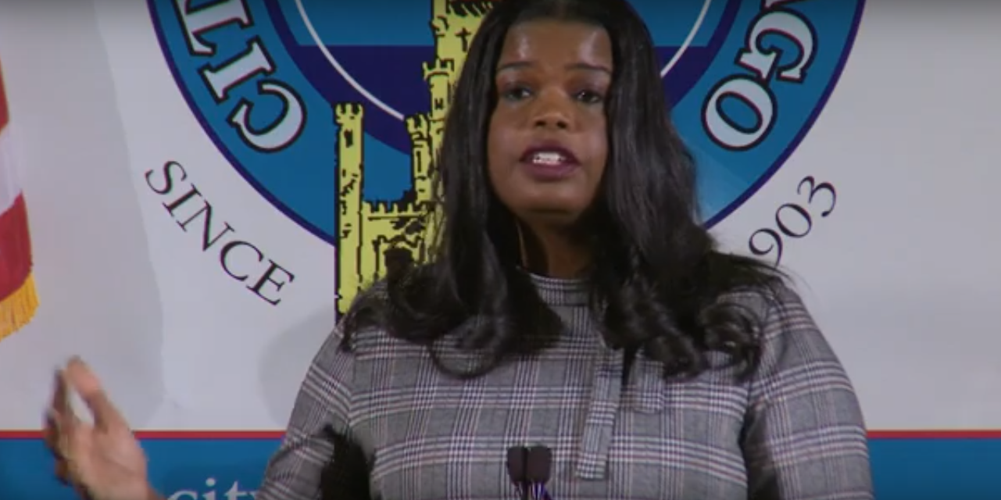


Former Cook County State’s Attorney Kim Foxx
CHICAGO — One of former Cook County State's Attorney Kim Foxx's top deputies will be forced to testify under oath to potentially explain more about how and why Foxx's office decided to allow multiple people convicted of murder and other heinous crimes to sue the city of Chicago for wrongful prosecution, when Foxx admitted under oath that she didn't necessarily believe they were actually innocent.
On Aug. 10, Magistrate Judge Young B. Kim granted the request from lawyers representing the city of Chicago and certain Chicago police officers to depose Risa Lanier, the former First Cook County State's Attorney in Kim Foxx's office.
The ruling came as part of the continuing proceedings in the lawsuits lodged against City Hall and Chicago Police officers by two women who are demanding potentially millions of dollars from the city because they claim they were wrongly coerced into confessing to the murders of two rival gang members in Humboldt Park in 1993.
In those cases, prosecutors and police claimed Marilyn Mulero, then 21 years old, and Madeline Mendoza, then 16, worked with 15-year-old Jacqueline Montanez to shoot and kill Hector Reyes and Jimmy Cruz, allegedly in retaliation for an earlier gang murder.
Mendoza was released from prison in 2009.
Mulero served 28 years in prison. Her sentence was ultimately commuted by Gov. JB Pritzker in 2020.
Both women filed suit in 2023, represented by attorneys known for suing the city of Chicago and other governments on behalf of convicted criminals who later claimed they were framed or otherwise the victims of wrongful prosecutions.
Mendoza and Mulero were aided in their lawsuits by Cook County judges' decisions to award them so-called "certificates of innocence." Those certificates, however, were only granted after Foxx's office conspicuously chose not to object to the women's petitions.
Generally, such certificates of innocence can only be obtained when someone who has been convicted of a crime persuades a judge that they are actually innocent — a legal standard upheld by the Illinois Supreme Court as recently as October 2025.
Typically, such process is adversarial, as prosecutors routinely argue against granting such proclamations to people against whom their offices had earlier secured convictions.
In the cases of both Mulero and Mendoza, however, the Cook County State's Attorney's Office, then under Kim Foxx, told the judge they would not object to the women's innocence petitions.
That decision came at the same time Foxx's office abruptly reversed course on opposing certificate of innocence petitions, particularly from anyone convicted in cases in which former Chicago Police Detective Reynaldo Guevara participated.

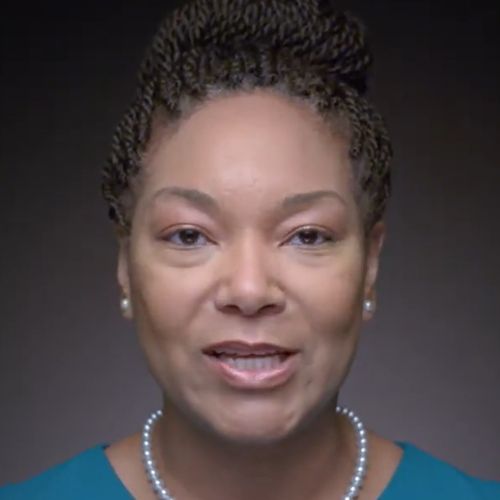
Former First Assistant Cook County State’s Attorney Risa Lanier
Guevara has stood at the center of scores of cases accusing him of wrongful convictions, alleging he improperly coerced confessions and framed those later convicted of crimes, including murder.
To date, published reports have indicated the city of Chicago has paid $142 million to settle 14 lawsuits in which Guevara is linked to alleged wrongful prosecutions for murder.
There are still dozens of lawsuits pending involving misconduct accusations against Guevara, including the cases lodged by Mendoza, Mulero, and two other men in separate proceedings, but which also lie at the heart of the controversy over Foxx's office's handling of proceedings related to certificates of innocence.
Those other men, Mexican nationals Gabriel Solache and Arturo DeLeon-Reyes, have also sued the city, seeking their own million-dollar payout for their alleged wrongful murder conviction.
Solache and DeLeon-Reyes were convicted and sentenced to prison, after they both confessed to assisting in stabbing a Chicago couple to death in their home. Prosecutors said the men allegedly helped kill the couple to help abduct their two children on behalf of a woman, Adriana Mejia, so Mejia could allegedly fulfill her dream of becoming a mother.
Both Solache and DeLeon-Reyes recanted their confessions and accused Chicago police officers of coercing them.
DeLeon-Reyes and Solache were eventually exonerated and freed when Foxx declined in 2017 to pursue new trials against either man. They were later presented with so-called “certificates of innocence” more than five years later by Cook County judges.
The men then swiftly filed lawsuits against the city and the police officers involved.
The same lawyers are representing the city and defendant police officers in the cases involving Solache, DeLeon-Reyes, Mulero and Mendoza.
Those attorneys have told the judges hearing those cases that they believe the cases could turn on better understanding how and why Foxx's office chose to simply stop contesting the claims of innocence by the people convicted of murder, essentially clearing the way for them to sue.
Earlier this year, Judge Kim agreed, granting them permission to question Foxx under oath.
That deposition, conducted under the Mulero/Mendoza case, was conducted in April. It eventually became public as part of the online court record in the Solache/DeLeon-Reyes case, when the defense lawyers asked permission to use it in court as part of their defense.
In that deposition, Foxx admitted under oath that her office chose not to contest the certificates of innocence for Solache and DeLeon-Reyes and other formerly convicted murderers, even though Foxx did not personally believe the evidence indicated they were actually innocent.
Further, Foxx confirmed in the deposition that the decision in 2022 and 2023 to not oppose the certificate of innocence petitions came after high-level meetings with representatives from the Exoneration Project, a Chicago group tied to lawyers who have secured many millions of dollars in payouts from the city on behalf of people who claim they were wrongfully convicted.
While officially a non-profit organization associated with the University of Chicago School of Law, the Exoneration Project is led by lawyers from the Chicago firm of Loevy & Loevy, who are regularly and prominently involved in suing the city of Chicago over alleged wrongful convictions.
The Loevy firm is representing Solache in his lawsuit. They are not representing either Mendoza or Mulero.
However, in her deposition, Foxx testified she did not directly order her prosecutors to drop all opposition certificate of innocence petitions from those formerly convicted of murder or other heinous crimes who wished to sue the city.
Rather, she asserted she had left it up to "the dedicated prosecutors who had been working on these cases" to decide.
However, lawyers for the city have stated that directly contradicts the testimony of prosecutors involved in those cases, who believed they had been all but ordered to stand down amid a blanket policy of allowing those formerly convicted of heinous murders to secure certificates of innocence needed to sue the city for millions.
Following Foxx's deposition, the lawyers for the city and police officers told Judge Kim they believed they still needed to question at least one more person: Foxx's former top deputy, Risa Lanier.
They told the judge Foxx had repeatedly indicated that Lanier was the deputy ultimately responsible for deciding how the Cook County State's Attorney's Office would handle the certificate of innocence petitions.
And they said they believed Lanier may hold the answers they need to finish connecting the dots and develop a more complete picture of the Cook County State's Attorney's decision making in the matters.
They have particularly noted that Lanier was actively involved in the meetings with the Loevy lawyers and the Exoneration Project that preceded Foxx's office's decision to drop opposition to certificate of innocence petitions.
According to Judge Kim's ruling, the request to depose Lanier was not resisted by the Cook County State's Attorney's Office, under current State's Attorney Eileen O'Neill Burke.
Rather, the judge said the deposition request was opposed by attorneys for Mendoza and Mulero. They attempted to shut down the deposition by arguing the deposition of Foxx should have ended the defendants' ability to question representatives of the Cook County State's Attorney's Office.
But Judge Kim disagreed, saying there was no way of knowing that Foxx's testimony would leave so many holes and questions that need to be answered to give the city and the police officers a fair chance to defend themselves in court.
"... The court agrees with Defendants that it seems 'obvious' that Plaintiffs wish to offer evidence at trial regarding their post-conviction proceedings, including the vacating of their convictions and their claims of innocence, and if that is the case, Defendants are entitled to discover the context surrounding those claims," Kim wrote.
"In other words, if Plaintiffs intend to 'flaunt' evidence at trial showing that CCSAO dismissed charges against them or that the state court entered COIs (certificates of innocence) in their favor, Defendants should be permitted to probe the circumstances that led the prosecutor to (drop charges) and not to contest the COIs," the judge said.
Lanier is no longer employed by the Cook County State's Attorney's Office. Lanier departed the office in November 2024, at the same time Foxx stepped down after choosing not to seek reelection.
Lanier is perhaps most famous for heading the prosecution of actor Jussie Smollett, who was accused of faking an assault on himself in Chicago in January 2019 and attempting to blame it on supporters of President Donald Trump. Lanier reportedly cut the infamous plea deal that ultimately allowed Smollett to escape the charges.
Lanier currently serves as vice president of policy and external affairs at the Lawndale Christian Legal Center, an organization that provides free legal representation, including criminal defense, to "juveniles and young adults" under the age of 25.
Their website claims they seek to "address the root causes of justice system involvement."
Lanier lost in the 2024 election as she sought to become a Cook County judge. Her candidacy was criticized by the Illinois State Bar Association, which rated her "not qualified" to serve on the bench. In its evaluation, the ISBA noted concern among a number of Lanier's fellow lawyers that she struggles with "honesty" and "poor decision making skills."
Court records do not state when Lanier may ultimately be questioned under oath in the Mendoza/Mulero case.
The city, Guevara and other defendants are represented by attorney Timothy P. Scahill and others with the firms of Borkan & Scahill; The Sotos Law Firm; and Rock Fusco & Connelly, all of Chicago.