
PORTLAND, Ore. - A federal court has reversed an $8 million judgment against BNSF Railway, holding that the rail carrier is not liable for the deaths of two Libby, Mont., residents allegedly caused by exposure to asbestos that had accumulated in the company’s railyard.
The case, Wells v. BNSF Railway Company, is one in a long line of attempts by the asbestos bar to fix blame for asbestos-related deaths stemming from exposures in Libby. The town of almost 3,000 people is located in the northwestern most part of Montana and about seven miles away from what was once the world's largest mine for vermiculite, a mineral that can contain asbestos.
The U.S. Court of Appeals for the Ninth Circuit ruled last week that the train company required by federal law to transport vermiculite can’t be blamed for any asbestos exposure to Libby residents.
The mine operated between 1922 and 1990, and from 1963 to 1990, W.R. Grace extracted and processed vermiculite, creating a concentrate and leftover waste known as “tailings.” Grace shipped the concentrate and tailings in sealed railcars and certified that the vermiculite shipments were not hazardous, a claim consistent with Montana Department of Environmental Quality findings at the time.
Nevertheless, plaintiffs produced evidence at trial that the raw vermiculate contained up to 26% asbestos, the tailings could contain as much as 80% and, despite sealing the railcars, asbestos was spilled during transportation and switching operations at the BNSF railyard located in Libby.
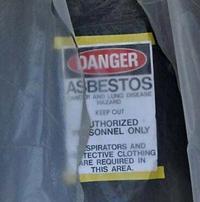
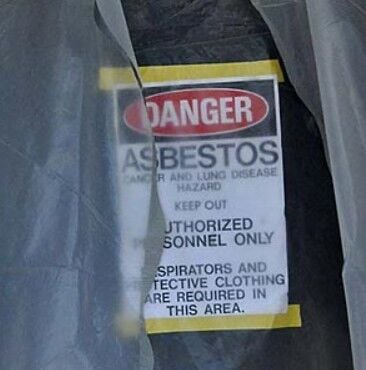
According to plaintiffs, as early as 1977 Grace was posting on at least some railcars a notice that the vermiculite inside contained asbestos.
Plaintiffs’ evidence also showed that Libby residents were exposed to the asbestos as a result of Grace’s storage of the material in the downtown area and its donation of tailings to residents for use in a local baseball field and residents’ homes and lawns.
This case was not filed against Grace, however, as prior asbestos claims had driven it into bankruptcy in 2001, at which time it established a $2.9 billion fund to settle asbestos-related claims.
The mine was closed in 1990 and in 2000, the U.S. Environmental Protection Agency declared it a Superfund under the Comprehensive Environmental Response, Compensation, and Liability Act site and undertook to clean up the asbestos on “a size and cost not previously seen.”
With Grace’s bankruptcy, Libby residents suing over asbestos exposure were left to pursue BNSF, which they did by filing hundreds of lawsuits against the carrier.
The first case to reach trial was filed in 2021 by Thomas Wells, who lived in a trailer home next to the BNSF railyard in Libby for several months during the summer and fall of 1978 and again in the summer of 1981, and Joyce Walder, a resident of Libby from 1954 to 1972 and again from 1976 to 1978.
Wells and Walder were both diagnosed with mesothelioma and died within months of their diagnoses.
Their estates, represented by W. Mark Lanier of The Lanier Law Firm, brought negligence and strict liability claims against BNSF and sought compensatory and punitive damages based on the carrier’s transportation of Grace’s vermiculite and tailings.
After a 10-day trial before U.S. District Judge Brian Morris in Helena, a jury returned a verdict in favor of plaintiffs on the strict liability claim and awarded compensatory damages of $4 million to each plaintiff.
The jury found in BNSF’s favor on the negligence claims and also declined to award punitive damages.
The District Court denied BNSF’s renewed motion for judgment as a matter of law and ruled that, even though it was a common carrier required by federal law to transport Grace’s vermiculite, BNSF was not entitled to the common carrier exception to strict liability because it was not engaged in “public-duty-imposed common carrier activities” when hauling the substance.
BNSF appealed.
In its 3-0 decision reversing the District Court, the Ninth Circuit accepted “that BNSF’s transportation of vermiculite concentrate was an abnormally dangerous activity” subjecting it to strict liability.
It noted, however, that the Montana Supreme Court, in a separate case involving BNSF’s liability related to asbestos, had adopted the Restatement (Second) of Torts § 521, which “bars the imposition of ‘strict liability for abnormally dangerous activities… if the activity is carried on in pursuance of a public duty imposed upon the actor… as a common carrier.’”
At issue here was whether to treat the accumulation of asbestos in BNSF’s railyard as subsumed by its common carrier obligations, and therefore not subject to strict liability, or as the private maintenance duty of a landowner, which would make it strictly liable for dangerous conditions on its property.
The Court found that the asbestos spillage was part and parcel of BNSF’s activities as a common carrier and reasoned that Montana “caselaw strongly supports the conclusion that BNSF is entitled to the protection afforded by the common carrier exception because it is uncontested that the asbestos dust that accumulated in BNSF’s railyard leaked or escaped from rail cars during BNSF’s required transportation of vermiculite concentrate.”
To adopt the plaintiffs’ argument that BNSF should be held strictly liable for “maintaining asbestos on its property,” the Court stated, would convert the claim of strict liability into one of negligence despite the fact the jury had rejected plaintiffs’ negligence claims.
Having found that the Montana Supreme Court already applied the Restatement of Torts common carrier exception to strict liability claims, the Court refused to certify the question of whether that exception includes BNSF’s failure to maintain its railyard.