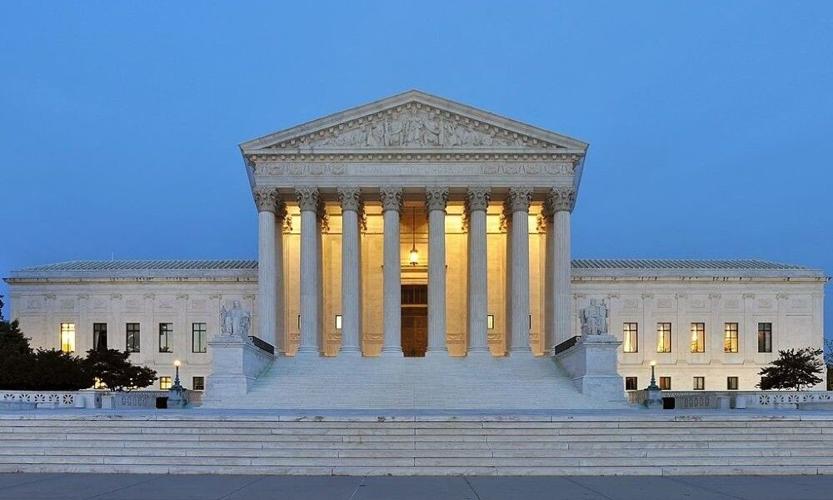

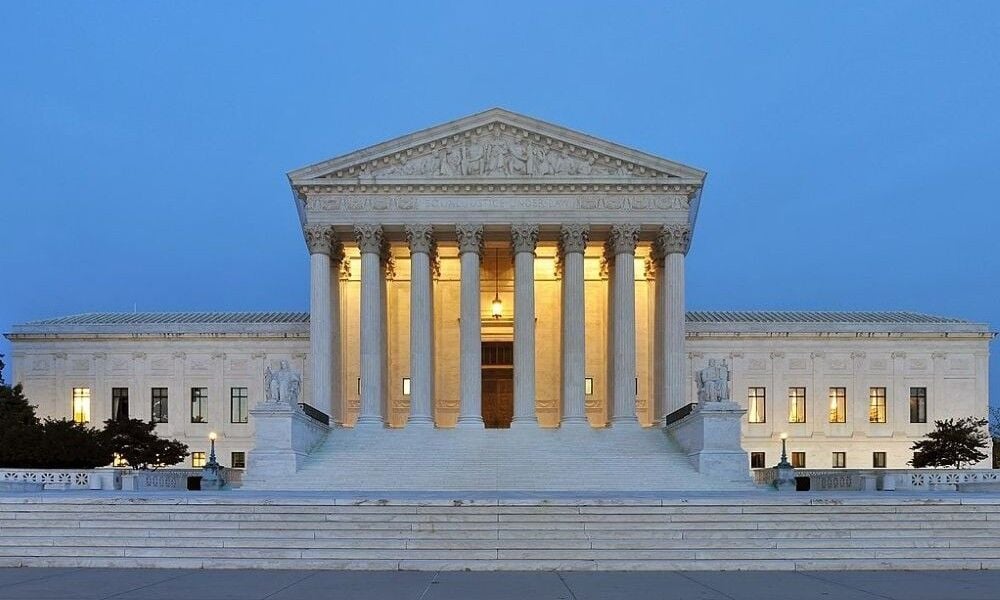
U.S. Supreme Court
WASHINGTON, D.C. — Saying the state of California has almost certainly trampled the constitutional rights of parents to direct the upbringing of their children, the U.S. Supreme Court has reinstated a judge's order blocking California and its public school districts from enforcing policies the judge found illegally keep parents in the dark by withholding information from them should their children begin identifying as transgender.
On March 2, the high court delivered what supporters called a "historic and groundbreaking" legal win for parents in California and elsewhere in the U.S.
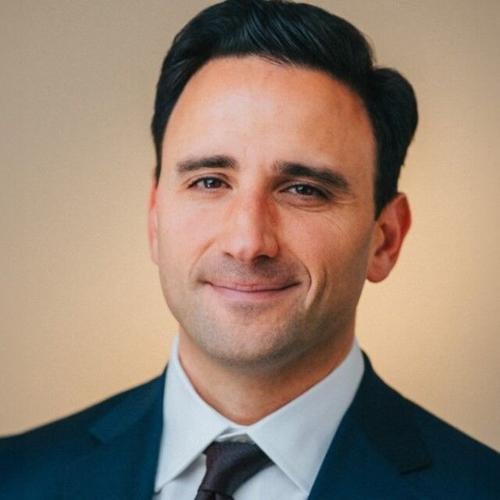
“This is a watershed moment for parental rights in America,” said attorney Paul M. Jonna, with the firm of LiMandri and Jonna. Jonna is working on the case with The Thomas More Society, a religious liberties advocacy organization.
“The Supreme Court has told California and every state in the nation in no uncertain terms: you cannot secretly transition a child behind a parent’s back," Jonna said.
In the 6-3 ruling, all of the court's conservative members joined in an opinion explaining that the state of California is almost certain to lose on the question of whether its educational policies related to student gender information violate parents' religious freedom rights and their rights to so-called "substantive due process."
"The State argues that its policies advance a compelling interest in student safety and privacy. But those policies cut out the primary protectors of children’s best interests: their parents," the court's majority wrote in the primary, unsigned "per curiam" opinion portion of the ruling.
Per curiam is a Latin term meaning "by the court."
"... Under long-established precedent, parents—not the State—have primary authority with respect to 'the upbringing and education of children,'” the majority wrote.
"The right protected by these precedents includes the right not to be shut out of participation in decisions regarding their children’s mental health."

Paul M. Jonna
The 6-3 ruling stands out as a remarkable decision by the high court to step into this particular court fight at this stage of the proceedings. In the vast majority of cases, the Supreme Court opts not to step in on such a so-called "emergency" basis, preferring instead to allow federal district and appeals courts hash out the majority of the legal and constitutional arguments first.
In this case, however, the Supreme Court's majority said they believed allowing the process to play out, perhaps for years, in the lower courts would result in the state being allowed to enforce a policy that the majority would almost certainly eventually strike down as obviously unconstitutional, needlessly harming families in the process.
The Supreme Court's unexpected entry into the fray comes as the latest, and perhaps most consequential, step in the case that has stood at the center of the raging legal and constitutional debate over where to draw the lines between parents' constitutional rights to direct the upbringing of their children and make health care decisions for their children and the authority of the state to protect the so-called "privacy rights" of children, particularly when their children may question their gender or expressly identify as a gender different from their biological sex.
The current case landed in San Diego federal court in 2023, when when two Escondido Union School District public school teachers filed suit challenging California state law and school district policies requiring them to withhold from parents information about their children's gender presentation.
In their lawsuit, the plaintiffs noted California law and school policies "forced teachers to aid in a student's 'social transition' by using any pronouns or a gender-specific name requested by the student during school, while reverting to biological pronouns and legal names when speaking with parents in order to actively hide information about their child's gender identity from them."
If asked by parents directly, they said teachers are required to respond vaguely, mislead or outright lie to parents.
In the years since, parents of San Diego County school children have joined the lawsuit, as well, saying the state law and school policies also violate their constitutional rights to know.
Some parents in the action indicated, for instance, that school officials deceiving parents about their child's gender confusion and about the role school teachers and staff played in helping the child "transition," until the moment the child attempted suicide.
The parents and teachers said the state law and school policies endanger children by intentionally cutting parents off from medically essential information about their children, but also thumb their nose at parents' and teachers' constitutional rights.
In response, the state defended the policies, saying they were based on students' privacy rights. They asserted they were needed to protect transgender children against potential abuse at home and bullying at school and elsewhere.
U.S. District Judge Roger Benitez sided almost completely with the parents and teachers, explicitly declaring public schools cannot withhold from parents or otherwise mislead parents about their students' gender expression or status at school. He said any state law or local policies that interfere with parents' right to know violates their rights under the Fourteenth Amendment and First Amendment of the U.S. Constitution.
The judge also ruled the state can't prevent teachers and school staff from telling parents about their children's gender expressions or status, without similarly violating the teachers' and staff members' First Amendment rights.
In the ruling, delivered just before Christmas 2025, Benitez blasted California officials for repeatedly asserting the guarantees of privacy rights for students under California's state constitution and state law outweighs the rights of parents under the U.S. Constitution to know medically, psychologically and religiously significant information about their children, as well as the parents’ rights to direct the religious upbringing of their children.
The judge issued a statewide permanent injunction against the state of California and any public school districts that would seek to continue the policies. The ruling was on behalf of a class of all parents of public school students and public school teachers throughout California.
California Attorney General Rob Bonta appealed immediately, however, asserting the ruling would create chaos and uncertainty within the schools and harm transgender students.
The state found a more welcoming reception at the Ninth Circuit, where a three-judge panel, led by Ninth Circuit Chief Judge Mary Murguia and two other judges appointed by Democratic presidents, blocked Benitez's ruling and reinstated the California state policies while the case played out.
The Ninth Circuit judges said they believed Benitez's ruling went too far and was not "narrowly tailored" enough to address the potential "harm" that the ruling could inflict on the state of California by blocking California's ruling Democratic supermajority from imposing its preferred state laws and policies.
The judges said they also said they believed Benitez's findings affirming the rights of parents and teachers to be superior to California state law to be constitutionally unsound, because they doubted teachers and parents could show they have been harmed by the state law and education policies.
The judges further said they believed Benitez's ruling was based on an incorrect reading of the facts in the case, as well. The judges sided entirely with the state, saying it is enough that state policies don't "categorically forbid" public school teachers from telling parents "information about students' gender identities ... without student consent."
And the appellate judges brushed aside Benitez's findings that the state law and policies interfere with parents' First Amendment religious liberty rights to direct the religious upbringing of their children and with teachers' First Amendment rights to speak freely.
They particularly noted a belief that Benitez had misinterpreted and overextended the U.S. Supreme Court's 2025 decision in Mahmoud v Taylor. In that ruling, the Supreme Court had ruled a public school district infringed on the religious rights of parents by not allowing parents to opt their children out of school activities in which school officials explicitly promote and incorporate pro-LGBTQ content into curriculum, lessons or special school assemblies or events.
Judge Benitez extended that holding to the new case, saying California gender disclosure policies "impose a similar, if not greater, burden on free exercise” than the policies struck down by the Supreme Court in Mahmoud.
The Ninth Circuit judges, however, said they interpreted Mahmoud v Taylor more narrowly, because they said the decision was solely focused on "coercive curricular requirements," and not parents' rights to information.
In the new Supreme Court decision, however, the conservative majority explicitly declared that it was Benitez who was almost certainly correct on that question.
"Indeed, the intrusion on parents’ free exercise rights here — unconsented facilitation of a child’s gender transition — is greater than the introduction of LGBTQ storybooks we considered sufficient to trigger strict scrutiny in Mahmoud," the Supreme Court majority wrote in its per curiam opinion.
The majority decision reinstated Benitez's opinion as it applied to parents and their rights.

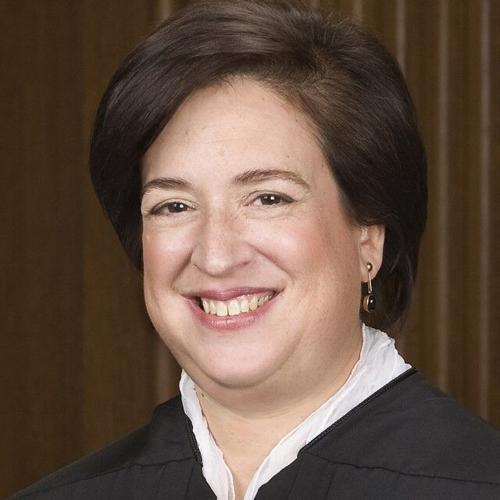
U.S. Supreme Court Justice Elena Kagan
The Supreme Court's three liberal justices, Elena Kagan, Ketanji Brown Jackson and Sonia Sotomayor, dissented in the ruling.
Sotomayor did not explain her dissent.
However, in a dissenting opinion, Kagan and Brown Jackson criticized the majority for stepping into the case at this stage. They asserted the high court should have allowed California to keep its policies in place, no matter how many years it took for the lower courts to eventually allow the case to reach a point for a traditional appeal to the Supreme Court.
They further criticized their conservative colleagues for what they saw as hypocrisy on the question of so-called "substantive due process" on the question of parental rights. Kagan compared the court's decision to uphold the rights of parents, which she noted are not explicitly declared in the U.S. Constitution, to federal abortion rights, which the majority struck down, in part, because the Constitution did not explicitly declare such a constitutional right.
In the decision known as Dobbs v Jackson Women's Health Organization, the majority again allowed states to regulate and ban abortion.
"... I have no doubt that parents have rights, even though unenumerated, concerning their children and the life choices they make," Kagan wrote. "On the other side of ledger, of course, a State has critical interests in the care and education of children.
"But California’s policy, in depriving all parents of information critical to their children’s health and well-being, could have crossed the constitutional line."
However, she said, the court "owes it to a sovereign State (California) to avoid throwing over its policies in a slapdash way, if the Court can provide normal procedures. And throwing over a State’s policy is what the Court does today," Kagan wrote.
U.S. Supreme Court Justice Amy Coney Barrett, however, included a special concurring opinion pushing back on Kagan's assertions concerning the comparison between parental rights and abortion rights.
Joined by Chief Justice John Roberts and Justice Brett Kavanaugh, Barrett said parents' rights, unlike abortion rights, are both "deeply rooted in this Nation's history and tradition" and "implicit in the concept of ordered liberty."
In her opinion, Barrett specifically noted that "one set of parents" in the lawsuit "learned about their child's transition at school only after the child attempted suicide."
"Strikingly, even after this tragic event, school administrators continued to withhold information about the student’s gender identification. California’s nondisclosure policy thus quite obviously excludes parents from highly important decisions about their child’s mental health, and is unlikely to satisfy heightened scrutiny.
"Our resolution of the parents’ likelihood of success on this claim is dictated by existing law."
At the Supreme Court, the parents' petition for emergency relief was backed by briefs filed by a host of other organizations, including other religious liberty and civil liberty advocates and the states of Florida, Montana and West Virginia, among others.
Following the Supreme Court's decision, one of those religious liberty groups, the Becket Fund for Religious Liberty, through its president and CEO Mark Rienzi, released the following statement:
“Parents’ fundamental right to raise their children according to their faith doesn’t stop at the schoolhouse door. California tried cutting parents out of their children’s lives while forcing teachers to hide the school’s behavior from parents. We’re glad the Court stepped in to block this anti-family, anti-American policy.
"This is a victory for parental rights, religious freedom, and common sense. Once again, the Supreme Court has made clear that parents do not take a backseat to anyone when it comes to raising their kids, especially not government bureaucrats.”