

ATLANTA – A federal appeals court has thrown out a more than $12 million judgment against Carnival and ordered a new trial on a cruise passenger’s claims she was falsely imprisoned and sexually assaulted by a crew member.
In its August 25 opinion, the unanimous three-judge panel of the 11th U.S. Circuit Court of Appeals found a trial judge improperly kept jurors from considering an FBI agent’s conclusion that the encounter was consensual.
The panel also ruled the Miami federal court erred by deciding before trial that Carnival was liable for falsely imprisoning the woman, identified in court papers as Jane Doe. The ruling removed a key factual question from jurors and may have affected their consideration of the sexual-assault claim, the court said.
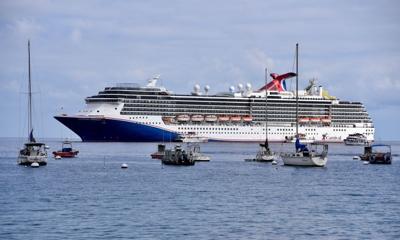
Doe, then 21, was aboard the Carnival Miracle in December 2018 when she said a ship janitor, Fredy Anggara, pulled her into a storage closet and raped her after she became heavily intoxicated and hit her head on the pool deck, according to the appellate ruling.
The encounter occurred during a game of hide-and-seek, and Doe later sued Carnival, alleging false imprisonment, sexual assault, negligent hiring and supervision, and intentional infliction of emotional distress. Anggara, who was fired by Carnival, was not named as a defendant.
The cruise line disputed Doe’s account. FBI agents who investigated the incident shortly after it occurred interviewed both Doe and Anggara. The FBI report concluded that the encounter was consensual, according to the appellate court. Federal prosecutors did not bring criminal charges against Anggara.
Before trial, a magistrate judge concluded there was no evidence from which jurors could reject Doe’s account that Anggara did not let her leave the closet after she tried to do so. The district judge adopted that recommendation and granted Doe partial summary judgment on liability for false imprisonment.
The 11th Circuit reversed that ruling, saying the FBI report created a factual dispute over whether Doe was restrained against her will. The appellate court said a jury, rather than the judge, should decide whether the detention was consensual.
“Such an instruction could lead a jury to infer that the sexual conduct was similarly against her will,” Judge Barbara Lagoa wrote for the panel.
The court also found the trial judge wrongly excluded the FBI report’s conclusion from evidence. While the report contained statements that could present hearsay issues, the court said the special agent’s own conclusion from a legally authorized investigation qualified under the public-records exception to the hearsay rule unless Doe established it was untrustworthy.
Doe had argued the FBI investigation was incomplete because the agent did not review ship security video or a written statement Doe gave Carnival. But the panel said Doe had not met her burden to show the agent’s conclusion could not be trusted.
“Doe suggests that the conclusions were untrustworthy because SA Andreasen’s investigation deviated from how Doe herself would have investigated the incident,” Lagoa wrote.
A jury had awarded Doe $10.3 million in damages, and, with interest, the judgment exceeded $12 million. The jury found Carnival liable on the claims tied to Anggara’s conduct but found for the company on Doe’s claims of negligence and intentional infliction of emotional distress.
The appeals court vacated the judgment on the false imprisonment and sexual assault claims and sent the case back to the U.S. District Court for the Southern District of Florida for a new trial on those claims only.
Because Doe did not appeal the jury’s defense verdicts on negligence and intentional infliction of emotional distress, those claims will not be retried.
Lagoa was joined by Judges Kevin Newsom and Embry Kidd.
U.S. Circuit Court of Appeals for the 11th Circuit case number 24-13159