

Tom Gaitens
Florida ranked fifth in the nation last year in “nuclear” verdicts – damages awards exceeding $10 million – despite the recent passage of tort reforms, including the elimination of one-way attorney fees in insurance claims and limits on medical damages.
Even though such significant legal reforms were enacted in 2023, Florida’s nuclear verdict ranking went from No. 10 among the 50 states in 2024 to No. 5 last year, according to a new study by the legal research and communications company Marathon Strategies. Florida’s 20 payouts of eight figures or more, which affected industries such as banking and hospitality, included three verdicts exceeding $100 million. Among them was an $833 million verdict against Wells Fargo and a $779 million wrongful-death verdict against an internet cafe.
“Even without these outlier cases, Florida still would have ranked in the top 10 states,” the Marathon Strategies report said.
Florida’s payouts last year followed a nationwide trend of rising nuclear verdicts, including a 40.7% increase that took place from 2024 to 2025, the study said. Florida’s nuclear verdict total last year amounted to more than $2.5 billion, while the sum of No. 1 Georgia’s nuclear verdicts was nearly $4.9 billion.
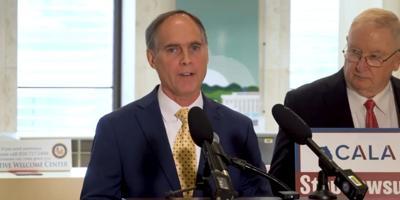
Tom Gaitens, executive director of Florida Citizens Against Lawsuit Abuse (CALA), said that in the wake of the Florida Legislature’s passage of legal reforms three years ago, the trial bar has sought out more lucrative areas of the law to exploit.
“The major issues facing Florida and its spike in nuclear verdicts are not easily solved,” Gaitens told the Florida Record in an email. “Public opinion has been influenced over time and has vilified corporate America. Juries in Florida have been skewed toward urban populations that have been saturated with anti-corporate tropes and bias.”
Plaintiffs’ attorneys have worked to turn the court system into a “Robinhood tool” that extracts large damages awards for clients, according to Gaitens.
“The failed tenure of former Speaker (Daniel) Perez lost an important and valuable two years of time to address these existing loopholes, like third-party litigation funding, for instance,” he said. “This, coupled with rising cost of living and a coordinated plaintiffs' bar, was a toxic mix enabling nuclear verdicts.”
Trial attorneys have worked hard to identify a combination of markets, jury pools and industries to produce predictable legal outcomes, according to Gaitens.
“The unique Florida market has impacted the jury psychology to favor the little guy, with continued media layering to punish the corporate entities,” he said.
The state Legislature needs to investigate how trial attorneys’ use of noneconomic damages and punitive damages tends to bypass statutory caps on jury awards, Gaitens added.
Among the notable Florida nuclear verdicts in 2025 was one that came out of Miami, where a jury concluded Tesla was partly at fault for a fatal 2019 vehicle crash involving its Autopilot driving system, according to the study.
“Without question, these cases should underscore for policymakers and businesses alike the volatility of nuclear verdicts: It only takes two or three verdicts to have a severe impact on a state,” the report stated.
In addition, the U.S. District Court for the Southern District of Florida had the highest sum of nuclear verdicts in 2025 among all federal courts, at $303 million, according to Marathon Strategies.
Gaitens said Florida must be constantly vigilant in mitigating legal system abuses.
“Fighting the trial lobby can be seen by Florida homeowners like the battle many of us have trying to stop ants from getting into our homes,” he said. “There is always another access point they can find, given enough time.”