
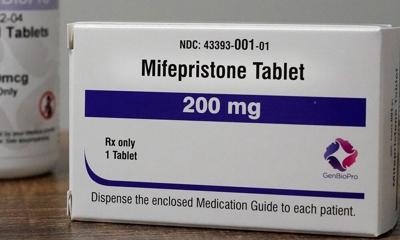


NEW ORLEANS — A federal appeals court panel appeared skeptical of Louisiana’s effort to end nationwide telehealth prescribing and mail delivery of the abortion drug mifepristone, pressing the state on whether it has the legal right to challenge the federal policy.
During about 100 minutes of arguments September 9, a three-judge panel of the New Orleans-based 5th U.S. Circuit Court of Appeals focused heavily on Louisiana’s standing – whether the state can show that the Food and Drug Administration’s 2023 rule directly harms it. The court did not rule from the bench.
Louisiana, which has a near-total abortion ban, sued the FDA last year over the agency’s decision to remove the requirement that mifepristone be dispensed in person at a medical facility. The 2023 policy allows certified providers to prescribe the drug through telemedicine and allows it to be sent by mail.
Louisiana Solicitor General Ben Aguinaga told the panel the policy frustrates Louisiana’s abortion ban by enabling medication abortions within the state.
“There’s no dispute that Louisiana is experiencing 1,000 abortions a month due to mifepristone mailed into the state,” Aguinaga said.
The state has argued the FDA failed to adequately account for serious complications, including sepsis and hemorrhaging, and that the rule unlawfully overrides the state’s authority to enforce its abortion prohibition. Louisiana is joined by a resident who says she was coerced by a former boyfriend into taking abortion pills.
A ruling for Louisiana could reinstate an in-person dispensing requirement nationwide, affecting patients even in states where abortion remains legal. Mifepristone is used in a two-drug medication-abortion regimen, followed by misoprostol; medication abortion accounts for more than 60% of abortions in the United States, according to the Guttmacher Institute.
Judges Stephen Higginson and Dana Douglas questioned whether Louisiana had tied the abortions it attributes to mailed mifepristone directly enough to the FDA rule, rather than to decisions by patients, providers, prescribers and others.
“There are too many independent actors to say that actually the government’s assessment of safety is what’s causing your 1,000 abortions a month,” Higginson said.
Judge Priscilla Richman also questioned the factual premise of Louisiana’s claim, telling Aguinaga that she had trouble finding support in the record for the proposition that the FDA authorized mailing the drug into states where it is unlawful to do so.
The standing issue is central because the U.S. Supreme Court in 2024 unanimously rejected an earlier challenge by anti-abortion doctors and groups seeking to roll back FDA actions easing access to mifepristone. The justices ruled those plaintiffs lacked standing to sue.
The Justice Department argued that the case should not proceed on the merits because Louisiana has not established standing. DOJ lawyer Daniel Winik told the court that an ongoing FDA review, rather than judicial intervention, should address disputes about mifepristone’s safety and regulation.
“The whole point of our position in this case is that it’s the FDA’s job in the ongoing consideration of mifepristone to address all of these issues,” Winik said.
Lawyers for GenBioPro and Danco Laboratories, manufacturers of mifepristone, defended the FDA’s 2023 action.
“The FDA’s decision was richly supported,” GenBioPro lawyer John Elwood told the court.
The FDA, which approved mifepristone in 2000, has described the drug as safe and effective and said periodic reviews have not identified new safety concerns. The Trump administration has said its separate safety review remains underway.
The hearing was the latest stage of a broader national legal fight over abortion medication after the Supreme Court’s 2022 decision overturning Roe v. Wade. Similar challenges are pending in Missouri and Texas.
The 5th Circuit earlier this year granted Louisiana temporary relief that would have blocked telehealth prescribing and mail distribution, but the Supreme Court put that order on hold in May. As a result, the existing FDA rules remain in effect while the litigation continues. And any 5th Circuit ruling is likely to be appealed, either to the full appeals court or to the Supreme Court.

