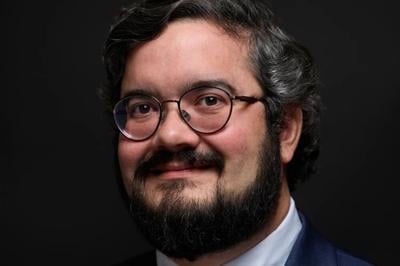



Mike Fragoso of Torridon Law
The resolution of scores of coastal erosion lawsuits brought by Louisiana parishes against energy companies remains “gratuitously complicated” in spite of a recent U.S. Supreme Court ruling facilitating the removal of such cases to federal courts.
That was one of the takeaways made by panelists who have been following the case of Chevron v. Plaquemines Parish, which the high court issued in April. The panelists took part in a June 8 webinar organized by the George Mason University Law & Economics Center's Civil Justice Academy in Virginia.
The webinar, which didn’t include any plaintiff attorneys or supporters of the parish lawsuits, sought to examine the fallout from the Supreme Court decision authored by Justice Clarence Thomas.
Panelist Mike Fragoso, a partner with Torridon Law PLLC in Washington, D.C., said the more than 40 coastal erosion lawsuits will now need to be analyzed to see if they fall within the scope of the Plaquemines opinion and can be adjudicated in federal courts. The cases will be examined by federal district courts – operating at different speeds with different judges applying different approaches – to verify the appropriate venues, according to Fragoso.
“It’s going to be a white until we know much of anything,” he said.
The Supreme Court ruling held in the Plaquemines case that Chevron had established a nexus between its crude oil production activities in coastal Louisiana during World War II and an aviation gasoline contract the company had with the U.S. military at the time. Due to the connection between oil production and the refining of aviation gas, Chevron has the right to remove the case from state court to federal court under the federal officer removal statute, the court held.
“We thus decide only whether this suit, which implicates Chevron’s wartime production of crude oil, ‘relat[es] to’ Chevron’s wartime aviation-gasoline refining for the military,” the 8-0 court ruling states. “We hold that it does.”
Prior to the U.S. Supreme Court decision, the Plaquemines case was litigated in state court, leading to a $745 million judgment against Chevron for coastal degradation that allegedly occurred as a result of oil-drilling activities during past decades. But the high court’s decision effectively nullifies that judgement, though the court did not weigh in on the merits of the parish’s claims.
The decision gives the parties some needed tools to resolve “this broader Louisiana coastal lawfare issue,” Fragoso said.
The parishes’ lawsuits, some of which were initiated more than a decade ago, rely on provisions of the State and Local Coastal Resources Management Act, which was enacted in 1978. That law bars oil production in coastal zones without legally obtained permits. The parties continue to debate whether it’s legal to establish retroactive liability in these cases.
Michael R. Williams, solicitor general for the West Virginia Attorney General’s Office, said the high court’s ruling helped to shore up the argument that federal issues, such as those which involve the nation’s energy policies, should be resolved in federal courts. Energy companies have said they tend to get a better shake in the federal system.
But myriad issues remain outstanding, including those related to the merits of the parishes’ cases and liability matters, Williams said.
Simone Maloz, campaign director for Restore the Mississippi River Delta, said money and resources need to go toward Louisiana’s science-based Coastal Master Plan in order to deal with coastal erosion issues. The solutions include sediment-diversion projects to counter previous land loss in the Louisiana Delta, Maloz said, but the focus on litigation deflects from the other avenues available to resolve coastal erosion issues.
Melissa Landry, director of the Pelican Center for Energy, said the parish lawsuits have created a more hostile business climate in Louisiana, to the tune of fewer wells being drilled and $44 million to $113 million in annual economic losses.
Every dollar invested in the litigation could be going to coastal restoration efforts, according to Landry.
“Courtroom battles do not protect our coastal lands,” she said.