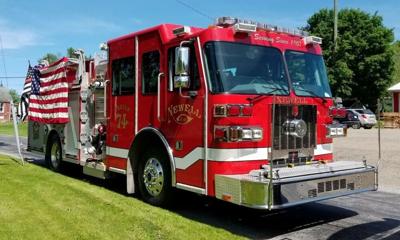


NEW CUMBERLAND – A judge has dismissed a lawsuit brought by two longtime members of the Newell Volunteer Fire Department who claimed they were wrongfully ousted from the organization and locked out of its property.
In a final order entered August 3, Hancock Circuit Judge Joseph E. Barki III denied a petition for declaratory judgment filed by brothers Michael and Mitchell Nixon, who alleged their removal from the NVFD was “fraudulent” and “not in the best interest of the group or the greater community.”
The Nixons had asked the court to reinstate them as members, void all votes taken by the department since their removal and award fees. Barki denied the petition and dismissed the case with prejudice, meaning it cannot be refiled.
Barki ruled the brothers failed to identify any legal basis for the relief they sought, beyond the department’s internal bylaws. While all sides agreed those bylaws govern membership matters, the judge said they do not state they are enforceable in court and he would not “read into the bylaws a remedy that they do not provide.”
The case, filed in October 2025, stemmed from what Barki described as a series of disputes between the Nixons and department leadership over “relatively low-to-moderate” issues, including food service and purchasing, scheduling of community events, access to department property and how the bylaws should be interpreted and applied.
According to testimony from Board President Seth Cheuvront and other NVFD officers, the brothers became increasingly “contumacious” toward leadership, to the point that the department found it difficult to operate. Contumacious means stubbornly and willfully disobedient or rebellious against authority. It is most often used in legal contexts to describe someone who actively defies a court order or refuses to cooperate with judicial authority.
Cheuvront and other witnesses testified that even in the immediate aftermath of fire calls, the Nixons would attempt to call meetings of the entire department, intimidate members from participating and then conduct votes with no one present but the two brothers, later insisting those votes were binding on the organization. The Nixons maintained a
At the July 20 final hearing, the Nixons maintained that their actions, including treating themselves as a quorum able to bind the NVFD “as to any matter,” were authorized by the bylaws and that the bylaws were “the last word on all matters related to the NVFD,” the order says.
Barki said the brothers’ best argument for relief was their claim they were not allowed to attend the meeting where their removal was finalized. But he rejected that claim on three grounds: the bylaws do not specifically guarantee a right to attend such a meeting, the Nixons made no showing they were entitled to constitutional due process in the internal dispute and the court credited testimony that the brothers had disrupted meetings they attended “to the point that the meetings could not function.”
Barki also found no support for the Nixons’ allegation that their removal was fraudulent.
“The Court specifically finds that there was no evidence whatsoever of fraud,” Barki wrote, characterizing their arguments about the bylaws as “at best, tedious and far-fetched.”
During discovery, the brothers directed the lawyer representing the fire department to take certain actions, contending that only they had authority to act for the NVFD even after they were removed. In the order, Barki said they “purported to vote themselves control of the NVFD in sham meetings, fil(ed) this lawsuit, and even (sought) to control both sides of this case through their purported take-over of the NVFD.”
The only case the Nixons cited, a 1969 West Virginia Supreme Court decision involving a county employee’s statutory rights, did not apply because the NVFD “is not a creature of statute,” Barki said. The brothers offered neither legal authority nor evidence showing they had a right to their positions as volunteer firefighters or that the department could not terminate their membership.
Although he rejected their claims, Barki noted the Nixons’ decades-long service and said their presentation suggested they were acting in good faith, sincerely believing in their positions. The bylaws require a one-year waiting period before removed members may seek reinstatement, the order notes.
“The service of volunteer firemen is deeply important to the community, and such service is equally important to citizens who are devoted enough to provide it,” Barki wrote, adding that all veterans of the NVFD who took part in the hearing “deserve the honor and respect that the sacrifice of service calls for from the community.”
Barki also expressed hope that “cooler heads can prevail and amends can be made for the series of unfortunate disputes that gave rise to this case.”
NVFD and Cheuvront were represented by Teresa Toriseva and Joshua Miller of Toriseva Law in Wheeling.
Hancock Circuit Court case number 25-C-113