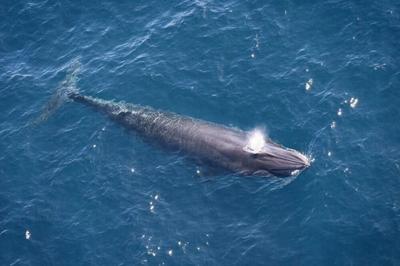


The endangered Rice’s whale population in the Gulf of Mexico is believed to be around 52. (Photo by Paul Nagelkirk)
A Trump administration panel decided Tuesday to exempt all oil and gas operations in the Gulf of Mexico from the provisions of the Endangered Species Act (ESA) on the grounds that such energy extraction activities are tied to national security.
The Endangered Species Committee, whose members include the secretaries of the Interior, Agriculture and Army, as well as several federal agency administrators, voted unanimously to approve the exemption, the first one issued during the more than 50 years the law has been on the books.
Environmental groups criticized the decision as unprecedented, amoral and lacking in justification, arguing that it would likely consign the endangered Rice’s whale, sea turtles, rays and corals to extinction. The Center for Biodiversity had filed a lawsuit in the District of Columbia to block the action, but a judge rejected the center’s motion for a temporary restraining order.
In the wake of Tuesday’s meeting, U.S. Secretary of the Interior Doug Burgum stressed that sustained U.S. oil and gas production is key to both national security and economic stability, but he also cautioned that such vital activities must not be under the threat of disruptive litigation.
“This meeting made clear that energy streams in the Gulf of America must not be disrupted or held hostage by ongoing litigation,” Burgum said in a prepared statement. “Energy production in the Gulf of America is indispensable to our nation’s strength, safeguarding our energy independence and preventing reliance on foreign adversaries. Robust development in the Gulf keeps our economy resilient, stabilizes costs for American families and secures the U.S. as a global leader for decades to come.”
The executive director of New Orleans-based Healthy Gulf said the move is unjustified.
“In the nearly 50 years that a national security exemption has existed under the Endangered Species Act, it has never been claimed despite U.S. involvement in much larger and more lengthy wars and the terrorist attacks of Sept. 11, 2001,” Martha Collins said in a statement emailed to The Record prior to the vote. “These large, profitable oil and gas corporations have been required to protect endangered wildlife during previous U.S. military actions – they can do the same today and into the future.”
The Center for Biological Diversity, meanwhile, has filed an amended lawsuit challenging the panel’s vote, which followed only 32 minutes of discussion, the center reported. Secretary of Defense Pete Hegseth advocated for the meeting based on national security concerns about the impact of ESA provisions on oil and gas companies operating in the Gulf.
No federal agency or energy company formally requested the panel to grant the exemption, the center reported, adding that the vote overrules a National Marine Fisheries Service rule requiring that energy industry ships travel at safe speeds in the eastern part of the Gulf and monitor whale locations to avoid lethal collisions.
Only about 51 members of the Rice’s whale species exist today, according to the Center for Biological Diversity.
“This amoral action by Pete Hegseth and Trump’s cronies is as horrific as it is illegal, and we’ll overturn it in court,” Brett Hartl, the center’s government affairs director, said in a statement. “Americans overwhelmingly oppose sacrificing endangered whales and other marine life so the fossil fuel industry can get richer. …”
Last year, the Trump administration proposed opening sections of the eastern Gulf to oil and gas drilling, including areas off southwest Florida, which could threaten the Florida Everglades in the event of an oil spill, the center said in its initial lawsuit challenging the Endangered Species Committee meeting.