
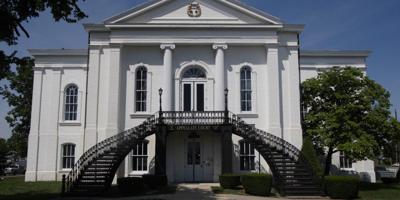



Illinois Fifth District Appellate Court, Mount Vernon
MOUNT VERNON — A state appeals panel has idled a lawsuit from an insurance company that claims it’s not obligated to help a St. Clair County school district in its defense against litigation stemming from a late-1970s sexual abuse allegation.
The underlying litigation is a July 2021 claim from an unnamed man against Freeburg District 70 and Lawrence Meggs, a former superintendent. That lawsuit alleges sexual abuse at Barton Elementary School, on the part of a school employee, starting in about 1977; the unnamed litigant “John Doe 5” said he attended the school from 1972-1981.
Meggs and the district asked Country Mutual Insurance to pay the costs of defending the case, which it agreed to do in February 2022. However, five weeks later, Country Mutual sought judgment against Meggs and the district, claiming it wasn’t obligated to indemnify the parties based on possessing “no definitive records” of a policy covering the years in question.
In May 2025, St. Clair County Circuit Court Judge Stacy Campbell agreed to stay Country Mutual’s claims pending the resolution of the underlying litigation. That led to an interlocutory appeal before the Illinois Fifth District Appellate Court.
Justice Judy Lynn Cates wrote the panel’s decision, filed May 22; Justices Barry Vaughan and Amy Sholar concurred. The ruling was issued as an unpublished order under Supreme Court Rule 23, which may restrict its use as precedent.
Country Mutual argued Judge Campbell erred by concluding the insurer had “only reserved its right to challenge the duty to indemnify,” Cates wrote, because the company did provide a defense while also litigating coverage obligations. It also maintained the resolution of Doe’s complaint was immaterial to the indemnity issue.
“At the time the motion to stay was heard, the declaratory judgment action had been pending for more than three years,” Cates wrote. “In that three-year period, the declaratory judgment action was essentially stayed by agreement, with little activity beyond a status conference and no substantive rulings by the circuit court.”
That changed in February 2025 when Country Mutual opened discovery. The panel noted the company wanted a judge to declare “defendants” had no rights under any policy and requested discovery to incorporate “all documents and information concerning the underlying complaint filed by Doe 5,” Cates wrote. “This is significant because Doe 5 is a named defendant and necessary party in the present action, yet he was never served with a summons and a copy of the complaint for declaratory relief.”
The panel said Judge Campbell recognized Doe’s role as a necessary party to the litigation as well as “an injured party who has a substantial right in the viability of the insurance policy and the coverage,” Cates wrote. “(Campbell) recognized that Doe 5 must be given an opportunity to litigate the questions regarding coverage under the relevant Country Mutual liability insurance policies before his beneficial interest may be terminated.”
That alone was enough to find Campbell didn’t abuse her discretion, the panel said, but that was not the only valid reason it identified to affirm her ruling to stay the proceedings.
“In its complaint for declaratory relief, Country Mutual challenged both the duty to defend and the duty to indemnify its insureds in the underlying tort case,” Cates wrote. “In opposing the insureds’ motion to stay, Country Mutual seemed to acknowledge that the indemnity question would not become ripe for adjudication until its insureds’ liability was determined in the underlying action.”
The panel said Country Mutual focused on whether it was obligated to provide defense at all, saying the question didn’t rely on whether Doe prevailed at trial. Cates explained courts typically compare allegations to relevant policy provisions, but said in the case of Doe’s allegations “the dates and nature of the abuse have yet to be clearly defined.”
Cates also wrote there are factual questions regarding when Meggs or the district knew of prior misconduct allegations involving the employee Doe named and how they responded to any such information. The panel further said “there are genuine factual questions about the existence of insurance coverage for the occurrences at issue, the effective dates of coverage, and the timeliness of the notification of the occurrences to Country Mutual. The resolution of these coverage questions rests, in part, upon factual issues that have yet to be developed and determined in the underlying case.”
Finally, the panel said Judge Campbell didn’t make a final decision on whether Country Mutual waived or reserved any rights. Although it acknowledged she might have made confusing comments, the panel said the remarks “could not be construed as a substantive ruling.”