
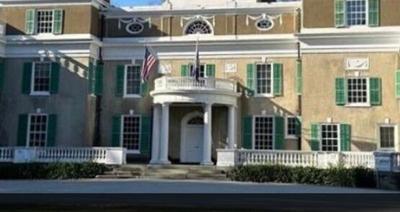


Home of Franklin D. Roosevelt National Historic Site
WASHINGTON – Americans only carrying paper money to national parks got bad news Wednesday when a federal judge tossed a lawsuit over cashless parks.
Toby Stover sued the National Parks Service last year in D.C. federal court after being unable to pay an entrance fee to the Home of Franklin D. Roosevelt National Historic Site, but federal judge Timothy Kelly decided she lacked standing to bring the suit.
She tried to pay with a $10 bill but was told the site only accepted electronic payment. She sought an order declaring the cashless policy unlawful.
“(T)o the extent she alleges that she has been harmed in the past – the NPS deprived her of her purported right to pay in cash when she sought to visit Hyde Park in January 2024 – those allegations are insufficient,” Kelly wrote.
“They do not allege that she ‘is suffering an ongoing injury or faces an immediate threat of injury.’”
The claim that she still wants to visit Hyde Park isn’t enough to establish standing, the judge added.
Stover was the last remaining plaintiff out of three who originally sued. They complained the NPS implemented and expanded a cashless entrance-fee payment scheme at dozens of historic sites around the country that left them unable to visit.
Citing U.S. Code, cash is legal tender for "all public charges," they said. "Thus," they added, "NPS' refusal to accept U.S. currency tendered for entrance fees constitutes a clear violation of federal law."
There are about 6 million households without bank accounts, the complaint says. Access to certain locations have "foreclosed access" to those who pay their debts in cash, the suit says.
NPS said in a motion to dismiss that there is no official "cashless entrance-fee payment" policy, but even if there were, the plaintiffs haven't shown they were harmed by it. And that policy doesn't violate Section 5103, which says coins and currency are legal tender for all debts, NPS said.
"(Section 5103) has no bearing on 'whether a provider of goods and services is obligated to take a certain payment device,'" the motion to dismiss says.
"And, regardless, non-cash methods of payment - such as by credit or debit card - are not a restriction on 'the substance of payment but on its form.'"
That part of the motion cites a Sixth Circuit ruling from 2009 that requires dealers to pay for air conditioning coils with checks or money orders.