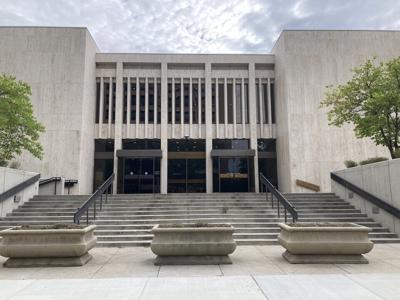


Idaho Supreme Court in Boise
LEWISTON, Idaho - The Idaho Supreme Court this week issued an opinion with a strong warning for advocates about the use of artificial intelligence in their briefs, in the case of a drag performer alleging defamation online.
On Sept. 22, the court dismissed an appeal of a $1.1 million judgment awarded against a blogger who posted an edited and allegedly defamatory video of a drag performance largely on the grounds that the appellant’s brief appeared to be written by AI and was riddled with factual and legal errors, including citations to cases that don’t exist and misrepresentations of facts from the trial.
While the case on its surface was about the appropriate standard for proving defamation, Chief Justice G. Richard Bevan took 14 pages of the Court’s 17-page opinion, endorsed by the entire court, “to address the risks associated with reliance on generative artificial intelligence” and to make clear that “the use of artificial intelligence does not excuse inaccuracies in briefing, whether it be used by attorneys or self-represented litigants.”
The case arose from a drag show at the North Idaho Pride Alliance’s Pride in the Park event in June 2022. A man in the audience recorded a drag performance by Eric Posey, the plaintiff, and sent the video to Summer Bushnell, the defendant and a local internet blogger.
Bushnell, in turn, posted an edited version of the video to Facebook, along with the comment, “why did nobody arrest the man in a dress who flashed his genitalia to minors and people in the crowd[?]” The video blurred Posey’s crotch and included a clip of children reacting negatively to a different performance. As edited, the video gave the impression that the children were reacting to Posey’s performance when, in fact, the clip of the children did not involve Posey at all.
Bushnell also stated that the blurred area “covered ‘fully exposed genitals,’ and that she could see Posey’s ‘berries and partial twig’ in the unedited version,” according to the court.
Posey sued claiming that Bushnell’s video defamed him and caused him to face public ridicule and an investigation by the local police into whether Posey had unlawfully exposed himself to children. The investigation was closed, but his mental health continued to deteriorate, Posey alleged, and even led to him losing his job at Walmart after a confrontation with a customer, which Posey claimed was due to Bushnell’s video.
The case went to trial almost two years later after several pre-trial rulings and questions during voir dire that seemed to provide potential grounds for appeal.
Multiple trial judges made conflicting rulings on Bushnell’s request to find that Posey was a limited-purpose public figure, which would have raised the burden of proof for Posey at trial. The court ultimately ruled against Bushnell and allowed Posey to proceed with the lower factual threshold for establishing defamation.
Prior to trial, the judge asked potential jurors about their religious beliefs and their ability to sit as impartial jurors. Bevan called out the unusual colloquy, noting that the court asked potential jurors whether “any of them held ‘a religious or moral position that would make it impossible to render judgment,’” and also noted that “the court asked this question because it could ‘see there’s a religious position in this specific case [that] may preclude [potential jurors] from making a decision.’”
Five people were excused from jury selection based on this line of questioning.
Ultimately, the jury returned a verdict in favor of Posey, awarding compensatory damages of $926,000 and punitive damages of $250,000.
Bushnell represented herself on appeal, where things got worse for her.
She filed a brief presenting 10 different points of error by the trial court, though the court refused to consider nine of her arguments, instead ruling that Bushnell failed to comply with basic appellate standards including failing to provide adequate argument and authority, failing to preserve issues for appeal, failing to apply the correct standard of review and misrepresenting facts and legal authorities.
“Our review of Bushnell’s briefing reveals that most of the issues raised on appeal are unsupported by cogent argument or authority,” Bevan wrote. “Fake quotations, errant citations, and non-existent cases do not constitute adequate authority. Neither do citations that materially misstate or misrepresent the authorities on which they purport to rely.”
And the factual and legal arguments Bushnell actually presented were “vague and conclusory.” “[I]t is not the role of this Court to search the record on appeal for citation or argument. Indeed, judges are not like pigs, hunting for truffles buried in briefs,” Bevans declared.
In response to the court’s request that Bushnell explain why her appeal shouldn’t be dismissed outright, Bushnell apologized for the errors and claimed she did not use AI in writing her brief. The court seemed skeptical, explaining that a “[r]eview of her briefing and the record raise serious doubt as to that assertion.”
The court decided not to sanction Bushnell. Fourteen pages into its opinion, the court addressed the actual merits of the defamation claims and found that, even if there was error in the trial court’s determination that Posey was not a limited-purpose public figure, there was no harm to Bushnell because the court instructed the jury, and the jury found that Posey had presented sufficient evidence to meet the higher legal standard.
The court also awarded costs to Posey since he had prevailed on every issue appealed by Bushnell.