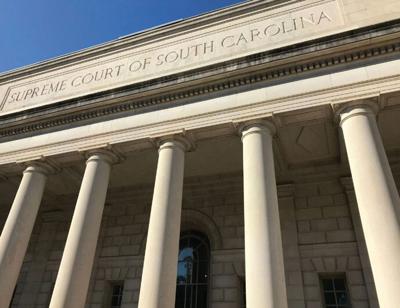



South Carolina Supreme Court
COLUMBIA, S.C. - The South Carolina Supreme Court politely but firmly criticized how a former chief justice handled Richard Murdaugh’s complaint about jury interference in his murder trial, saying she wrongly considered the mental impressions of jurors and didn’t follow the proper legal rule for such challenges.
After Murdaugh, a former personal injury attorney, was convicted of killing his wife and son, his lawyers sought to reverse the verdict and Judge Jean Toal, the first female chief justice of the South Carolina Supreme Court, was appointed to hear the appeal. Murdaugh’s lawyers submitted affidavits from jurors who said Colleton County Clerk of Court Rebecca Hill had told at least some jurors to “watch him closely” when Murdaugh testified and “watch his body language.”
Three jurors, including an alternate, said in affidavits they heard Hill make comments about Murdaugh but only one, identified as Juror Z, said she was influenced by what Hill said.
Judge Toal questioned the jurors in a live hearing, asking each of them if they had been influenced by anything Hill said. The judge questioned Juror Z about each paragraph of her affidavit. The clerk’s comments, the juror told the judge, “made it seem he was already guilty.”
But Toal asked if that was true since the juror said in her affidavit, "I had questions about Mr. Murdaugh's guilt but voted guilty because I felt pressured by the other jurors.”
“Is that answer that I just read a more accurate statement of how you felt?” Judge Toal asked.
Juror Z said yes, but later submitted an affidavit stating she felt influenced by Hill as well as the other jurors. Judge Toal didn’t allow that affidavit into the record.
Judge Toal ultimately rejected Murdaugh’s challenge, citing the fact only three jurors said they heard Hill say anything and the one who said she might have been influenced acknowledged that it was because she felt pressured by other jurors.
This was an error, the Supreme Court ruled. Under longstanding precedent, judges must apply a two-part test when a defendant claims the jury was unfairly biased. First, the defendant must prove there was improper contact with jurors. The burden then shifts to the state to prove there is “no reasonable possibility” the verdict was affected by that contact. The number of jurors who alleged improper contact has no bearing on the analysis, the court said.
The Supreme Court also said Judge Toal shouldn’t have questioned the jurors about their affidavits, especially to inquire about their thoughts during deliberations. Jurors can testify about improper communications with them “but not on the comments' effects on the jurors' deliberative process.”
“The post-trial court erred in questioning the jurors about whether Hill's comments influenced their verdicts and in relying on the jurors' answers in its prejudice analysis,” the Supreme Court ruled. (It also overruled an earlier decision that had allowed a judge to ask jurors how a fellow juror’s “premature deliberations” affected their votes.)
The portion of Juror Z’s affidavit in which she talked about her thought process was inadmissible, and Judge Toal “erred in questioning her about that portion of the affidavit, and the post trial court should not have considered that portion in ruling on the new trial motion.”
The court ended with a footnote commending Judge Toal, saying she “was placed in in the unenviable position of evaluating unprecedented jury interference by a clerk of court within the context of a murky area of the law.” But it reversed Murdaugh’s murder conviction and ordered a new trial.
Hill later wrote a book, Behind the Doors of Justice: The Murdaugh Murders, describing the trial but it was pulled from publication because she plagiarized parts of it. Hill also pled guilty to perjury for testifying she didn’t give reporters access to evidence including sealed exhibits.