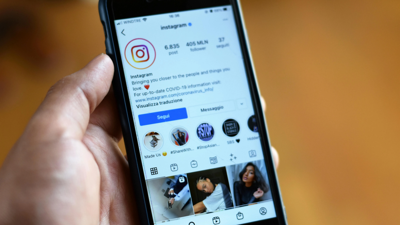



The Instagram app is displayed on a smartphone screen.
Meta will pay up to $17 billion to 47 states and implement changes to Facebook and Instagram as a result of a settlement reached during a historic trial that asked whether those platforms were designed to create a generation of social-media addicts.
State attorneys general announced the settlement Wednesday, with Ohio’s Andy Wilson declaring that platforms “that cater to children have a duty to shield impressionable minds.” The result of the agreement, AGs hope, is less time scrolling through “productive pauses” for children.
And paid over 10 years will be a financial windfall for states, including $2.2 billion for California and $1.1 billion for New York. Puerto Rico, the Northern Mariana Islands, American Samoa and the District of Columbia also participated in the settlement.
It is the largest “Big Tech” settlement in history and one of the largest consumer-protection agreements ever, though it falls well short of the more than $200 billion the tobacco industry agreed to pay in the 1990s. Both cases alleged products were designed to be addictive to consumers.
“As a mother, I know how critical it is to shield kids from predators, addictive material, and content that harms their mental health,” Missouri Attorney General Catherine Hanaway said. “Every minor should be secure the moment they log on, and we will continue working toward a digital environment where children are truly protected, no matter where they live or which platform they use.”
States had taken their claims to trial in Oakland, Calif., this month, accusing Meta of deceptive practices that violated state consumer-protection laws and the federal Children’s Online Privacy Protection Act.
A team from California, Colorado, Kentucky and New Jersey led a coalition of 25 other states and argued research has shown use of Facebook and Instagram is associated with depression, anxiety, insomnia and body dysmorphia.
In response, Meta’s lawyers at Covington & Burling said the company was dedicated to developing tools to keep teens from excessively using the platforms and noted over four years it had disabled 1.4 million accounts that it felt were created by users under the age of 13.
The billions of dollars from the settlement will be used for “any lawful purpose consistent with the Settling State’s Attorney General’s authority,” the agreement said, suggesting measures like crisis intervention, mental health programs and suicide prevention.
Minors will now have daily time limits – two hours per day with mandatory pauses after 15 minutes of continuous use and other breaks at 60 and 90 minutes. Access will be restricted from midnight to 6 a.m., plus limited access during school hours.
The AGs also tout safeguards against bullying and content promoting eating disorders or related to suicide and self-harm. Beauty filters and visible “like counts” have been linked to poor mental health, the AGs say, and Meta will install limits on social comparison features.
After California and New York, the states receiving the highest amounts are Illinois ($768 million), New Jersey ($752 million) and Tennessee ($739 million).
Pennsylvania gets $705 million, Missouri $152 million, Louisiana $247 million and West Virginia $109 million. Texas, Florida and New Mexico did not participate in the settlement.