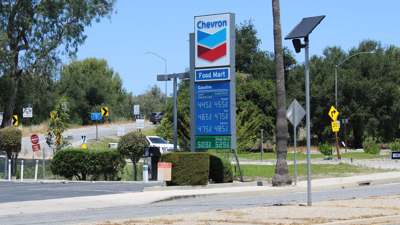


A Chevron station in Simi Valley, Calif.
SEATTLE – A lawsuit blaming climate change for the death of a Washington woman can proceed, a state judge has ruled in allowing a novel theory against the world’s largest fossil fuel companies.
Judge Matthew Lapin earlier this month issued his ruling in a lawsuit over Juliana Leon, who died in 2021 on what the complaint says was “the hottest day ever recorded in Washington with temperatures in Seattle, where Julie died, peaking about 108 degrees.” The lawsuit blames companies like Exxon, Chevron and BP for contributing to the heat wave, which created a so-called “Heat Dome.”
Leon died in her car after a doctor’s appointment for which she had been on a liquid diet. The car’s air conditioning was not working, and once she was overwhelmed by the temperature, she pulled her car off the road and passed away. Her internal temperature was 110 degrees.
While the U.S. Supreme Court decides if cases brought by cities, states and counties around the country are improper attempts to regulate the worldwide energy market – a job for federal regulators – Lapin acknowledged that Leon’s case does not involve “non-justiciable political questions.”
The claims, he wrote, “are simple torts and do not invade the province of policy making that might implicate separation-of-powers concerns… (T)he theory of causation rests on what consumers might have done and how that would have affected emissions.”
“While the Court is skeptical of the Plaintiff’s ability to connect that to emissions amount during the relevant time period and to further establish causation regarding a particular weather event in 2021, the Plaintiff has sufficiently alleged the causation to survive a motion to dismiss…” Lapin wrote.
The ruling will ramp up discovery demands on defendants already fighting court battles across the country. Companies and the Trump administration are calling on the Supreme Court to end them by deciding the case brought by Boulder, Colo., can’t move forward, despite a Colorado Supreme Court ruling that allowed it.
State judges in Pennsylvania, South Carolina, New York, Maryland, Delaware and New Jersey have thrown out lawsuits for stepping on the government’s authority to regulate emissions. Colorado’s and Hawaii’s supreme courts ruled differently, but the Maryland Supreme Court affirmed dismissals in that state.
Many, like South Carolina judge Roger Young, have warned that accepting the state-law theories of consumer protection and public nuisance could open anyone to liability for climate change. Young was worried “virtually anyone could be a plaintiff – and a defendant – in what would effectively amount to a perpetual series of lawsuits that reset after every storm.”
The cases allege consumers would not have purchased as many fossil fuel products as they did had Big Oil been more forthright about their effects on the climate. Possibly relevant to Leon’s case are rulings in Puerto Rico that refused to hold the industry liable for Hurricane Maria.
Defendants filed a joint motion to dismiss in February in Leon’s case, focusing on many of the same arguments they’ve made in lawsuits brought by government officials who hired contingency-fee lawyers.
They also claimed they had no obligation to warn the public, as is required under the Washington Product Liability Act, of a danger that is “obvious or known” like climate change.
“As the complaint itself acknowledges and the public record reflects, the risks of global climate change have been a topic of public discussion, debate and legislation for decades,” the companies wrote.
“Moreover, Plaintiff’s failure-to-warn claim fails because it seeks to establish liability based on a limitless duty to warn the entire world, which is untenable under product-liability law.”
Still, Judge Lapin allowed WPLA and public nuisance claims to advance, writing that whether the dangers were obvious is a disputed fact.