
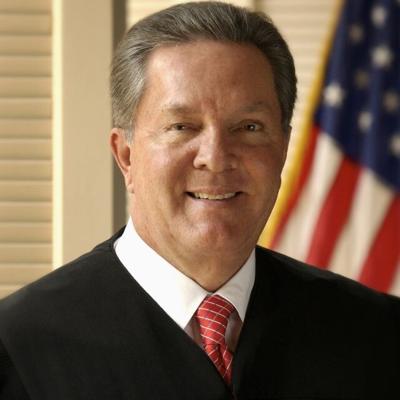


U.S. Ninth Circuit Judge Milan D. Smith Jr.
SAN FRANCISCO — A group of current and one-time California teens and their left-wing environmentalist backers can't revive a lawsuit seeking to force federal regulators to change the way they calculate the economic impacts of environmental regulations to more fully account for the ill effects of so-called climate change, a federal appeals court has ruled.
On April 9, a three-judge panel of the U.S. Ninth Circuit Court of Appeals agreed the plaintiffs cannot establish a legal right to use the courts to address national emissions standards in such a manner.
In the ruling on what they called the "sprawling" lawsuit, the judges said ultimately the legal claims rest on little more than speculation of a long list of possible future harms in a bid to bend government policies that affect the entire U.S. economy to the plaintiffs' preferences.
The decision was authored by Ninth Circuit Judge Milan D. Smith Jr. He was joined in the decision by judges Ronald M. Gould and Ryan D. Nelson.
"The case at bar is far afield," Smith wrote in the decision. "Rather than challenging a specific governmental action targeting Plaintiffs directly, Plaintiffs attack non-binding administrative guidance that may or may not be employed in the future to set in motion a lengthy chain of events that will allegedly result in their downstream harm.
"... Speculation is the only pathway to conclude that declaratory relief will remedy their asserted injuries."
The decision comes as the latest and perhaps final step in the court fight launched against the U.S. Environmental Protection Agency in 2023.
At that time, attorneys from environmental activist group Our Children's Trust, together with lawyers from the Gregory Law Group, of Redding; Schonbrun Seplow Harris Hoffman & Zeldes, of Hermosa Beach; and the Civil Rights Litigation Clinic at the University of California at Irvine School of Law, filed suit in Los Angeles federal court, osentsibly on behalf of a group of 18 minors, including some who have now moved beyond their 18th birthdays.
The lawsuit at its core took aim at forcing the EPA to alter the way it calculates risk and economic cost of regulations of so-called "greenhouse gases" (GHG), or emissions from the burning of hydocarbon fuels, like gasoline, diesel, natural gas and coal.
Such emissions are blamed for allegedly altering the atmosphere and inducing warming in the climate.
Acitivists and many scientists assert such changes have resulted in a growing raft of alleged harms, including allegedly an increased number and risk of wildfires, severe storms, floods, drought, and other alleged harms. They further assert the cost of responding to such allegedly increasing climate change-induced weather emergencies has increased the economic burden on governments and society, as compared to what they assert should be a climatic norm.
Trial lawyers and environmental activists, together with states and city governments led mostly by Democratic politicians, have in recent years launched a series of lawsuits in courts across the country, ostensibly seeking to force oil companies and other businesses allegedly responsible for producing these fuels to pay for the alleged harms.
The U.S. Supreme is expected to weigh in one such case out of Boulder, Colorado, in coming months. That decision could include a ruling on whether such lawsuits can continue at all.
However, in the meantime, courts are also dealing with other attempts to force the environmental policies preferred by progressives, including lawsuits ostensibly on behalf of children and teens.
In those cases, like the 2023 action lodged in California court against the EPA, the plaintiffs assert the current regulations allowing for such emissions amounts to a violation fo their rights to “fundamental right to a life-sustaining climate system," and thus an unconstitutional "taking," allegedly in violation of the Constitution's Fifth Amendment.
To remedy those alleged harms and violations, the 2023 action sought a court order requiring the EPA to alter the way it calculates the economic cost of emissions regulations. Specifically, the case took aim at the EPA's practice known as "discounting."
Under that practice, established through orders issued by President Bill Clinton in the 1990s and several of his successors since, the EPA would assign a greater value to economic effects in the present and near future, while accounting for currency inflation by "discounting" the value of future costs.
As Judge Smith described it: "Discounting allows agencies like the EPA to translate the future value of money into present-day value, so they can compute the projected effects of a proposed regulation over time. Rooted in the 'time value of money,' discounting seeks to account for the economic observation that a dollar today is generally more valuable than a dollar tomorrow."
The plaintiffs asserted this policy unconstitutionally "discriminates against children like them ... because it favors present-day consumption over future consumption, which ... advantages adults at the expense of minors."
This, in turn, allegedly permits greater emissions today, "which in turn leads to increased atmospheric temperatures and extreme weather events, ultimately causing Plaintiffs to suffer a litany of downstream harms, such as damage to their homes, respiratory ailments, and anxiety over climate change."
Those claims, however, evaporated in L.A. federal court and now on appeal before the Ninth Circuit.
All judges who have heard the case agreed the claims cannot support their demand for the desired change in EPA regulations and the elimination of the "discounting" policy.
The judges all agreed the claims require far too much speculation to allow the lawsuit to proceed.
"... Plaintiffs do not challenge any proposed rule regulating GHG emissions, so they can only guess that the current administration or future administrations will promulgate such a rule," Smith wrote. "Yet 'courts cannot presume ... to predict' how 'governing officials' might exercise their discretion."
Later in the ruling, the judges added: "Only by stacking one 'hypothetical assumption' on top of another can we deduce that those Policies, or the Government’s alleged discounting practice, will inflict any future harm on the young plaintiffs before us."
The Ninth Circuit judges upheld the lower court's dismissal of the lawsuit and barred the plaintiffs from attempting to amend their lawsuit and try again.