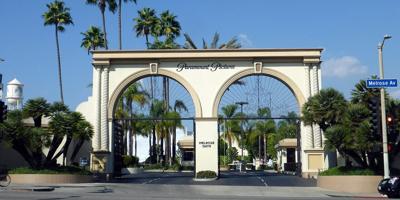


Paramount Studios, Los Angeles
SAN FRANCISCO — A San Francisco federal judge has put the brakes on Paramount's planned merger with Warner Bros. over concerns the combined company could control an undue share of blockbuster films and cable channels distributed throughout the United States.
In response to a motion filed by California Attorney General Rob Bonta and 11 other state attorneys general, U.S. District Judge Araceli Martinez-Olguin entered a temporary restraining order barring Paramount Skydance Corp. and Warner Bros. Discover Inc. from closing their merger before an Aug. 3 hearing can be held to determine if the proposed transaction violates federal antitrust laws.
Last February, Paramount announced that it had agreed to acquire all the shares of Warner Bros. for approximately $110 billion after wooing Warner Bros. away from competing suitor, Netflix. The combination would bring together two of the “big five” major film studios, responsible for film franchises like "Top Gun," "Mission: Impossible," "Harry Potter" and "The Lord of the Rings." Both companies also own more than 50 basic cable television channels; premium cable channels HBO and Showtime; subscription streaming services Paramount+, HBO Max and Discovery+; and three television production studios.
Bonta – joined by the attorneys general of Arizona, Colorado, Connecticut, Massachusetts, Minnesota, Nevada, New Jersey, New Mexico, New York, Oregon and Washington – filed a federal complaint to stop the merger on July 13.
The action alleged the merger would harm competition for the distribution of feature-length films in movie theaters, the distribution of blockbuster films, and the licensing of basic cable channels to cable distributors. According to the attorneys general, Paramount and Warner Bros. together control between 27 and 34 percent of these markets, respectively.
The complaint came after months of investigation into the likely competitive effects of the merger, an investigation initially conducted in conjunction with the federal Justice Department’s antitrust division.
The DOJ closed its investigation in early June without bringing any charges, however, and concluded the merger would be good for competition.
“The extensive investigatory record reviewed by the [DOJ] suggests that the impact of the transaction will be to increase competition across the media and entertainment ecosystem, with benefits for American consumers and workers,” the DOJ announced in a public statement.
Unlike the states' lawsuit, the DOJ’s review focused on the impact the merger would have for on-demand streaming, traditional “linear” television and studio development, production and distribution of theatrical films.
In addition to approval by U.S. antitrust authorities, the merger also has been cleared by 24 foreign jurisdictions, including those of Canada, China and Australia.
Paramount and Warner Bros. presented similar arguments of benefits to competition to Judge Martinez-Olguin. The attorneys generals' “Motion for a Temporary Restraining Order presents one of the weakest merger challenges in modern antitrust history,” Paramount and Warner Bros. declared in their brief opposing the motion.
“The reason is simple: the merger is procompetitive, not anticompetitive. It will produce more high-quality content for consumers; it will incentivize investment in job-creating film production; it will stabilize basic cable television (which is gravely threatened by cord cutting); and it will increase the output of theatrical releases in a challenged entertainment landscape,” the companies argued.
The merger also would create a “more formidable competitor” to large streaming services like Netflix, Disney and Amazon, they asserted.
Martinez-Olguin discounted these arguments, though. In her 10-page ruling that focused on only one of the three markets asserted in the complaint, the Court sided with Bonta and the other state attorneys general.
“Plaintiffs present compelling evidence that the combined firm resulting from the transaction will possess substantial market share in the wide-release theatrical distribution market,” the judge ruled, citing the 27% share of films Paramount and Warner Bros. would control after the merger.
In all, the judge found that the attorneys general had “raised serious questions about the merits of their antitrust claim” that weighed in favor of temporarily halting the merger.
“My office and attorneys general nationwide have secured an emergency order blocking the unlawful merger of Warner Bros. and Paramount,” Bonta said. “This is a critical first win in our case to ensure this megamerger never sees the light of day."
On Aug. 3, the judge will hold a hearing on whether to enter a preliminary injunction, further delaying the transaction until a full trial on the states’ antitrust claims could be held.
A delay past September could make the deal more costly for Paramount. As part of its deal, Paramount committed to paying Warner Bros. a “ticking fee” of $0.25 per share for each quarter the transaction is delayed beyond Sept. 30. The company also agreed to pay a break-up fee of $7 billion if the merger does not close for regulatory reasons.
In the meantime, the parties have committed to fighting the states’ claims. A Paramount spokesperson stated the company is “confident the evidence will demonstrate that the State AGs’ antitrust arguments are without merit as their alleged markets and claims of anticompetitive effects are without any basis in modern market realities.”