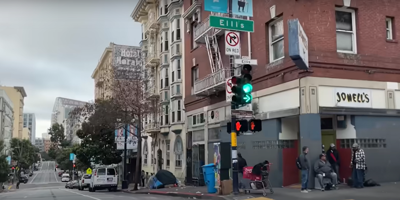



Tenderloin neighborhood, San Francisco
SAN FRANCISCO — A federal judge in San Francisco won’t grant residents of its beleaguered Tenderloin neighborhood an order compelling the city government to take more action against use and distribution of fentanyl and other drugs.
In March 2024 a group of residents and businesses first sought a court order requiring the city to address rampant crime and sanitation issues in the famously gritty neighborhood and end an alleged unwritten policy seeking to contain open air drug dealing and other criminal and dangerous behavior there.
Attorneys with the firms of Walkup Melodia Kelley & Schoenberger, of San Francisco, and Kline & Specter, of Philadelphia, filed the complaint on behalf of residents identified only as Jane, Mary, Susan, John and Barbara Roe, some of whom are identified as immigrants, elderly and disabled. Other plaintiffs include businesses including Phoenix Hotel; Funky Fun, which operates a restaurant inside the Phoenix Hotel; and El Camino, which operates the Best Western Road Coach Inn.
The Phoenix Hotel and associated business plaintiffs have since exited the case, as the Phoenix wound down operations.
Although he dismissed the initial complaint, U.S. District Judge Jon Tigar ruled in favor of the plaintiffs’ amended complaint in October 2024 after finding they made sufficient allegations concerning the government’s role in the condition of Tenderloin.
In August 2025 the plaintiffs sought a further preliminary injunction to stop the city “from directly or indirectly supplying fentanyl or methamphetamine-related drug paraphernalia to any individuals, groups, organizations, or entities within the Tenderloin neighborhood,” an order that would include stopping city-funded contractors from providing such paraphernalia.
After the government opposed that motion the next month, the plaintiffs asked to file a reply including new evidence from discovery. Tigar granted that motion, but on March 28 denied the injunction request.
The city argued the plaintiffs shouldn’t be granted the injunction because they failed to show how the requested relief would head off future legal harm. The government specifically contended there is no evidence its drug “paraphernalia policies have increased drug use or other social ills in the Tenderloin,” Tigar wrote, “or that cessation of those policies would lead to a decrease.”
Tigar took note of the city’s argument the plaintiffs failed to respond to the challenge to their standing, and further noted the city's claim that its “concrete steps” since the lawsuit started have abated drug use and maintained certain positive conditions. The city submitted photos of Tenderloin homes and businesses it claims confirm the alleged conditions “have abated to the extent they ever existed” along with testimony from some plaintiffs acknowledging improved conditions.
Altogether the city said the current conditions mean the injunction request now is based on a “theoretical possibility of future injury, which is insufficient,” Tigar wrote, adding it also claimed no evidence a freeze on distributing supplies would resolve homelessness, drug use and other crimes and suggested an injunction could worsen conditions if addicts end up forced to used shared or otherwise unsafe items.
“These arguments are both unrebutted and persuasive,” Tigar wrote, explaining that even had the plaintiffs responded the city was likely to prevail on the merits. He pointed to the city’s photos and said the plaintiffs’ own photographic evidence, with one exception, dates to November 2021.
“The record before the court contains no evidence that enjoining the city from funding organizations that distribute drug paraphernalia would reduce the social ills that plaintiffs complain about,” Tigar wrote. “Given plaintiffs’ lack of standing, they cannot establish that they are entitled to a preliminary injunction.”
Tigar set a case management conference for April 28.