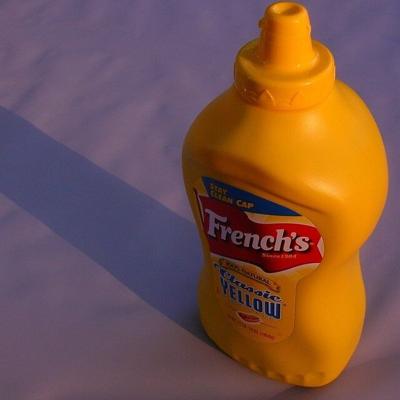


FRESNO — A federal judge has put the squeeze on the majority of a class action accusing the makers of French’s mustard of improperly marketing its condiment as “American Flavor in a Bottle” despite using Canadian-grown mustard seed as a key ingredient.
Darnell McCoy sued McCormick & Company for allegedly violating California consumer protection laws, and other common law claims, basing his complaint on an April 2023 online shopping experience while living in Manteca. He said he was reviewing details on French’s Dijon Mustard and noted product packaging promoting the mustard was “Crafted and Bottled in Springfield, MO, USA” in addition to the principal display panel on the front. He said he paid $3.42 for the bottle from Walmart, claiming that his prior purchases of other French’s mustards relied on presentation of the products as domestically sourced and created.
McCoy’s complaint is rooted in a claim that most, if not all, of the mustard seed French’s uses comes from Canada, while certain products, like yellow mustard, include imported turmeric.
In April 2025, McCormick moved to dismiss the initial complaint. That July a court issued findings and recommended a federal district judge grant the motion based on determining McCoy’s claims failed to allege the product ingredients exceeded the law’s “safe harbor” provision under which raw materials don’t trigger the same labeling requirements as manufactured components.
In August the district judge adopted those findings but also expressing it is improper to equate a California law’s reference to “wholesale value” with how the Federal Trade Commission uses the word “cost.” McCoy filed an amended complaint in September and McCormick moved to dismiss a few weeks later. That request landed before U.S. Magistrate Judge Stanley Boone, of the Eastern District of California, who issued a ruling Feb. 9.
McCormick argued that even if McCoy successfully pleaded the safe harbor provision is inapplicable, there still is no violation because ingredients from other countries are “raw materials,” while further challenging the allegation the labels would deceive a reasonable consumer.
Boone said he agreed McCoy’s allegations were sufficient to show the safe harbor provision doesn’t apply but rejected the contention “the cultivation of mustard is synonymous with manufacturing a product” and also agreed with McCormick’s stance on whether the labels were deceptive.
Although the complaint detailed the cultivation process, Boone wrote, McCoy still “has not alleged that mustard is manufactured or produced, as defined by the California Court of Appeal,” and his complaint doesn’t “describe how mustard grown in Canada is ‘transformed’ into a new and different article, product or commodity, having a distinctive name, character or use. Rather, (McCoy) merely describes the act of growing a plant from seed to seed. And while (McCoy) attempts to separate mustard into its district parts (i.e., the mustard plant from the mustard seed), this logic defies commonsense.”
Boone said the complaint doesn’t allege McCormick uses seeds processed outside the United States and further agreed with the company that its label statements aren’t deceptive. Use of the word “crafted,” the company said, doesn’t imply all the ingredients were grown and harvested in Missouri and the “American Flavor” message isn’t a claim about the product’s origin. Boone agreed, further noting the analysis might be different had the bottle used language such as “Made in the USA,” which is subject to heightened scrutiny under California law.
McCormick didn’t dispute it uses Canadian-grown mustard seed, but did argue McCoy didn’t sufficiently allege “the mustard seed constitutes five or more percent of the final wholesale value” of its products, Boone wrote, explaining both sides seemingly consented the law doesn’t define the concept of final value. As such, McCormick wanted to import a definition from another state law regarding “Made in California” labeling — Boone said that law covers “direct and indirect material and labor costs of a product or a component” — while McCoy pointed to the earlier distinction including “consideration of consumer preferences in a manner consistent with the FTC’s standard.”
Boone rejected McCormick’s argument and said McCoy “sufficiently pleaded, under the circumstances of this case, that the wholesale value of mustard seed in mustard products exceeds five percent,” meaning he wouldn’t recommend dismissing the complaint on those grounds. He likewise said McCoy had sufficient allegations under California’s unfair competition, false advertising and consumers’ legal remedies laws.
Finally, although Boone agreed McCoy did show he had the standing to pursue an injunction, he agreed with McCormick that it is proper to dismiss the request for equitable relief and that McCoy can’t be allowed to expand his class action to cover products he never bought.
Based on which arguments remain underdeveloped, Boone said, he recommended allowing McCoy the chance to amend his complaint relative to express warranty, negligent misrepresentation and intentional misrepresentation.
McCoy is represented by attorney Pamela Prescott, of the Kazerouni Law Group, of Costa Mesa.
McCormick is represented by attorney Amit Rana and others with the firm of Amit Rana
Venable LLP, of San Francisco.