
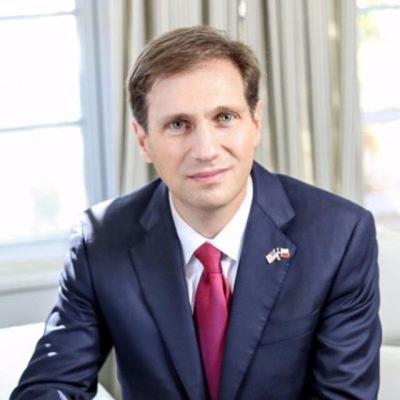



Attorney Justin Nelson, of Susman Godfrey, was a Democratic candidate for attorney general of Texas in 2018.
SAN FRANCISCO — The lawyers whose class action lawsuits against the creators of Claude, the AI research company Anthropic, led to a $1.5 billion settlement have cut in half their demands for hundreds of millions of dollars in attorney fees, in a bid to ease the settlement toward final approval in San Francisco federal court.
On March 19, attorneys with the prominent class action firms of Lieff Cabraser Heimann & Bernstein LLP and Susman Godfrey LLP filed a motion asking for 12.5% of the settlement funds to be paid to them and other lawyers who worked on the case.
That would still amount to $187.5 million in fees, but would be about half of the $375 million in fees the plaintiffs' lawyers had originally sought on behalf of the two lead firms and three additional firms who allegedly performed work in the case.
The reduced fee petition comes as the latest step in the litigation against Anthropic, with massive financial stakes.
The case has been in San Francisco federal court since the spring of 2024, when attorneys from the two lead firms, and others, filed suit against Anthropic on behalf of thousands of authors and copyright holders.
The lawsuits have claimed Anthropic improperly used original, copyrighted works created by thousands of authors to train its variety of so-called "large language model" (LLM) artificial intelligence programs to respond to human queries more like humans in text.
The action was led by named plaintiffs Andrea Bartz, Charles Graever, Kirk Wallace Johnson, all of whom are identified as authors and journalists.
The lawsuit specifically accused Anthropic of violating federal copyright protections by allegedly downloading at least 500,000 books and other copyrighted works from online datasets of pirated works and then fed those works into programs designed to help the company develop and refine its Claude family of AI models.
According to court documents, Anthropic sought to specifically help the Claude AIs better respond to queries with "lifelike, complex, and useful text responses."
According to the complaint, Anthropic allegedly used its alleged online piracy to build a company that was worth an estimated $18 billion in late 2023.
After nearly a year and a half in court, Anthropic agreed in the summer of 2025 to pay $1.5 billion to end the lawsuit.
Under the deal, authors would receive $3,000 per work allegedly pirated by Anthropic.
At the same time, attorneys indicated they would ask the court to award them about 25% of the settlement funds, or about $375 million in fees.
U.S. District Judge William Alsup granted preliminary approval to the settlement last year.
However, before obtaining final approval, the attorneys submitted a brief formally laying out their fee request.
That motion was met with skepticism by Judge Alsup just before his retirement at the end of 2025.
Upon Alsup's retirement, the case was passed to U.S. District Judge Araceli Martinez-Olguin, who said she shares those concerns.
Foremost among those concerns, the judges said, was the decision by the Lieff Cabraser and Susman Godfrey firms to attempt to insert the three other law firms into the line for fees without first clearing the arrangement with the court. Those three additional firms were identified as Cowan DeBaets Abrahams & Shepherd; Edelson P.C.; and Oppenheim + Zebrak.
On Dec. 23, 2025, Alsup said he had appointed only the two lead firms to act as class counsel in the case, and had "never blessed" any of the fee-sharing arrangements with the three additional law firms.
The judge said he only learned of the arrangement from the attorneys' original petition for nearly $375 million in fees in the case.
The judges have demanded the plaintiffs' lawyers justify the arrangement and file declarations explaining the nature of any fee-splitting arrangements among the firms suddenly seeking a cut of the big money pot.
The lead plaintiffs' attorneys acknowledged the judges' concerns in their new filing and indicated their new, substantially lower fee request cut out a special $75 million prize for the other three firms, among other reductions.
In the filing, the attorneys asserted there were no deals, outside of agreements to divide fees for work related to the Anthropic case.
And they asserted the fees are "amply justified," particularly when compared to the size of the payout to which Anthropic had agreed and the scope of the case leading to the "historic, 'home run' settlement."
They claimed the settlement has "overwhelming" support from class members seeking recovery for the use of "pirated" books and other materials.
And they further asserted the court should discount Anthropic's opposition to the fee request. The plaintiffs' lawyers asserted the company is merely attempting to whittle down the payout for lawyers to reduce the likelihood of future big-money lawsuits from "quality law firms" looking to win similar paydays through "similar class actions against it in the future."
They noted the settlement does nothing to prevent even more class actions against Anthropic for "among other things, all model output and conduct" since the settlement's effective date of August 2025.

