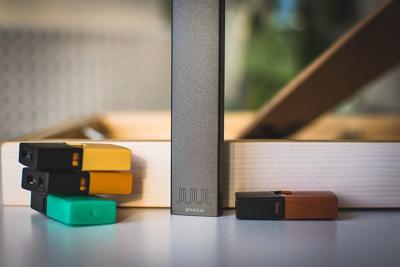


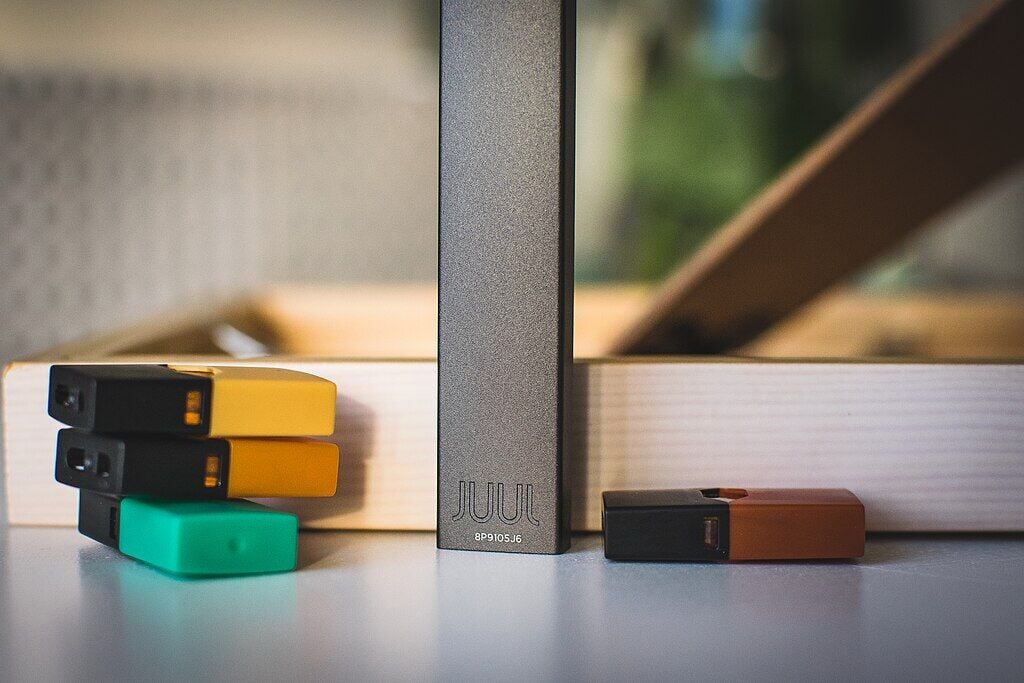
Juul Labs vape/electronic cigarette device
SAN FRANCISCO — A federal judge won’t let Juul block a class action alleging the electronic vape manufacturer violated California’s Cartwright Act antitrust law through an agreement with tobacco company Altria.
In a Feb. 26 order, U.S. District Judge William Orrick expanded on his short order from earlier in the month in which he agreed to certify a class of plaintiffs who bought directly from Juul, partially granted the same to classes of indirect buyers — those who bought Juul pods from brick-and-mortar retailers — and indirect resellers and also resolving motions regarding expert opinions.
The ruling comes as the latest step in a sprawling, multidistrict legal action launched since 2019 against the makers of some of America's most popular smoking alternative products, accusing them of illegal marketing practices, particularly targeted at youth.
Juul has already agreed to pay more than $2 billion to settle various lawsuits, including $1.7 billion to settle thousands of invidivual lawsuits and hundreds of millions more to states that sued the company.
The litigation has taken on many forms, including the class action at the heart of the latest ruling, which accused Juul of colluding with tobacco companies to artificially boost profits.
In this case, Orrick said there are hundreds of thousands of people who bought electronic cigarette products directly from Juul. The company said three named plaintiffs are atypical of the class because they bought about $2,000 worth of products, whereas vape shops and other large distributors spent millions of dollars and account for 93% of that market from November 2018 through March 2024.
“There are only two defendants, three channels of distribution (wholesaler, direct retailer and direct to customer), and one set of products (JUUL pods),” Orrick wrote. “Differences in purchasing prices as a result of negotiations or favorable deals to large distributors or retailers — to the extent relevant, given the lack of a pass-through defense to the federal antitrust claims — are matters that can and presumably will be addressed by the experts and presented to the jury. These distinctions do not undermine the typicality of the named (direct purchasers) or call into question their ability to represent the class of (direct purchasers) who do not opt out.”
Importantly, Orrick said, the complaint alleges all pricing channels experienced inflation stemming from the Juul-Altria contract, and the named plaintiffs’ claims are typical of the entire group because proving them relies on showing conduct on the part of defendants and not how that affected individual customers. He also said he wouldn’t rule on the enforceability of arbitration agreements until Juul makes a motion on that front.
Orrick similarly declined to strike the plaintiffs’ damages and market dynamics experts, saying the damages estimates can be tested during or after the trial while the market data “is based not merely on theory but on evidence from defendants as well as concentration figures using the Herfindahl-Hirschman Index, a method the Federal Trade Commission found supported a presumption of competitive harm in the proceedings before the FTC.”
He did, however, agree partially with the defendants that a third plaintiffs’ expert, an economics professor, could only testify in rebuttal to their own expert raising relevant topics. But a fourth expert, whose testimony covered the value of Altria’s e-cigarette business before the deal with Juul, can stand. The allowable testimony, Orrick said, will depend on trial evidence, and the defendants are free to ask why she didn’t “conduct a full valuation report and instead relied on her precedent market transactions analysis.”
Regarding defense experts, Orrick generally said most of what the direct purchasers sought to exclude is better suited to disputes during the trial, although he did limit one attorney from discussing the “reasonableness” of Altria exiting the vape market. However, he did agreed to strike opinions about how companies prepare for premerger notifications as potentially confusing to jurors, while allowing leave to reconsider that decision during the trial.
The indirect purchaser plaintiffs seek to create a class for all customers as well as subclasses for residents of California, Florida, Hawaii, Massachusetts, New York and Rhode Island. The indirect reseller group also want to certify a multistate Cartwright Act Class while calling for subclasses based on residents in California, Florida and Michigan.
Juul was based in California during the relevant dates, Orrick said, but Altria said applying the Cartwright Act to its interests would violate due process protections. Orrick further said the challenge in determining where jurisdiction is proper involves distinctions between states that don’t allow representative or class claims for antitrust litigation on behalf of indirect buyers.
As such, he granted certification with the exception of customers from Arkansas, South Carolina, Tennessee and Virginia. He then denied a motion to strike the indirect purchasers’ witnesses, again saying the defendants’ challenges are suitable for trial proceedings.
Plaintiffs in the action are represented by attorneys from the firms of Joseph Saveri Law Firm, of San Francisco; Zwerling Schachter & Zwerling, of New York; Kaplan Fox & Kilsheimer, of New York; and Cera LLP, of Boston and San Francisco.
Altria is represented by attorneys with the firms of Wilkinson Stekloff, of Washington, D.C., and New York; and Arnold & Porter Kaye Scholer, of Los Angeles.
Juul Labs is represented by attorneys with the firm of Cleary Gottlieb Steen & Hamilton, of Washington, D.C.