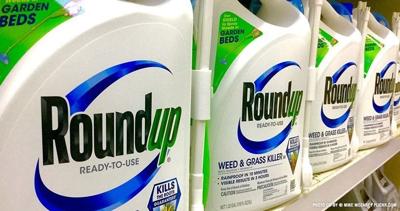


WASHINGTON, D.C. - With billions of dollars at stake, the U.S. Supreme Court has agreed to settle the question of whether trial lawyers can continue using U.S. state courts in Missouri, Pennsylvania, California, Illinois and elsewhere to rack up big money verdicts against Bayer Monsanto over claims the company's popular Roundup weedkiller causes cancer.
On Jan. 16, the high court granted the appeal in a case out of St. Louis.
The court said proceedings will center on one key question: Whether that lawsuit and any of the thousands of virtually identical claims filed in state courts across the U.S. should be disallowed, because they are preempted by a federal law regulating the consumer warnings that must be included on the bottles of Roundup and other herbicides and pesticides.
Ultimately, a decision from the Supreme Court in favor of the herbicide makers could merely serve to reduce the amount of money that changes hands in the hand. Bayer Monsanto has already paid more than $11 billion to settle thousands of Roundup lawsuits.
But the reduction could still be dramatic, as it could be used by the makers of Roundup to undo state court verdicts which, individually, are already worth many millions or even billions of dollars.
In Georgia, for instance, jurors in March 2025 ordered Bayer Monsanto to pay plaintiff John Barnes $2.1 billion.
In Philadelphia, a jury in 2024 awarded plaintiff John McKivison $2.25 billion. A judge reduced that verdict to $404 million.
In Alameda County, California, jurors in 2019 ordered the company to pay plaintiffs Alva and Alberta Pilliod more than $2 billion. A judge later reduced that verdict to $87 million.
And in Missouri court, three more plaintiffs were collectively awarded nearly $550 million.
By comparison, the $1.25 million amount awarded to plaintiff John Durnell may seem small. But the implications of the case are potentially massive.
Across the country, Bayer Monsanto face more than 100,000 similar lawsuits.
All of the cases center on claims leveled plaintiffs that exposure to the key ingredient in Roundup, known as glyphosate, caused them to develop non-Hodgkin lymphoma, a common cancer associated with aging.
Plaintiff lawyers began filing suits after a finding by the International Agency for Research on Cancer that glyphosate is a likely carcinogen, although the U.S. Environmental Protection Agency and other regulators around the world reject that conclusion.
However, while many thousands of cases have been consolidated in San Francisco federal court, enterprising trial lawyers have managed to avoid having their cases swept up in that so-called multi-district litigation (MDL) by sidestepping claims under federal law entirely.
Rather, they have asserted Bayer Monsanto should be made to pay for allegedly violating state laws by allegedly failing to properly warn consumers about the health risks of using Roundup and other products containing glyphosate.
Bayer Monsanto, in response, has consistently argued such state law-based claims should be rejected, because the warnings it must print on its product labels are governed entirely by the Federal Insecticide, Fungicide, and Rodenticide Act (FIFRA).
FIFRA prohibits states from imposing “any requirements for labeling or packaging in addition to or different from those required under” FIFRA. The EPA also prohibits cancer warnings on glyphosate, saying the benefits of the widely used herbicide outweigh the risks.
To this point, however, the company has failed to persuade state court judges in Pennsylvania, Missouri and California, among others, that federal law should preempt the cases in their state courts.
And that has allowed the plaintiffs to keep their lawsuits in some of the most famously plaintiff-friendly state court jurisdictions in the country in the pursuit of paydays worth billions.
After a Missouri court refused to overturn Durnell's win on such state law failure-to-warn claims, the company appealed to the U.S. Supreme Court, urging the court to declare such lawsuits should not be permitted under FIFRA.
The U.S. Justice Department then jumped in, filing a brief in support of the company's FIFRA preemption claims. That filing marked a return to the federal government’s position on the question before the Biden administration shifted in favor of plaintiff lawyers.
In the filing from Solicitor General John Sauer, the Justice Department said: "EPA has repeatedly determined that glyphosate is not likely to be carcinogenic in humans, and the agency has repeatedly approved Roundup labels that did not contain cancer warnings.
"... Where, as here, EPA has specified the health warnings that should appear on a particular pesticide’s label, a manufacturer should not be left subject to ‘50 different labeling regimes prescribing’ different requirements," Sauer wrote in the brief in support of Bayer Monsanto.
No matter which way the court ultimately lands on the question, the result would likely have wide-ranging impact. While tens of thousands of lawsuits remain pending over Roundup alone, many thousands of other lawsuits have been lodged in other state courts across the U.S. leveling similar accusations against the makers of other widely used herbicide and pesticide products.
The court's potential ruling in the St. Louis Roundup case could then be used to either provide such product makers with a potent new weapon against such state law failure to warn lawsuits or potentially sweep away such federal preemption defenses forever.
Following the court's decision to take up the appeal, Bayer Monsanto heralded the decision.
In a statement released Jan. 16, the company called the acceptance of their appeal "good news for U.S. farmers, who need regulatory clarity."
They noted "every leading regulator worldwide has concluded that glyphosate-based herbicides can be used safely."
“It’s also an important step in our multi-pronged strategy to significantly contain this litigation," said Bayer CEO Bill Anderson in the prepared statement. "It is time for the U.S. legal system to establish that companies should not be punished under state laws for complying with federal warning label requirements.”