

Castor
PHILADELPHIA – A prominent Pennsylvania lawyer says his former client’s lawsuit is just sour grapes for losing what it hailed as a “historic” group of cases challenging how federal elections are conducted.
United Sovereign Americans went to court in 2024, alleging federal elections in Texas, Maryland, Pennsylvania and elsewhere in 2022 were not handled appropriately. But judges like Daryl Bloom of Harrisburg tossed the cases, as he ruled last year that USA and its named plaintiffs lacked standing to bring them.
In return, USA sued its lawyer – former Pennsylvania Attorney General Bruce Castor – and his firm van der Veen, Hartshorn, Levin & Lindheim, alleging legal malpractice.
“Plaintiff’s legal malpractice claim fails because it never pleads the missing link between Defendants’ lawyering and the loss of a viable underlying claim,” attorneys for Castor and the firm wrote in a motion to dismiss filed Monday in Philadelphia federal court.
“Instead, the complaint admits that the underlying matters suffered from standing and jurisdictional defects, then simply assumes that better lawyering would have changed the result. That is not enough to plead actual loss or the required ‘case within a case.’”
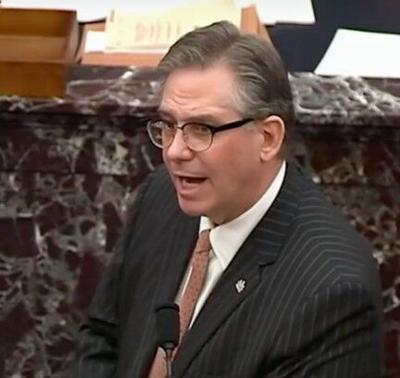
Castor is a former Montgomery County district attorney who became interim state attorney general for two weeks in August 2016 when then-AG Kathleen Kane resigned following a criminal conviction of perjury. He also represented President Donald Trump during an impeachment proceeding.
Castor is accused of creating a losing strategy for USA’s cases, then failing to complete work on them while billing $417,000.
USA brought suit against federal and Pennsylvania officials in 2024, alleging violations of the Help America Vote Act and the National Voter Registration Act. It claimed data showed errors in Pennsylvania’s federal voter rolls and included plaintiffs who claimed their votes were not counted.
USA called the case “historic,” but chief U.S. magistrate judge Bloom threw it out in March 2025. One plaintiff, a Constitution Party candidate for U.S. Senate, couldn’t show a “particularized” injury, Bloom found. Instead, the complaint only made general claims that the integrity of elections in Pennsylvania would be undermined if officials weren’t forced to address USA’s concerns.
USA alleged 9,000 more votes were counted than voters who voted, outside of an error rate laid out in the HAVA. It did not challenge the 2022 results and instead only sought to prevent any violations in the future.
Bloom cited U.S. Supreme Court direction that says the context of voting creates a special need for plaintiffs to allege injuries caused a "disadvantage to themselves as individuals."
Plaintiff Ruth Moton said she spent money on three campaigns but could not be certain of the location and identity of voters she was attempting to canvas. The money was spent in 2018, 2020 and 2022, and since the lawsuit only sought future remedies, her claim was missing redressability.
Diane Houser said her vote was not recorded in the Statewide Uniform Registry of Electors system. Dean Dreibelbis said he observed and reported numerous election errors but was ignored.
"Without an allegation that either petitioner had a protected legal interest in receiving a response to their reports, or in having a vote appear in the SURE system, they fail to allege an injury," Bloom wrote.
"Further, even assuming arguendo that we were to find these to be cognizable injuries, it is apparent they will not be redressed by the exclusively forward-looking relief petitioners seek."
Castor and the firm’s motion to dismiss attacks the other claims made by USA. Breach-of-fiduciary-duty fails because the complaint fails to allege disloyalty, and the fraud claim fails because it isn’t pleaded with the required specificity, they say.
“Plaintiff never identifies which underlying claims were legally viable, what specific amendment would have cured the defects identified by the courts, what facts would have established standing, what jurisdictional basis existed, or what recoverable judgment Plaintiff would have obtained absent Defendants’ alleged negligence,” the motion says.
“Instead, Plaintiff offers only the bare conclusion that competent counsel ‘would have preserved’ its ‘procedural rights’ and ‘evidentiary opportunities.’ That is the sort of speculative pleading Pennsylvania and federal law rejects.”