


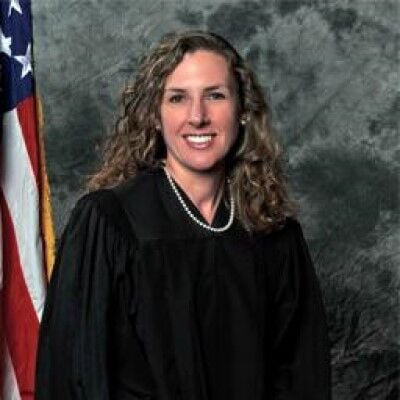
U.S. Third Circuit Court of Appeals Judge Cheryl Ann Krause
PHILADELPHIA — Class action lawyers “deserve to be paid,” the U.S. Court of Appeals for the Third Circuit says, “[b]ut not twice.”
That’s how a three-judge panel at the Third Circuit Court described its decision to toss the award of $3.7 million in fees to a group of class action lawyers who led a lawsuit against BMW of North America.
The panel sent the case back to a New Jersey federal district judge to determine a more appropriate amount of fees.
The case, docketed as Gelis v. BMW of North America, involved a class action suit alleging the auto maker sold cars with defective timing chains.
While the case originated in New Jersey, the decision related to attorney fees will carry weight in Pennsylvania, as well, as the Keystone State's federal courts are among those under the leadership of the Third Circuit Court.
In the almost nine years since the case was filed, more time has passed arguing in court over attorneys’ fees than was spent litigating the merits of the case. The plaintiffs filed their original complaint in September 2017 and, after being partially dismissed, filed amended complaints adding 20 federal and state claims on behalf of a nationwide class with a dozen state-specific subclasses.
After four months of discovery, producing some 12,000 pages of documents, the parties arrived at a settlement on the merits, though they could not agree on the attorneys’ fees BMW would have to pay.
That resulted in another round of mediation in which the parties agreed to apply to the district court for “an award of ‘reasonable attorneys’ fees,’ . . . to be paid by BMW ‘separate and apart from any relief provided to the Settlement Class.’” The settlement agreement placed the outer bounds of the fee award between $1.5 million and $3.7 million.
The plaintiffs’ lawyers asked for the full $3.7 million, which BMW opposed. And that’s where the dispute began, consuming over five years of litigation, including two trips to the Third Circuit.
The district court judge, U.S. District Judge Cathy L. Waldor, used what’s known as the “lodestar method” – a simple equation of multiplying hours spent by an average billing rate – to arrive at a baseline fee award of $1.9 million. But it also found that this baseline fee was insufficient given the size of the settlement fund, “the skill and efficiency of the attorneys, the complexity and duration of the litigation, and the risk of nonpayment.”
And so it applied a lodestar multiplier – a practice by which a court increases the baseline lodestar fee to account for factors such as “(1) the time and labor required; (2) the novelty and difficulty of the questions; (3) the skill requisite to perform the legal service properly; (4) the preclusion of employment by the attorney due to acceptance of the case; (5) the customary fee; (6) whether the fee is fixed or contingent; (7) time limitations imposed by the client or the circumstances; (8) the amount involved and the results obtained; (9) the experience, reputation, and ability of the attorneys; (10) the ‘undesirability’ of the case; (11) the nature and length of the professional relationship with the client; and (12) awards in similar cases.”
After considering these factors, the district court chose a lodestar multiplier of 1.94, which resulted in a total fee award of the full $3.7 million sought by the plaintiffs’ attorneys.
BMW appealed arguing that the record did not support the fee award. The Third Circuit agreed, as the plaintiffs’ attorneys’ documentation supporting their fees left the Court unable to “’discern . . . whether certain hours [were] duplicative . . . or whether the total hours billed were reasonable for the work performed.’”
Back at the district court, class counsel supplemented the record supporting its fee request. This time, they offered a new lodestar baseline fee of $2.1 million, saying it was needed to cover the costs of the continued litigation over the fee award.
And the district court again awarded the full $3.7 million fee request, though it adjusted its lodestar multiplier downward to 1.75 to arrive at this second, identical award.
For a second time the Third Circuit rejected the rationale applied by the district court to arrive at the maximum negotiated fee. This time, the appeals court judges on the case cited problems with the lodestar multiplier used by the lower court and its calculation of the baseline lodestar fee.
Though it held that the use of a lodestar multiplier, which normally arises in statutory fee-shifting cases, could also be used appropriately to determine a fee award under a contractual settlement agreement, the Court found that several factors applied by the district court in arriving at the multiplier were faulty.
In the appellate opinion, Judge Cheryl Ann Krause rejected the rationales provided by the district court in settling on a lodestar multiplier of 1.75.
“Compensating for contingency risk in contract cases . . . could motivate attorneys to litigate unmeritorious cases . . . and produce ‘burdensome satellite litigation’ to determine counsel’s eligibility for enhancements," Krause wrote in the opinion. "Compensating for superior results risks enhancing fees based merely on ‘inferior performance by defense counsel’ or ‘simple luck.’
"...Also ... attorneys ‘understand[] that payment of fees will generally not come until the end of the case, if at all,’ so lodestar enhancements for the outlay of expenses and delays in payment are reasonable only when such expenses or delays are truly ‘exceptional,'" Krause wrote.
And though district court judges have considerable discretion to determine the baseline lodestar fee, “given the number of hours claimed by Class Counsel for the tasks in question, and the fact that the vast majority were incurred by partners at partner billing rates, we cannot conclude that the District Court acted within those limits.”
Those partner rates resulted in an average billing rate of $726 per hour.
What’s more, a “startling 80%” of the work was performed by partners with no discernible efficiency savings, Krause noted.
“[W]here, as here, hours are billed at partner rates because of the alleged need for expert and specialized knowledge, but the number of hours billed does not reflect any greater efficiency, there is reason for concern about impermissible ‘[d]ouble-dipping,’” Krause wrote.
Ultimately, the appeals judges found that the record did not support either the multiplier used or the baseline fee.
“’Michelangelo should not charge Sistine Chapel rates for painting a farmer’s barn,’” Krause wrote.
Third Circuit judges Peter J. Phipps and Jane R. Roth concurred with Krause in the ruling.
Plaintiffs were represented before the Third Circuit by attorneys Thomas P. Sobran, of Hingham, Massachusetts; Bruce H. Nagel and Robert Solomon, of Nagel Rice LLP, of Roseland, New Jersey; and Gary S. Graifman, of Kantrowitz Goldhamer & Graifman, of Montvale, New Jersey.
BMW was represented in the case by attorneys from the firm of Buchanan Ingersoll & Rooney, of Newark, New Jersey.