
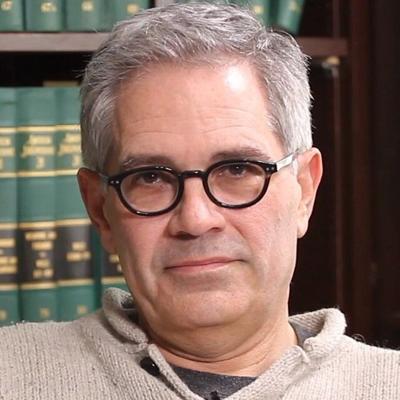


Philadelphia D.A. Larry Krasner
PHILADELPHIA — Philadelphia's controversial district attorney will need to secure approval from the state's attorney general before he refuses to oppose attempts by convicted murderers and other convicted criminals to secure court orders undoing their former convictions, setting up new criminal trials, as well as potential lawsuits over their alleged wrongful convictions.
On June 16, the Pennsylvania Supreme Court issued that directive and rebuke to Philadelphia D.A. Larry Krasner.
In the decision, the court's majority ruled Krasner had effectively abdicated the duties of his office in refusing to contest the demands by many people who claim they were wrongly prosecuted and convicted of crimes for so-called "post-conviction relief."
In the decision, the court's majority said prosecutors should not simply oppose requests for such "relief" as a matter of course. They noted prosecutors should use "the facts and the law" to decide when and how to oppose or "concede relief" to petitioners who assert their constitutional rights were violated in a criminal case.
But, the court's majority said, it was apparent to them that Krasner, a left-wing prosecutor infamous for his commitment to so-called criminal justice reforms, has acted more as a reform advocate than as a prosecutor when deciding how he will handle such cases.
The majority decision was authored by Justice Kevin Dougerty.
"This is not to say a prosecutor should never concede relief," Dougherty wrote. "A prosecutor bears the responsibility of a minister of justice and not simply that of an advocate. Hence, a prosecutor is duty-bound to confess error, provided the facts and law call for it.
"But the proviso is critical. When relief is not dictated by the record and law but merely advocated for personal, political, ideological, policy, or other non-legal reasons, a prosecutor’s concession does not minister justice; it facilitates injustice."
Justices Sallie Updyke Mundy, P. Kevin Brobson and Daniel D. McCaffrey joined in the decision.
Justice Christine Donohue partially dissented, joined partially by Chief Justice Debra Todd.
And Justice David N. Wecht dissented in full.
The decision came in an appeal of the decision of the so-called Post-Conviction Relief Act (PCRA) Court, granting the petition of Lavar Brown for a new trial on murder charges related to his role in a 2002 robbery of a CVS drug store that resulted in the murder of the store manager.
Brown did not fire the gunshot that killed the manager, but prosecutors allege he was part of a crew that plotted together and attempted to violently rob the store.
Brown had filed for a new trial in 2007, but that petition was rejected by the PCRA court at that time, when the Philadelphia D.A.'s office, then under Lynne Abraham, opposed the petition.
After Krasner became D.A., Brown petitioned again for PCRA relief in 2020. This time, the PCRA court granted his request for a new trial, noting that Krasner refused to oppose the petition. The court asserted that left it no choice but to grant the petition, because it could only rule on the case presented.
The ruling came over the objections of the murder victim in Brown's case. The family then appealed, arguing Krasner's refusal to oppose Brown's petition was suspect and part of a larger pattern of repeatedly siding with convicted and accused criminals, rather than seeking to prosecute accused criminals and defend prior convictions.
They further noted Krasner suffered from an alleged conflict of interest in Brown's case, in particular, as both attorneys who represented Brown in his PCRA petitions, James Funt and Lloyd Long, had practiced law with Krasner before he became D.A.
At the Pennsylvania Supreme Court, the majority sided with the family.
They noted in this case, in particular, Krasner could not defend his decision to "concede PCRA relief" to Brown. They said both "the facts and the law" should have led Krasner to contest Brown's petition.
However, they further agreed that the case was, indeed, part of a larger, ongoing pattern in which Krasner sides with the convicted criminals over the wishes of crime victims and their families and in contravention of the constitutional duties of his office.
The majority noted that since taking office in 2018, Krasner has "conceded relief well over 100 times, mostly in murder cases like this one." And the majority said there are still more than 1,000 more cases pending in Krasner's so-called Conviction Integrity Unit in which Krasner could similarly choose to simply step aside.
The majority indicated Krasner has signaled he may do so, noting Krasner "vigorously defends his checkered concession program as a necessary corrective to past misdeeds by prior administrations."
The majority said the court could not allow the people of Philadelphia and crime victims to go unrepresented at such PCRA proceedings.
So, the majority said, the court had to take the unprecedented step of using the rarely invoked, so-called "King's Bench" power to force Krasner to notify the Pennsylvania Attorney General's office each time he decides to not oppose a PCRA relief petition and allow the state attorney general the opportunity to intervene in each matter, essentially filling the role vacated by Krasner in the proceedings when Krasner declines to oppose PCRA petitions.
The majority further reversed the PCRA court's ruling granting Brown a new trial.
Other justices went further still. Justices Brobson and Mundy, the court's two Republican justices, said they supported the majority decision reining in Krasner.
"We cannot allow any party, elected or otherwise, to engage in such a systematic manipulation of our justice system," they wrote in a special concurring opinion.
However, they added that they believed PCRA courts throughout Pennsylvania are obligated to scrutinize concessions by prosecutors and allow family, victims and other concerned parties to intervene to challenge the petitions, if elected prosecutors will not.
In their dissents, Donohue and Wecht said they believed the majority overstepped their constitutional limits.
They asserted, separately, that the state Supreme Court does not have the power to overturn the "policy decisions" of Krasner. If Krasner wishes to step aside when convicted murderers seek to undo their sentences, then he has the constitutional authority to do so, they wrote.
In a footnote, Donohue particularly bristled at the majority's assertion that Krasner's PCRA decisions reflect an "insidious agenda" driven by his stated ideology and politics, rather than a desire to ensure convictions are constitutional.
"As a minister of justice, it is the prosecutor’s 'duty both to respect the rights of the defendant and to enforce the interests of the public,' ensuring that 'the defendant is accorded procedural justice [and] that guilt is decided upon the basis of sufficient evidence,'" Donohue wrote.
Wecht said the power to address Krasner's conduct in PCRA cases rests with the voters of Philadelphia County.
"The Majority claims that its remedy is necessary to 'promote just outcomes.'" Wecht wrote.
"While all aspire to that worthy goal, the manner in which the Majority seeks to effectuate it far exceeds the power and role of the judiciary. If Philadelphians do not approve of the way in which their elected prosecutor is performing his duties, they can replace him. It is not our job to do so."