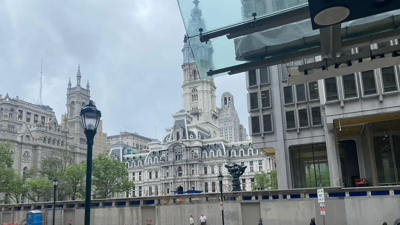



Philadelphia City Hall in Downtown Philadelphia
PHILADELPHIA – DraftKings must wait until it is sued by Philadelphia before it can challenge a law that gives Mayor Cherelle Parker the power to bring such a lawsuit, the City is telling a federal judge.
A motion to dismiss filed Tuesday in federal court calls DraftKings’ preemptive strike “woefully premature,” as the sports-gambling company seeks to block an investigation into its business. Philadelphia issued a subpoena to DraftKings in April seeking to learn how much money the company has made from gamblers identified through analytics and other means, plus information on promotions and bonus offers.
“DraftKings’ beeline to court was so hasty that it neglected to adequately plead an amount in controversy to establish federal jurisdiction,” attorneys for Philadelphia wrote. “The lack of claimed monetary harm is unsurprising in this premature suit, where any future enforcement action is purely hypothetical.”
At issue is Philadelphia’s own consumer-protection law, which largely mirrors the state’s but authorizes the mayor to bring his or her own cases. The Philadelphia Consumer Protection Ordinance was enacted in 2024 and has since been used in lawsuits against pharmacy benefits managers over opioids, S.C. Johnson & Son over the recyclability of Ziploc bags and the gun-maker Glock.
Most consumer-protection lawsuits in the state are brought under the Pennsylvania Unfair Trade Practices and Consumer Protection Law, but Mayor Parker signed the Philadelphia law because of the “absence of a specialized local mechanism within the mayor’s chain of command,” a press release read.
Philadelphia defended its power to enact the law in the motion, saying the First Class City Home Rule Act allows it to enact legislation that does not conflict with state law. DraftKings has said the Gaming Act puts its practices under the purview of state gaming regulators.
“But the only intersection between the Gaming Act and the general concept of marketing or promotion by gambling operators is that the Gaming Act requires certain ‘responsible gambling’ messages and bars solicitation to suspended or self-excluded accounts,” Philadelphia says.
“The Gaming Act does not touch upon—let alone occupy—the field of unfair or deceptive marketing. And while the Gaming Act does contain a limited express preemption provision addressing location of gambling facilities, that provision does not operate as a general bar to local regulation of covered entities in other areas.”
DraftKings also argues the state consumer-protection law vested public enforcement authority to the state attorney general and county district attorneys – not municipalities.
The pharmacy benefits managers sued by Philadelphia have similarly challenged the city law in that case, stating it “irreconcilably conflicts and interferes with the UTPCPL’s enforcement scheme.” In response, the City said municipalities have the power of self-government.