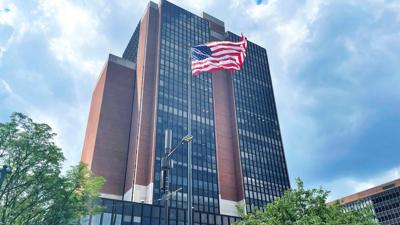



James A. Byrne U.S. Courthouse in Philadelphia
PHILADELPHIA – A Pennsylvania lawyer has been punished for misquoting other cases as he pursued a client’s discrimination lawsuit, with a federal appeals court calling his conduct a trend.
His plaintiff was accused of sleeping on the job, and the Third Circuit felt about the same toward Joshua P. Ward, who said he did not check a motion prepared by a law clerk. The same court had already ordered Ward to pay a $25,000 sanction for sending “made-up, handwritten letters” to generate debt-collection lawsuits, and Monday’s ruling penalizes him nearly $15,000.
Add in another case in which he’s been ordered to show why he shouldn’t be sanctioned for including direct quotations from Allegheny Health Network that were marked confidential during discovery, and “One incident may be a mistake; two or three is a pattern,” Third Circuit judge Stephanos Bibas wrote.
“In light of Ward’s past misconduct, we ordered him to show cause why he should not be sanctioned for submitting a motion containing misquotations. But he simply explained that he did not check after a law clerk prepared the document,” he added.
“Finding his response insufficient to foreclose sanctions, we order him to reimburse West Penn for the attorney’s fees that it paid to respond to his antics: $14,636.50. Ward may not recoup those costs from Hileman, but must pay them himself.”
Ward had submitted handwritten notes to collectors to dispute debts, figuring they had software that could flag meritorious disputes that were typed but not in “handwritten ones stuffed with fluff and guff,” Bibas wrote in September.
When Ward again appeared before the Third Circuit, the result was the same. He was representing Cheryl Hileman in a lawsuit against Forbes Hospital that alleged disability discrimination, but the case stalled when a district judge threw it out because Hileman had never requested a disability accommodation.
After a year at Forbes, where she performed CAT scans, she was reprimanded for calling out of work too often. In July 2022, a coworker said Hileman had been sleeping on duty, texting during work and failing to stock rooms.
Hileman denied sleeping but said she might have shut her eyes because of dryness caused by a change in her diabetes medication. It was the first time she’d disclosed her condition and later said she was “praying” for improvement and adjusting her medication. She was fired shortly after and sued under the Americans with Disabilities Act.
“Dry eye and fatigue are not uncommon, whether stemming from a change in medication or not,” Bibas wrote. “There was no obvious impairment, no prior disclosure, and no circumstances that would put the employer on notice that ordinary workplace issues masked a disability.
“Employers’ duty to accommodate is real, but it is not a license to speculate. They must respond to what they know – not what they might imagine.”