
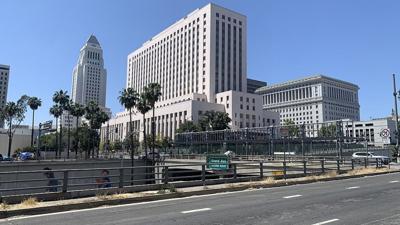


Los Angeles County Superior Court
LOS ANGELES — California’s “Lemon Law” last year drove a record volume of vehicle warranty lawsuits in state and federal courts as product-liability litigation surged nationwide, according to a new report.
The legal analytics company Lex Machina’s 2026 Product Liability Litigation Report found that the state’s Song-Beverly Consumer Warranty Act fueled a glut of warranty-related vehicle claims in the Los Angeles County Superior Court, where the product liability caseload went from 479 in 2021 to 11,822 in 2025.
Nationwide, from 2023 through last year, new federal product liability lawsuits outpaced federal disputes involving intellectual property, employment or labor issues and civil rights cases combined, according to the report. Over that time period, court-ordered payouts and class action settlements in federal product liability cases amounted to more than $6.37 billion, the study said.
“‘Vehicle warranty’ claims have been especially popular in California’s federal district courts, where more such cases were filed from 2016 to 2025 than every other federal district combined,” the report states. “... Early data for 2026, however, suggests that vehicle warranty lawsuits may have peaked in 2025, which makes sense in context of recent amendments to Song-Beverly that limited the time for plaintiffs to file vehicle warranty lawsuits.”
Under those amendments, which were included in Assembly Bill 1755, California consumers have 12 months after the expiration of a vehicle warranty to file a lemon-law claim.
In the federal court system, a surge in equipment and vehicle recalls by the National Highway Traffic Safety Administration (NHTSA) also tracks with the rise in lawsuits involving vehicles, according to the Lex Machina study.
Ryan Hasting, a Lex Machina product-liability data expert, said the impact of the California Lemon Law amendments will likely be short-term.
“While these changes could lead to a short-term decline (in warranty-related lawsuits), they did not remove the aspects of the Song-Beverly Act that make it so appealing to practitioners representing affected consumers, such as the potential for attorneys' fees and double damages awards,” Hasting said in an emailed statement to the Southern California Record.
Beyond the wording of the law, technological enhancements in newer vehicles, such as collision avoidance features, can add complexity – and consequently more points of potential failure – creating more avenues for legal claims under the Lemon Law, he said.
“Some of the technical requirements for filing a claim may have changed, but the incentives for successfully litigating a claim under the act remain, and practitioners will adapt,” Hasting said. “Changes within the automotive or legal industries at large, or even unforeseen future changes or refinements to the act itself, may well lead to these cases trending upward in the coming years.”
Maryann Marino, regional director of California Citizens Against Lawsuit Abuse (CALA), said the study confirms what California CALA has been telling lawmakers in the state for years.
“California has become the epicenter of lawsuit abuse in America, and it's not slowing down,” Marino told the Record. “The dramatic increase in product liability filings highlighted in this report is deeply concerning and consistent with the broader litigation trends California CALA has been tracking across the state.”
Such product liability filings contribute to court case backlogs, higher insurance premiums and rising costs for goods and services, she said.
“When laws intended to protect consumers instead create opportunities for excessive litigation, the costs ultimately fall on California's small businesses and their families,” Marino said. “Lawsuit abuse will continue to show up on your bill in the form of the tort tax. These numbers underscore the need for policymakers to pursue reforms that curb lawsuit abuse while preserving legitimate consumer protections.”
Overall, federal courts in California have become bogged down with product liability cases that are not part of multidistrict litigation (MDL), the study says. The Los Angeles-based Central District of California handled 3,004 such cases from 2023 to 2025, by far the largest volume of any federal district court in the nation, according to the report


