
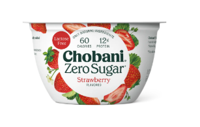


Chobani Zero Sugar
SAN DIEGO — A Southern California federal judge has preserved the bulk of a class action alleging Chobani misled consumers about the presence of so-called "plasticizer" chemicals in certain yogurt products.
In an opinion filed April 6, U.S. District Judge James Simmons Jr. said plaintiff Amy Wysocki may continue her false advertising claims regarding trace levels of four types of phthalate compounds found in two Chobani plain Greek yogurts. Phthalates, according to Simmons, are chemicals the U.S. Food and Drug Administration has deemed safe for hundreds of products, but Wysocki claimed they contravene Chobani’s advertising of its yogurt as containing “only natural ingredients.”
Simmons further noted Wysocki’s complaint said she learned about the presence of phthalates in Chobani yogurt via PlasticList, which published an online report from an unidentified laboratory that said it identified the issue during 2024 testing. She sued in April 2025, prompting Chobani’s motion to dismiss.
In addition to the “Only Natural Ingredients” text, Wysocki also alleged she “reasonably understood defendant’s representations and warranties to mean the product is free of non-natural toxic chemicals, like phthalates and therefore expected that the product can be purchased and consumed as marketed and sold” and said she wouldn’t have bought the yogurt, or wouldn’t have paid the same price, given her current knowledge.
Simmons said those allegations were sufficient to survive a motion to dismiss based on a lack of standing. He also said her claims meet the heightened standard required when allegations “sound in fraud,” including particular details such as her purchase of nonfat plain Greek yogurt from a San Marcos retailer in 2023 and the labeling on the package.
Although Chobani argued third-party testing from a year later doesn’t support Wysocki’s theory the specific yogurt she bought contained phthalates, Simmons noted the complaint alleged the company was using the same No. 5 plastic for its containers and further claimed the chemicals leach from the container into the food.
Simmons did dismiss allegations premised on the presence of one chemical, dibutyl phthalate, writing the complaint doesn’t allege PlasticList’s testing detected DBP, but allowed Wysocki a chance to amend those claims.
Chobani failed to persuade Simmons its product labels aren’t potentially misleading. He noted Wysocki argued a pledge the yogurt didn’t contain artificial flavors or sweeteners or preservatives represents a food entirely “free of unsafe, unnatural, toxic substances, such as phthalates” and said although Chobani didn’t include the chemicals in its ingredient list, the factual questions Wysocki raised are suitable for trial, not a dismissal motion.
Wysocki alleged “natural ingredients are one of the most important aspects of healthy food, which is why she, and reasonable consumers, are vastly more likely to purchase a product with a ‘natural’ label,” Simmons wrote. “Indeed, she alleges that, when food packaging does not contain the word ‘natural,’ over half of reasonable consumers assume the product must contain chemicals. Similarly, nearly half of reasonable consumers assume that such offerings are unhealthy or full of preservatives.”
Simmons further said Wysocki specifically “alleges the harmful nature of these chemicals, as their health impacts include disruptions of the endocrine, respiratory, and nervous systems, which can result from both high and low dose exposure.”
He sided with Chobani on its challenge to Wysocki’s omission claim, framing it as an allegation of partially omitting information and finding the complaint actually “argues the products’ labels are outright false” while her response to the dismissal motion effectively conceded Chobani’s position.
Chobani also argued Wysocki shouldn’t be allowed to sue because she seeks to impose a stricter standard than California’s Proposition 65, which dictates product warning labels as regards to cancer-causing chemicals, a policy Simmons called “the most stringent in the nation.” Wysocki said her claims were not about cancer or reproductive toxicity, as Prop 65 addresses, but whether the yogurt was all natural and the potential for other medical concerns like “endocrine disruption, developmental harm, immunological and renal harm, and hormone disruption,” Simmons wrote.
Although he said both sides were persuasive, Simmons said agreeing to dismiss the complaint could only result from “improperly making factual findings on contested issues at the pleading stage.”
Simmons also agreed to dismiss Wysocki’s claims under the state’s unfair competition and false advertising laws and the Consumers Legal Remedies Act as well as for unjust enrichment, but granted her the right to amend the complaint to show why restitution, disgorgement, damages and an injunction are necessary on top of the monetary damages the remainder of the complaint seeks.
Finally, Simmons said Wysocki adequately pleaded the required elements of her claim for breach of express warranty. He gave her until May 6 to file an amended complaint.
Wysocki and the potential class are represented by attorneys from the firm of Bursor & Fisher, of Walnut Creek.