



HOUSTON – A Houston appellate court has upheld a confidential arbitration award favoring the law firm Baker Botts in a malpractice case brought by natural gas companies after the law firm and its lead attorney made at least $32,500 in campaign contributions to five judges connected to the case, records reviewed by The Southeast Texas Record show.
The contributions do not by themselves establish wrongdoing. But the timing – including $6,500 paid in June to Justice Ken Wise while the appeal was pending before the 14th Court of Appeals – raises questions about disclosure, recusal and the appearance of impartiality in a case that was largely removed from public view through arbitration.

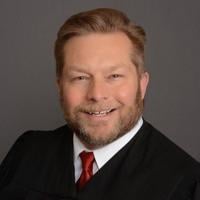
Wise

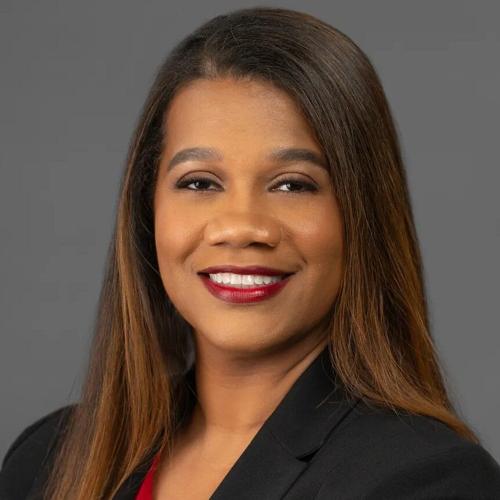
McLaughlin
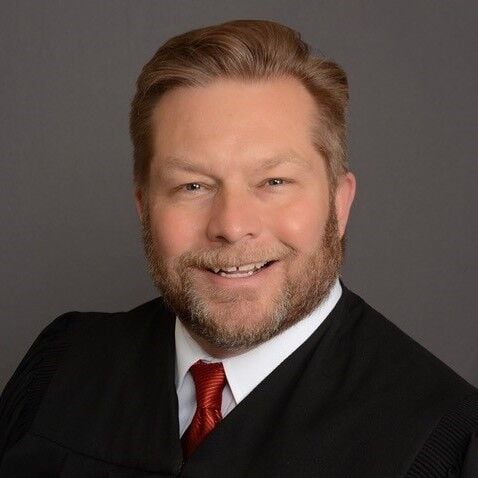
Bridges

Phillips

Shuchart
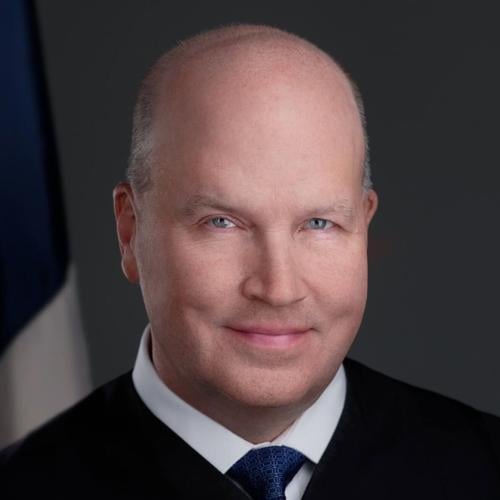
The August 4 appellate ruling, signed by Wise and Justices Tonya McLaughlin and Chad Bridges, affirmed a Harris County judge’s decision rejecting EQT’s effort to vacate the arbitration award. The court’s decision came after the panel declined EQT’s request for oral argument, according to records included in the case file.
EQT, a major American natural gas producer, alleged Baker Botts represented parties with adverse interests when drafting the agreement and failed to preserve EQT’s ability to terminate the deal if the Mountain Valley Pipeline was not operational by a specified date. Baker Botts has denied malpractice, calling the claims meritless and maintaining that it represented EQT Corp. and its subsidiaries in a longstanding attorney-client relationship.
EQT Production Co., EQT Energy LLC and EQT Corp. sued Baker Botts and attorney Scott Looper in Harris County in 2022 alleging malpractice and breach of fiduciary duty connected to the drafting of a 2018 gas-gathering agreement known as the Hammerhead Gas Gathering Agreement.
The central public dispute later became whether EQT’s claims should have been decided by a jury or in confidential arbitration. In legal matters, arbitration is an alternative dispute resolution method where a neutral third person, called an arbitrator, hears arguments and evidence out of court to make a final, legally binding decision on a disagreement.
Baker Botts and Looper moved in December 2022 to add EQT Corp. as a party and compel arbitration, arguing that an April 2018 engagement agreement covered the dispute and delegated arbitrability questions to an arbitration panel. Judge Fredericka Phillips granted the request in a one-page March 23, 2023, order that did not explain the basis for the ruling.
Before Phillips compelled arbitration in the one-sentence order, Robin Gibbs, who led Baker Botts’ defense, reportedly told her earlier signed arbitration agreements had been incorporated into a later engagement agreement.
The public malpractice case then disappeared behind closed doors.
But according to later arbitration filings, there were no earlier signed arbitration agreements. If that is accurate, the representation that opened the door to arbitration was wrong.
The consequences were enormous: no public jury trial, a confidential arbitration, privileged documents produced under seal, and a second claim accusing Baker Botts of breaching fiduciary duties to its client. When the arbitration result returned to state court, the motion to vacate and the hearing transcript were sealed.
Judge Lee Shuchart ruled for Baker Botts without publicly confronting the alleged misrepresentation. The appeal followed the same pattern: no oral argument, an apparent change in the panel, and an opinion for Baker Botts that reportedly never addressed the factual premise that sent the case into arbitration.
EQT has argued its malpractice allegations concerned work performed in 2017 and early 2018, before the April 2018 engagement agreement was signed. It also contended that neither EQT Production nor EQT Energy was named in that agreement and that Baker Botts had not identified an earlier written agreement requiring the companies to arbitrate.
In its appellate brief, EQT accused Baker Botts of relying on an inaccurate representation that earlier written agreements had been “superseded” by the April 2018 agreement. The brief says no prior written engagement agreements existed between Baker Botts and the two EQT subsidiaries that initially sued.
Baker Botts’ position was that EQT Corp. controlled the legal relationship, that the engagement agreement covered the parent company and its subsidiaries and that the plaintiffs could not avoid arbitration by omitting EQT Corp. from the original lawsuit.
The compelled arbitration ended with a February 27, 2025, award for Baker Botts. When EQT sought to vacate the award, Judge Lee Shuchart denied the request and confirmed the award in a July 15, 2025, order. Like Phillips’ earlier ruling, Shuchart’s order gave no detailed explanation.
Documents reviewed by The Record show Baker Botts and Robin Gibbs, the Gibbs & Bruns attorney who represented the firm, made contributions totaling $32,500 to Phillips, Shuchart, Wise, Bridges and McLaughlin.
The records list $3,000 contributed to Phillips after she compelled arbitration; $3,500 to Shuchart before she ruled on the effort to vacate the arbitration award; and $26,000 combined to the three appellate justices before they joined the opinion upholding Baker Botts’ victory.
Wise received $13,000 in total, including $1,500 from Gibbs on June 9 and $5,000 from Baker Botts on June 29, while the appeal was pending. The court ruled for Baker Botts about five weeks later. Bridges receive
d $6,500, and McLaughlin received $6,500, according to the contribution timeline.
The documents also show Baker Botts gave Shuchart $2,500 on December 12, 2024, after her election, and Gibbs gave her $1,000 on December 31, 2024. Shuchart later heard EQT’s challenge to the arbitration award.
Texas elects judges in partisan contests, and lawyers and law firms may make lawful campaign donations. Still, campaign contributions from litigants or lawyers with matters before a judge can prompt recusal or disclosure questions, particularly when the circumstances create an appearance of bias.
The U.S. Supreme Court ruled in Caperton v. A.T. Massey Coal Co. that due process can require judicial recusal when a donor’s political spending creates a serious, objective risk of actual bias. The ruling did not establish that every campaign contribution requires disqualification.
The documents reviewed for this story do not show that the judges disclosed the contributions in the case record or that any party sought their recusal based on them. They also do not establish that the contributions affected any ruling.
Phillips previously received a public warning from the State Commission on Judicial Conduct in an unrelated matter after attending a luncheon with attorneys from a firm appearing in a case before her, then failing to disclose the contact to all parties before awarding the firm’s client $2 million in attorney fees. The commission ordered additional education. That disciplinary action did not involve Baker Botts, Gibbs or the EQT case.
The case has attracted scrutiny, in part, because Baker Botts was the defendant accused of malpractice, rather than simply counsel for a client, and because the arbitration process limited public access to the underlying evidence and arguments. The motion to vacate and related hearing materials apparently were sealed.
EQT’s appellate brief says the trial court improperly deprived the subsidiaries of a jury trial by compelling arbitration without a valid agreement. Baker Botts has argued the dispute fell within a broad arbitration provision and that EQT’s substantive claims lack merit.
Gibbs announced his retirement July 23, less than two weeks before the appellate court’s August 4 ruling.
From 2020 to the middle of this year, Gibbs made nearly $486,000 in federal political contributions, and roughly 98 percent of it was to Republican recipients.
His giving surged from $5,875 in 2021 to $100,768 in 2022, which is when the Baker Botts dispute arose and Gibbs & Bruns was retained by the firm.
Again, that does not prove Gibbs used political money to influence this case. But it does establish he was far more than a lawyer making occasional campaign donations. He was a significant financial participant in the same Republican political system in which Texas judges must campaign, raise money and seek re-election.
The question is whether the judges connected to this case understood the broader political weight behind the man and firm contributing to them and whether that clout played any role in the unexplained rulings, the apparent panel change or the courts’ silence about the disputed basis for arbitration.
And in addition to Phillips’ previous public scolding, Baker Botts also has a documented history of campaign-contribution scrutiny.
A 2013 Texas Tribune and Marshall Project investigation reported that Baker Botts represented Merck in an appeal decided 7-0 for the company and that the justices in that decision had received at least $85,000 combined from the Baker Botts political action committee during the preceding decade. Baker Botts said the court decided cases on the law and facts.
Headquartered in Houston, Baker Botts was founded in 1865 and has more than 700 attorneys in offices around the world.
Baker Botts, Gibbs & Bruns and involved attorneys from those firms did not return calls seeking comment for this story. The same goes for all five judges and justices. Through a spokesperson, EQT declined to comment.
Harris County District Court (61st Judicial District) case number 2022-71602