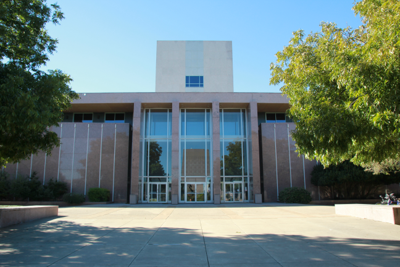


Texas Supreme Court
AUSTIN — The Texas Supreme Court on Friday dismissed a telecommunications fee lawsuit brought by several cities against the state, effectively ending nine years of litigation.
In 2017 and 2019, the Texas Legislature reduced the amount of money cities can charge telecommunications companies to run their equipment on public property alongside city streets.
Displeased with the lost revenue, a group of cities, which includes McAllen, banded together and sued the state of Texas to block the Legislature’s action, claiming that charging less than market rates for the use of public property amounted to an unconstitutional gift to the telecom companies, even in though the industry is heavily regulated, states the high court’s opinion.
The lawsuit, which began in 2017, asked for a declaration that the statutorily reduced rates violate the Texas Constitution’s Gift Clauses. The district court issued the requested declaration in part, and a court of appeals went further, essentially agreeing with the cities about the Gift Clauses.
“We vacate the lower courts’ judgments as well as the court of appeals’ opinion, which will have no continuing precedential effect with respect to the Gift Clauses,” the opinion states. “We do so without addressing the Gift Clauses at all, however, because this lawsuit suffers from a basic defect that has deprived the courts of jurisdiction from the beginning: The cities sued the wrong defendant.”
Justices found that a plaintiff seeking to sue the state over an allegedly unconstitutional law must at least “identify and name the officer or agency with authority to enforce the challenged law” so that a court may direct its judgment.
“Perhaps, if the case is revived in a justiciable posture, some of the time and effort expended over the last nine years will not have gone entirely to waste,” the opinion states. “Wasteful or not, courts must always dismiss a case to which the judicial power does not extend, no matter the stage of the litigation at which the defect is discovered.”
Supreme Court case No. 24-1060