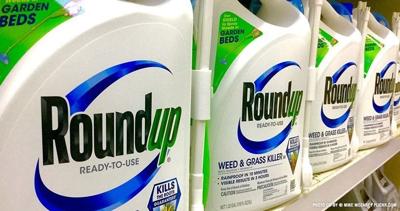


WASHINGTON, D.C. — The U.S. Supreme Court has reversed a decision by the Missouri Court of Appeals that allowed state-law liability claims against Monsanto for failing to include a cancer warning on the label of its Roundup herbicide, ruling that federal pesticide-labeling requirements preempt the state-law claim at issue.
The June 25 ruling, issued in a 7-2 decision, centers on a lawsuit brought by Missouri resident John L. Durnell, who alleged that his non-Hodgkin’s lymphoma resulted from exposure to Roundup, a glyphosate-based herbicide manufactured by Monsanto.
A Missouri jury had previously awarded Durnell $1.25 million after finding in his favor on claims that Monsanto failed to warn consumers that glyphosate is carcinogenic.
According to the Supreme Court’s decision, as described by supporters of Monsanto’s appeal, the Environmental Protection Agency has repeatedly determined that glyphosate is “not likely to be carcinogenic to humans” and has approved Roundup labels that do not contain a cancer warning.
The EPA has also rejected proposals to add such a warning, concluding that it would be false and misleading.
Despite those federal determinations, Durnell argued that Monsanto should have included a warning on Roundup’s label advising consumers that glyphosate is carcinogenic.
The Missouri Court of Appeals upheld the jury verdict, rejecting Monsanto’s argument that the claim was preempted by the Federal Insecticide, Fungicide and Rodenticide Act (FIFRA).
The Supreme Court disagreed, concluding that EPA approval of Roundup’s label without a cancer warning established federal labeling requirements under FIFRA.
According to the court’s reasoning, Durnell’s state-law claim would effectively require Monsanto to add a warning that was “in addition to or different from” the labeling requirements established under federal law.
The decision represents a significant victory for Monsanto and its parent company, Bayer, as well as for business groups and industry organizations that argued the Missouri ruling conflicted with federal regulatory authority over pesticide labeling.
Among those supporting reversal was the Washington Legal Foundation, which joined the U.S. Chamber of Commerce, the American Chemistry Council, the Pharmaceutical Research and Manufacturers of America and the Product Liability Advisory Council in filing an amicus brief with the Supreme Court.
In that filing, the Washington Legal Foundation argued that state tort law should not be permitted to override express federal preemption provisions or undermine what it described as Congress’s science-based framework for regulating herbicide labels.
The organization contended that allowing state-law liability based on the absence of a cancer warning would conflict with federal determinations made by the EPA under FIFRA.
Following the court’s ruling, Washington Legal Foundation General Counsel and Vice President of Litigation Cory Andrews said the decision reaffirmed limits on state-court authority in cases involving federally regulated product labeling.
“Today’s ruling reaffirms that state-court juries cannot punish businesses for merely adhering to regulatory federal law,” Andrews said in a statement.
Bayer CEO Bill Anderson also issued a statement on the matter.
“This decision is good for American farmers who help feed the world. It provides the regulatory clarity necessary for innovators like us to develop the agricultural tools that guarantee an affordable food supply,” Anderson said. "This litigation has enormous costs for the company and has impacted public trust. The decision brings overdue justice on an issue that should have been clarified much earlier. It’s time to put it behind us. Strengthened by this ruling, we continue to pursue our multi-pronged containment strategy, which includes the previously announced class settlement.”
The Supreme Court’s ruling overturns the Missouri appellate decision that had allowed the verdict to stand and clarifies the relationship between federal pesticide-labeling requirements and state-law failure-to-warn claims.
At the center of the court’s analysis was whether a state could impose liability for the absence of a warning that federal regulators had not required and had, according to the record described by supporters of the appeal, expressly rejected.
In this case, the Supreme Court concluded that federal requirements governing Roundup’s label preempted the state-law duty asserted by Durnell, bringing an end to the Missouri judgment that had awarded him $1.25 million based on the alleged failure to include a cancer warning on the product.
U.S. Supreme Court of the United States case number: 24-1068