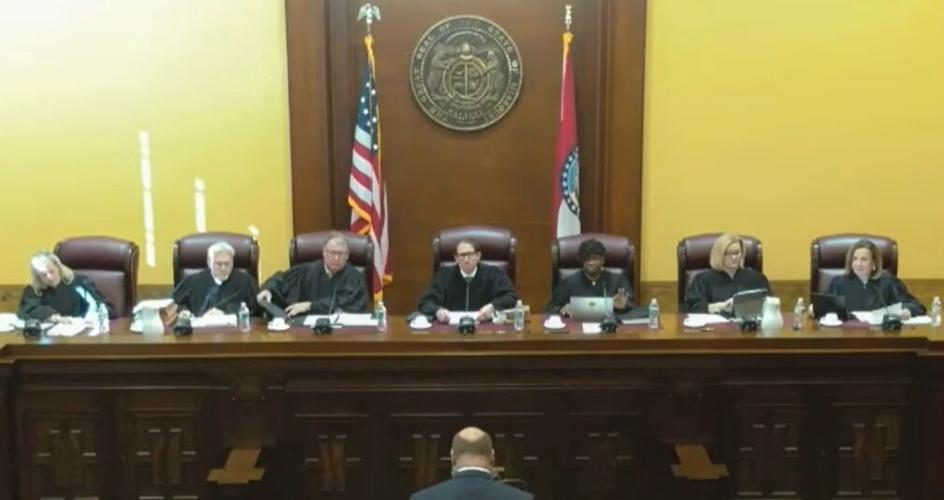


Missouri Supreme Court hears oral arguments.
JEFFERSON CITY — The Missouri Supreme Court has unanimously blocked a new congressional district map backed by President Donald Trump from being used in the November general election, ruling that voters must first have the opportunity to approve or reject the Republican-led redistricting plan.
The decision Thursday represents a significant setback for Republicans in their effort to strengthen their position in the U.S. House during the 2026 midterm elections. The court ruled that Missouri’s newly drawn congressional districts, which were used during the state’s August primary elections, cannot be used for the November election unless voters approve them in a statewide referendum, the Associated Press reported.
The ruling also restores Missouri’s congressional map based on the 2020 census for the November general election unless voters ultimately approve the new boundaries.
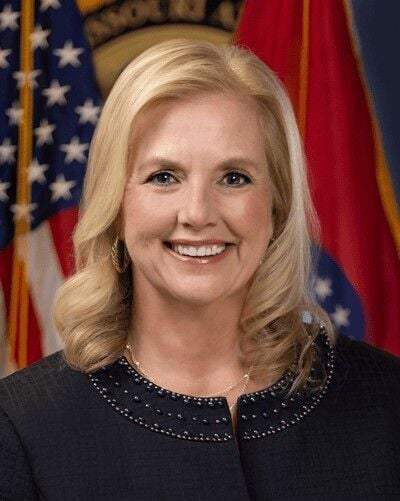
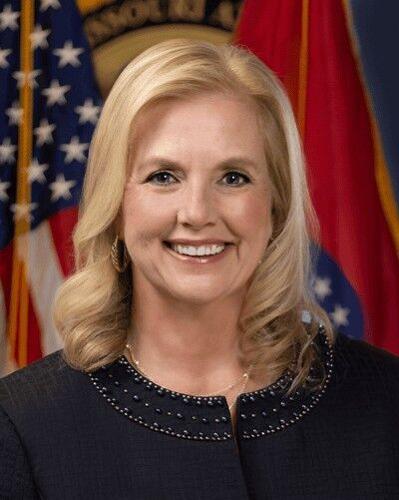
Hanaway
Missouri Attorney General Catherine Hanaway, a Republican, said she intends to immediately appeal the decision to the U.S. Supreme Court.
She described the ruling as creating what she called a “full-fledged constitutional crisis,” the Associated Press reported.
The Missouri Supreme Court’s decision centered on a citizens’ referendum petition challenging the new congressional districts. Opponents submitted more than 300,000 signatures in December seeking to place the map before voters.
The Associated Press reported the number was well above the approximately 110,000 signatures needed to suspend implementation of the new districts while a referendum could be held.
Republican Secretary of State Denny Hoskins rejected the petition on the day of the August primary, arguing that Missouri’s referendum process could not be used to challenge congressional redistricting.
A lower court agreed with Hoskins, but the Missouri Supreme Court overturned that decision Thursday.
The state’s highest court determined that the referendum petition was legal, sufficient and submitted on time. As a result, the legislation containing the new congressional districts had not taken effect and cannot take effect unless Missouri voters approve it.
That means the congressional map adopted following the 2020 census remains in place for the November general election, according to the court’s ruling and the Associated Press.
The dispute is particularly significant because the new map was designed to improve Republican chances of gaining another seat in Missouri’s eight-member congressional delegation.
Republicans currently hold six of the state’s eight U.S. House seats, while Democrats hold two.
The redistricting effort focused heavily on Missouri’s 5th Congressional District, represented by Democratic Rep. Emanuel Cleaver of Kansas City.
After Trump urged Republican-controlled states to redraw congressional districts in ways that could improve the party’s prospects, Republican Gov. Mike Kehoe called lawmakers into a special session to undertake the Missouri redistricting effort.
The resulting map reshaped Cleaver’s district by removing portions of the Kansas City area and extending the district into more heavily Republican rural areas.
Cleaver has represented the district for two decades and previously served as Kansas City’s first Black mayor.
Cleaver said Thursday that opponents of the redistricting plan had prevailed after fighting what he described as an effort to silence voters.
He had continued his reelection campaign despite uncertainty over which congressional map would ultimately be used.
Republican state Sen. Rick Brattin, a Marine veteran and founding member of the conservative Missouri Freedom Caucus, criticized the court’s decision.
Brattin won the Republican primary in the newly configured district and argued that the ruling effectively disenfranchises voters who participated in the August primary under the new boundaries.
The Missouri case is part of a broader national fight over congressional redistricting that has expanded well beyond the traditional schedule for redrawing House districts.
Congressional districts are generally redrawn at the beginning of each decade after the U.S. census. The current dispute, however, arose from Trump’s push for Republican-led states to redraw congressional maps before the 2026 elections in an effort to improve Republican chances of maintaining their narrow House majority, the Associated Press reported.
That effort has prompted redistricting battles in more than a dozen states and generated numerous lawsuits.
Missouri’s Supreme Court ruling is among the setbacks Republicans have faced as states battle over the political makeup of congressional districts.
Republicans had hoped that new maps in several states would produce additional House seats for their party, while Democrats have pursued their own redistricting efforts in response.