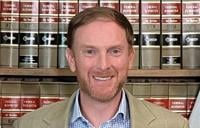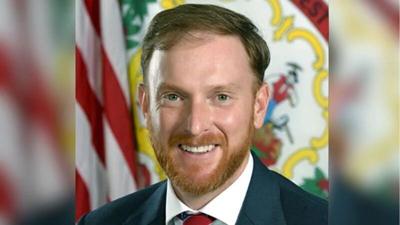


West Virginia Attorney General J.B. McCuskey
CHARLESTON – West Virginia Attorney General J.B. McCuskey is leading a 20-state coalition in support of students pursuing degrees that Virginia has deemed too religious to qualify for the state’s scholarship programs.
The coalition’s amicus brief in Johnson v. Fleming , which is before the U.S. Court of Appeals for the Fourth Circuit, argues those exclusions violate the students’ First Amendment right to the free exercise of religion.
“Students who are called to religious study deserve the same access to state scholarship programs as anyone else,” McCuskey said. “West Virginia will not stand by while other states force students to choose between their faith and a public benefit they have every right to receive.”
In the case, the plaintiffs are not pursuing degrees solely to lead a religious congregation. Cameron Johnson is pursuing a Pastoral Leadership degree while also considering careers in real estate and nonprofit work. Luke Thomas is studying Music and Worship. Trace Stevens, a member of the Virginia National Guard, is pursuing a religious studies degree to qualify for a commission as a National Guard Chaplain.
All three were denied Virginia state scholarship dollars solely because of the religious character of their chosen programs of study, even though the scholarships are available to students in comparable secular programs.
Virginia has sought to justify its scholarship exclusions by relying on Locke v. Davey, a U.S. Supreme Court decision permitting Washington State to exclude from a scholarship program students who were training to become ministers. The coalition’s brief argues that Locke does not apply here because these students are pursuing degrees that open onto a range of career paths. It also claims Virginia’s exclusions are arbitrary, funding some religious programs while denying funds to others.
The brief also says a ruling for Virginia could harm not only religious students but every state that administers scholarship programs.
McCuskey says West Virginia serves religious students and wants to continue doing so without making the arbitrary and constitutionally risky government judgments about which degrees are “too religious” to fund that a Virginia-style regime would require.
The coalition asks the Fourth Circuit to reverse the district court’s ruling and hold that Virginia’s scholarship exclusions violate the First Amendment.
West Virginia is joined by Alabama, Alaska, Arkansas, Florida, Georgia, Idaho, Indiana, Iowa, Kansas, Louisiana, Missouri, Montana, Nebraska, Ohio, South Carolina, South Dakota, Tennessee, Texas and Utah. Each state administers scholarship programs serving hundreds of thousands of students, religious and non-religious students alike.
U.S. Court of Appeals for the Fourth Circuit case number 26-1437