
WILLIAMSON – An attorney is asking a Mingo County judge to throw out an indictment of the former Tug Valley High School booster club president and remove the county prosecutor’s office from the case because of grand jury irregularities and conflicts of interest.
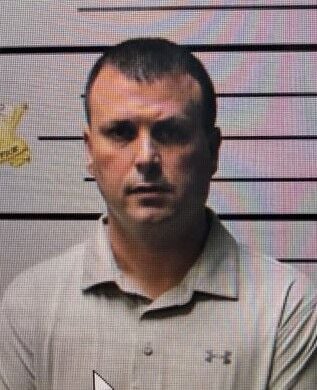
Hodge
The Mingo County grand jury handed up a 30-count felony indictment last week against Robert Tyler Hodge, a Mingo County businessman and assistant basketball coach at Tug Valley High School. He was arrested June 5 and is free on bond.
The indictment includes 13 counts of computer fraud, 12 counts of unauthorized use of an access device, two counts of obtaining money by false pretenses, two counts of fraudulent schemes and a single count of money laundering.
According to the criminal complaint, the allegations center around nearly $6,000 in donations for the Tug Valley basketball program. The indictment includes allegations of fraudulent purchases with the money at a variety of stores, restaurants and online retailers.

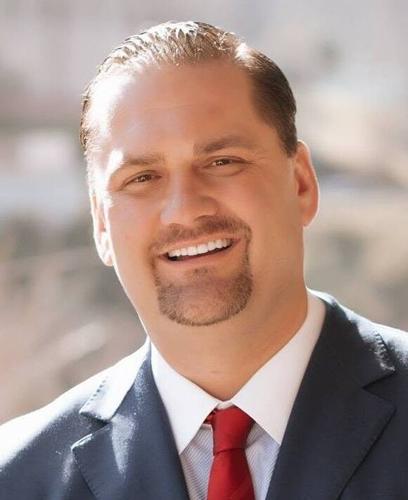
Simpkins
In a June 4 motion in Mingo Circuit Court, attorney Jeffrey S. Simpkins says Hodge’s indictment is invalid because a grand juror allegedly lived in neighboring Wayne County for about 18 months and still participated in the panel that returned charges against Hodge.
In a separate June 8 filing, Simpkins says Mingo County Prosecuting Attorney Brock Mounts and his entire office must be disqualified because several alleged victims are current and former members of that office or other county officials whom the prosecutor is obligated by statute to represent.
The June 4 motion says a grand juror who should have been disqualified “willfully, intentionally and fraudulently” heard evidence, took part in deliberations and voted for a true bill against Hodge despite being a Wayne County resident. Under West Virginia law, prospective jurors are disqualified if they are not residents of the county where the grand jury sits.
Simpkins says the grand juror either falsely attested to being a Mingo County resident or “tacitly misrepresented” residency status by remaining silent during voir dire. He also claims the same juror later broke the rule of grand jury secrecy by disclosing confidential matters from the proceedings and the identity of at least one other grand juror, conduct that could expose the juror to criminal penalties.
The filing raises questions about whether at least 15 legally qualified grand jurors were present and participating when the state presented its case, as required by state code for a “competent” grand jury.
“If another grand juror was excused from defendant’s case or otherwise did not participate, a quorum of fifteen (15) qualified grand jurors were not in attendance when defendant’s case was presented,” Simpkins writes, arguing that “the indictment is invalid” under those circumstances.
While acknowledging a statute that says an indictment cannot be quashed solely because one or more grand jurors were incompetent or disqualified, Simpkins contends the combination of residency issues, secrecy violations and potential lack of a quorum goes beyond a technical defect.
The motion also quotes Martin Luther King Jr. and warns that allowing the case to proceed “will undeniably exacerbate the prevailing skepticism of legal institutions in Mingo County,” urging the court to dismiss the indictment and order a new grand jury to hear the matter.
In the June 8 filing, Simpkins seeks to disqualify Mounts and the entire Mingo County Prosecuting Attorney’s Office and to have a special prosecutor appointed through the West Virginia Prosecuting Attorneys Institute. That filing focuses on alleged conflicts stemming from who the indictment identifies as victims: donors to the Tug Valley High School Panther Pride booster club, described as “a definable class of donors.”
According to the motion, that donor group includes former Mingo County Assistant Prosecuting Attorney and current County Commissioner Nathan Brown, current Assistant Prosecuting Attorney Josh Ferrell and current Mingo County Circuit Clerk Lonnie Hannah.
Simpkins emphasizes that two of those individuals – Ferrell and Brown – were on the staff of the Mingo County Prosecuting Attorney’s Office at the time of the alleged offenses and that Brown and Hannah now fall within the category of “statutory clients” the prosecutor is required by law to represent in civil matters involving the county or county entities.
The motion notes that prosecuting attorneys must “advise, attend to, bring, prosecute, or defend” cases in which the county or a county board of education is interested, framing Brown and Hannah as clients whose interests Mounts is obligated to protect. “Trusted professional and political colleagues and/or clients of the prosecuting attorney are the alleged victims,” Simpkins writes, calling the resulting “conflicts of interest and appearances of prosecutorial impropriety” “devastating” and arguing it is “irrefutable” Mounts should be removed from the case.
The defense relies on West Virginia Supreme Court precedent laying out when a prosecutor must be disqualified because of personal or professional interests. The motion quotes syllabus points from Nicholas v. Sammons and State v. Knight, which describe circumstances where prior attorney‑client relationships, animosity, financial interests, kinship or close friendships may call a prosecutor’s objectivity into question and justify appointment of a special prosecutor.
Simpkins also cites Garlow v. Zakaib for the principle that a circuit court may disqualify a lawyer “where the conflict of interest is such as clearly to call in question the fair and efficient administration of justice.” He further notes that under Moore v. Starcher, disqualification of an elected prosecutor typically extends to assistants in the office, reinforcing his request to remove the entire Mingo County Prosecuting Attorney’s Office from Hodge’s case.
The disqualification motion portrays the issues as part of a broader crisis of confidence in Mingo County’s justice system, directly linking them to the alleged grand jury problems raised in the earlier filing. “Grand jury irregularities in this case have already ignited a firestorm of public cynicism regarding the operational and ethical shortcomings of Mingo County governance,” the motion states, adding that it is “incumbent upon the court to intervene.”
Both motions frame the dispute as a test of public trust in local institutions as much as a fight over one indictment, repeatedly invoking the idea that prosecutors wield “prodigious power” and must avoid even the appearance of bias, favoritism or impropriety. Simpkins argues that continuing with the current indictment and current prosecuting team would “irreparably” erode confidence in the criminal justice system and urges the court to exercise its inherent authority to act “in the interest of the public good.”
Simpkins says the legal handling of Hodge’s case is “another sad day and black eye for Mingo County.”
“After many requests to dismiss, after reminding the prosecutor of his ethical obligations, and after communicating that he has competing interest in the prosecution, the MCPA has declined to dismiss the indictment and declined to ask for a special prosecuting attorney to review the merits of the claims and present the case again to a new panel of grand jurors,” Simpkins told The West Virginia Record. “This case reeks of the ‘appearance of impropriety’ and could be considered a malignant prosecution.”
Mingo Circuit Court case number 26-F-109