


CHARLESTON – The West Virginia Supreme Court has blocked a lawsuit by 33 local United Methodist churches that accused denominational officials of misleading them into missing a deadline to leave the denomination while keeping their property.
In a November 4 decision, the court granted a writ of prohibition preventing enforcement of a Mercer Circuit Court order that had revived the lawsuit. The justices ruled that deciding the congregations’ claims would require a civil court to interpret church law, violating constitutional protections for religious freedom.
The decision represents a victory for trustees of the West Virginia Conference of the United Methodist Church in a dispute over disaffiliation – the process by which congregations leave the denomination.
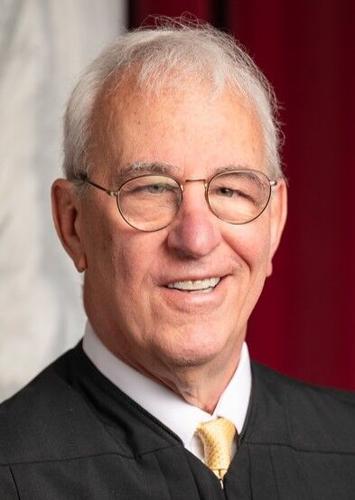
Writing for the court, Justice Charles Trump said the congregations’ allegations of fraud and collusion did not overcome the constitutional barrier.

Trump
“Characterizing a difference of opinion over the meaning of the Discipline’s provisions as a false statement does not confer jurisdiction upon a secular court to decide the underlying ecclesiastical question,” Trump wrote, referring to the denomination’s governing Book of Discipline.
The congregations sought to leave over doctrinal disagreements involving the ordination of gay clergy and the performance of same-sex weddings. At issue was whether they could retain property that the denomination maintains is held in trust for the benefit of the entire church.
A temporary church provision adopted in 2019, known as Paragraph 2553, allowed qualifying congregations to leave with property after meeting voting, financial and other requirements and obtaining their annual conference’s approval. The provision expired Dec. 31, 2023.
According to the opinion’s account of the complaint, conference representatives told the congregations in 2022 that they did not qualify under that provision. The representatives allegedly said the churches could wait until after the denomination’s 2024 General Conference and then use another provision, Paragraph 2549, to leave with their property.
The congregations alleged that they relied on those assurances. After the 2024 meeting, they decided to leave because of changes to church rules they opposed, but conference officials told them they would have to surrender their real and personal property.
Their lawsuit alleged fraud, breach of fiduciary duty, breach of contract, conspiracy and other claims. The allegations were not findings that misconduct occurred.
The denomination’s Judicial Council, its highest legal body, ruled in October 2024 that Paragraph 2549 governed church closures and property sales, not disaffiliation. It also determined that the expiration and deletion of Paragraph 2553 had removed the only authorized pathway for local churches to disaffiliate.
The state Supreme Court said resolving the congregations’ claims would require a judge to decide what those church provisions permitted and whether conference officials correctly interpreted them.
“That a dispute has consequences for ownership of property does not negate the constitutional imperative that the civil courts are forbidden from intruding upon matters committed to a church’s ecclesiastical authority,” Trump wrote.
The congregations argued that a fraud-or-collusion exception allowed their case to proceed. But the court said that narrow exception concerns misconduct used to procure a final church adjudication – not alleged misrepresentations underlying a dispute.
The churches did not allege that fraud or collusion produced the Judicial Council’s decisions, the court said. It left the exception’s precise scope unresolved.
The circuit court initially dismissed the lawsuit for lack of subject matter jurisdiction. After the case was reassigned to a different judge, the court reopened it, concluding that the fraud and collusion allegations presented factual questions for a jury.
The Supreme Court blocked that March 13 order, holding that the original dismissal was correct and that the existence of potential jury questions could not supply authority to hear the case.
The justices emphasized that religious organizations are not categorically immune from civil lawsuits. Courts may decide secular disputes involving churches when they can do so without resolving religious questions. In this case, however, the court said the congregations’ claims crossed that constitutional line.