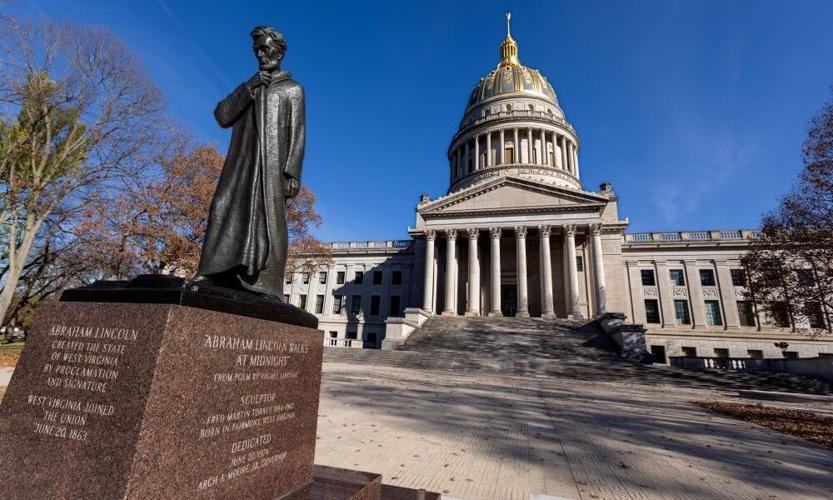


“Abraham Lincoln Walks At Midnight” outside the West Virginia State Capitol.
CHARLESTON – Two resolutions that would amend the state Constitution to ensure only United States citizens vote in West Virginia elections are again languishing in committee.
House Joint Resolution 18 and Senate Joint Resolution 9 both were introduced last month, and both were sent to their respective Judiciary Committees.
But since introduction, no action has been taken on either.

Hanshaw
Proponents of the bill blamed House leadership for the 2025 failure, but House Speaker Roger Hanshaw (R-Clay) told The West Virginia Record shortly after last year’s session he expected the idea to get “an increased effort” this session because its impact this year has a mid-term election.
So far this session, there apparently has been zero effort.
When asked about this year’s House version, Ann Ali, Hanshaw’s deputy chief of staff and communications director, said she was unable to ask Hanshaw about it because the speaker was traveling a few days last week. But she said Jeff Billings, Hanshaw’s chief of staff, said “there was discussion during the off-season about doing this, but it has not yet come up again among the members since we’ve been gaveled in.”
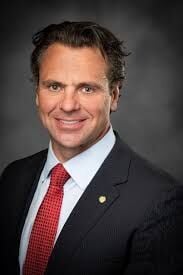
Akers
Delegate J.B. Akers (R-Kanawha) is chairman of the House Judiciary Committee where HJR 18 sits.
“There’s a bunch of resolutions that have been introduced, and we can’t run them all,” he said. “The more we run, the more of a chance they can all fail. As for what might be put on the ballot, there’s been some discussion. But it’s looking less and less likely as the session moves toward the end.
“In the past, we’ve had three things on the ballot at once, and they all seem to get mixed up together. That hurt the chances of some of them being passed.”
Akers mentioned a few other joint resolutions – such as one regarding the business inventory tax and another regarding EMS and fire levies – that have been discussed more.
“It (HJR 18) just hasn’t been a real popular discussion for some reason,” Akers said. “We aren’t getting a lot of calls to run that one. Others just seem to be gaining more discussion.”
Akers did say the House already has passed several election-related reforms regarding vote integrity.
“I think there still is a slim chance we could do something on this one,” he said. “But as the session moves along, I think it becomes less and less likely. I think it comes down to whether this is a significant problem, and a practical matter that needs addressed urgently? Probably not. There are just other issues that mean more to more people.
“We just can’t do them all.”
The lead sponsor of HJR18 is Delegate Scot Heckert (R-Wood), and Delegates Rick Hillenbrand (R-Hampshire) and Dave Foggin (R-Wood) also are listed as sponsors.
The lead sponsor of SJR9 is Sen. Patricia Rucker (R-Jefferson), who is a naturalized citizen. She was born in Venezuela, emigrated to the United States when she was 6 years old and became a U.S. citizen in 2004.
“This is a simple constitutional amendment that I believe most citizens will support and makes it consistent throughout the state that only U.S. citizens can vote in any West Virginia election,” Rucker told The Record last year.
Other sponsors of the Senate version are Senators Chris Rose (R-Monongalia), Darren Thorne (R-Hampshire) and Amy Grady (R-Mason).
As with previous versions, this year’s resolutions would modify Section 1, Article IV of the state Constitution to prohibit persons not United States citizens from voting in any election held within the state. The resolution needs to be adopted by both houses by a two-thirds vote to be put before voters in this fall’s general election.
During the 2024 session, a similar resolution passed the House on a 96-0 vote and the Senate on a 32-0 vote. But the House measure died on the final night of the session because of a technical glitch in the Legislature’s bill tracking system that temporarily showed the measure as being completed.
By the time the problem was realized, it was too late for it and a host of other measures to be taken across the finish line because of a Democratic filibuster.
In last year’s session, the Senate resolution passed by a 34-0 vote before being sent to the House of Delegates’ Judiciary Committee, where it sat until the end of the session.

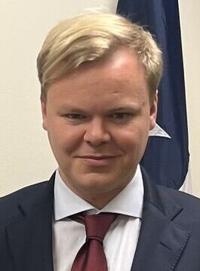
Kolean
“Republican leadership needs to recognize this is an issue they can lead on,” said Charlie Kolean, state director of Americans for Citizen Voting. “More than 80% of voters agree that only U.S. citizens should be allowed to vote in U.S. elections. Other states have already taken action, and it’s frankly puzzling why West Virginia leadership is holding this up.
“This is a clear opportunity for Republicans to step up, join a growing national movement, and deliver results. Americans are demanding something simple and common sense: only citizens should be voting in our elections.”
In recent years, ACV has worked to have similar measures adopted in states. Texas voters approved a similar measure in November. And in 2024, eight states (Idaho, Iowa, Kentucky, Missouri, North Carolina, Oklahoma, South Carolina and Wisconsin) passed laws to keep non-citizens from voting.
Including Texas, 21 states now have laws ensuring only American citizens can vote in those states, and several other states are actively considering such legislation.
Legislatures in Arkansas, Kansas and South Dakota already have placed amendments on the 2026 ballot. And in addition to West Virginia, efforts to place citizen only voting measures on the 2026 ballot are taking place in Alaska, Georgia, Indiana, Michigan, Mississippi, Montana, Nebraska, New Hampshire and Tennessee.