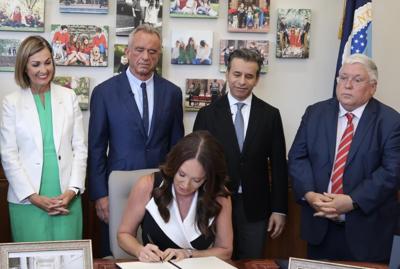


U.S. Secretary of Agriculture Brooke L. Rollins (seated) signs six new food choice state waiver August 4, 2025, while (from left) Iowa Governor Kim Reynolds, Secretary of Health and Human Services Robert F. Kennedy Jr., FDA Commissioner Marty Makary, M.D., M.P.H. and West Virginia Governor Patrick Morrisey look on.
WASHINGTON – A federal judge has struck down a West Virginia waiver that kept federal food assistance from using those benefits to purchase soda.
U.S. District Judge Amy Berman Jackson’s June 22 opinion said Supplement Nutrition Assistance Program (SNAP) recipients blocks the state’s ban and orders federal officials to revisit how to improve West Virginia’s “Healthy Choices” waiver.
“The federal defendants and the states may have a genuine desire to improve the health of SNAP households by encouraging healthy choices at the store, and they can take lawful steps to meet those goals,” Jackson wrote. “But what they cannot do is violate the law and their own regulations along the way.”
The state’s pilot project, which was approved by the federal Department of Agriculture, kept SNAP households from using the funds to buy sodas, which are defined broadly as any sweetened, flavored carbonated drink, including diet varieties and caffeinated soft drinks.
Jackson’s 68-page opinion blocked the policies in the five states that had instituted bans. In addition to West Virginia, the other states are Colorado, Iowa, Nebraska and Tennessee. Some of the other states also banned candy and other items considered unhealthy.
Last August, West Virginia was approved for a waiver request to prevent benefits under SNAP from being used to buy drinks with sugar and artificial flavorings. Gov. Patrick Morrisey announced he plan last August with U.S. Agriculture Secretary Brooke Rollins and Health and Human Services Secretary Robert F. Kennedy Jr.
West Virginia officials began enforcing the first‑in‑the‑nation ban on January 1. The restriction covered all 146,488 SNAP households and 2,118 participating retailers statewide, with no opt‑out for medical or other reasons. State officials required retailers to reprogram point‑of‑sale systems so soda purchases made with SNAP would automatically be declined at the register.
Hunter Starks, a West Virginia SNAP recipient, is one of five named plaintiffs in the case challenging USDA’s approval of the state pilots in West Virginia, Colorado, Iowa, Nebraska and Tennessee. In the original complaint, Starks said he relied on soda as a moderate source of caffeine and said the ban interfered with the ability to maintain energy needed to work, attend school and care for a child.
Jackson’s opinion says the pilot projects cover entire state SNAP populations, exposing participants and retailers to the risk of serious sanctions if they inadvertently violate new, state‑specific purchase rules.
Under federal law, SNAP beneficiaries can lose benefits and retailers can be kicked out of the program for accepting EBT payments for items that no longer qualify as “food” under state pilots.
In her 68‑page memorandum opinion granting summary judgment to the plaintiffs, Jackson ruled Rollins exceeded her authority by using one section of federal law to waive the statutory definition of “food” for SNAP pilots that were really aimed at health and nutrition.
That section, Jackson wrote, is limited to projects that improve administrative efficiency – not efforts to curb obesity by banning soda, energy drinks and candy.
The opinion says USDA “sidestepped” a separate provision specifically governing health‑focused SNAP pilots and imposes strict, publicly‑disseminated criteria for projects meant to improve diet and reduce obesity. Jackson also found the agency violated its own regulation requiring advance Federal Register notice for pilots likely to significantly affect the public, rejecting USDA’s claim that the restrictions would not have such an impact.
The ruling means SNAP users in West Virginia can again use their benefits to buy soda for now while USDA goes back to the drawing board on the waiver and the court’s order is implemented. Retailers that had rushed to comply with the soda ban and updated systems under the “Healthy Choices” waiver now face a reset as federal authorities unwind the project.
In the filing, Jackson said her decision is not a judgment on whether West Virginia’s health goals are wise, but on whether federal and state officials followed the law.
The ruling is a setback for Morrisey’s effort to use SNAP as a lever to fight diet‑related disease, and it signals that any future attempt to narrow what low‑income families can buy with EBT cards will face strict statutory and procedural scrutiny in federal court.
The Morrisey administration disagrees with Jackson’s ruling.
“We are disappointed by the court’s decision but remain convinced that previous taxpayer subsidized resources should only be spent on healthy, nutritious food for those who need help the most,” Morrisey spokesman Lars Dalseide said. “Our commitment to improving the health of West Virginians has not changed, and we will continue to advance commonsense policies that encourage healthier choices and better outcomes.”