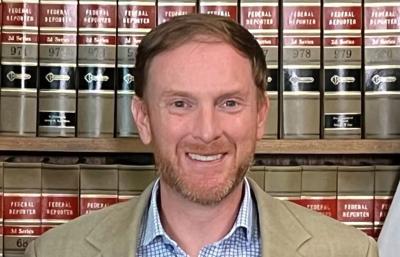



West Virginia Attorney General J.B. McCuskey
CHARLESTON — West Virginia Attorney General J.B. McCuskey says the Federal Judicial Center is withdrawing the climate science chapter from the Reference Manual on Scientific Evidence.
McCuskey received a letter February 6 from FJC Director Robin L. Rosenberg informing him of the change after McCuskey led a coalition of 27 conservative AGs asking the FJC to withdraw a new addition to the Reference Manual on Scientific Evidence that deals with “climate science.”
For decades, the Manual has been a research tool for judges and attorneys. The U.S. Supreme Court has cited it to explain basic principles in math and science, and it has been cited in more than 1,700 opinions.
“I’m proud of the effort of our coalition,” McCuskey said. “As we stated in our letter to the center, impartiality is a cornerstone of our judicial system. Judges across the country use the Manual to help guide their decisions and bias towards left-leaning climate policies would have absolutely tipped the scales in many cases.
“I’m glad the center heard our rational and commonsense argument for removing the chapter. It’s a win for domestic energy production, American prosperity and security, and West Virginia.”
In its letter, the coalition of AGs said the accuracy and impartiality of the Manual is vital. The AGs said “Reference Manual on Climate Science” chapter was written by authors who are connected to university climate studies programs that promote legal warfare against states and energy producers to push their left leaning political agendas.
“Impartiality is a cornerstone of our judicial system,” McCuskey said. “That’s why it is so important that a document that serves as the guidelines by which most, if not all, courts interpret the law be written with justice, honesty, and freedom from bias.
“The climate chapter of the latest edition of the Manual is absolutely biased and would tip the scales in favor of left-leaning policies that would be the final nail in the coffin of American-produced energy. We cannot allow that to happen. Domestic energy production is key to continued American prosperity and security.”
The coalition sent an eight-page letter January 29 to Rosenberg, director of the FJC, outlining its concerns.
Article III of the Constitution “guarantees every litigant… the right to an independent and impartial tribunal.”
McCuskey’s group of 27 AGs says this guarantee loses all meaning when the court system’s research office decides controversial questions before judges have ruled on them.
The coalition argues that if the Federal Judicial Center can decide scientific questions in climate cases, it could easily decide other controversial questions for election disputes, Second Amendment cases and other matters.
That’s why the AGs are asking the center to withdraw this chapter and establish policies so that political agenda-driven guidelines are not included in future editions.
Last month, the U.S. House Judiciary Committee questioned how an attorney pushing climate change cases against Big Oil had access to materials an activist group gives judges as part of a training program.
Joining McCuskey in the letter are the AGs from Alabama, Alaska, Arkansas, Florida, Georgia, Idaho, Indiana, Iowa, Kansas, Kentucky, Louisiana, Mississippi, Missouri, Montana, Nebraska, New Hampshire, North Dakota, Ohio, Oklahoma, Pennsylvania, South Carolina, South Dakota, Tennessee, Texas, Utah and Wyoming.